
Written by Alexandra TOUCHARD
Premiering in Official Competition at the Cannes Film Festival on Wednesday, May 20, 2026, La Bola Negra could very well leave with the Palme d’Or. Directed by Javier Calvo and Javier Ambrossi (with Miguel Bernardeau, Penelope Cruz, Glen Close, Álvaro Lafuente, Carlos González, Milo Quifes) the film traces the journeys of three gay men in Spain across three different eras: 1932, 1937, and 2017. A choral narrative haunted by the work of Federico García Lorca and adapted from La Piedra Oscura by Alberto Conejero, the film unfolds as a titanic epic set against the heart of Francoist Spain, unearthing stories of love buried for far too long by the country itself — like a Greek vase depicting the story of Daphnis and Chloe, rediscovered centuries later.
From the opening sequence onward, we follow Sebastián in 1932, a trumpet player from a small Spanish village who finds himself, against his will, drawn into the Francoist militia simply to survive. The narrative charts his romance with Rafael, an opponent of the regime who is being treated in a hospital requisitioned by the government. Rafael is soon revealed to be the former lover of the celebrated playwright Federico García Lorca, recently deceased, who entrusted him with his final play — La Bola Negra — so that it might be published posthumously. When Rafael realizes he is destined to be executed after surrendering information to the authorities, he entrusts Sebastián with the mission of finding and safeguarding the manuscript in his stead.
Around this lost manuscript unfolds a sweeping fresco on love that ties Sebastián’s fate in 1932 to that of Carlos in 1937, a young man seeking acceptance into his father’s prestigious Casino club, only to receive the “black ball” of rejection because of his homosexuality. The timeline ultimately concludes with Alberto in 2017: openly gay, free to affirm both his identity and his relationship.

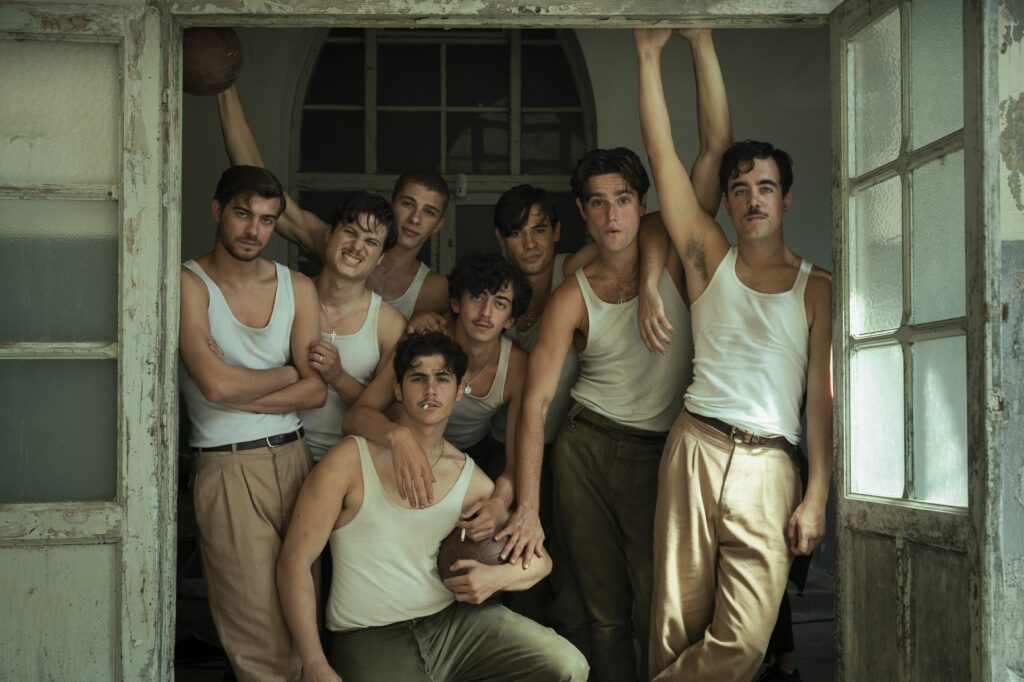
Carlos in La Bola Negra
What makes the film so overwhelmingly powerful is the way it intertwines universal history, intimate personal stories, and the imagined legacy of an author who remains a source of national pride for Spain. The film is deeply steeped in Spanish culture, with a grainy texture and a delicately restrained direction for the actors in the 1930s sequences, beautifully reinforcing the film’s central premise: that love itself was erased from Spanish history. By love, the film refers to all those stories that moved hearts amidst war, the marginal loves that took shape in the depths of dictatorship’s night. In one particularly devastating scene, Lorca himself evokes the metaphor of the Daphnis and Chloe vase, discovered in a field by peasants, as an image for all love once buried, for all the letters burned by Francoist Spain.
The direction — utterly mesmerizing — moves from static shots reminiscent of 18th-century naturalist paintings to choreographed long takes in the film’s more dreamlike passages, always remaining in service of its themes. While Carlos’s storyline may initially seem disorienting in its heightened, almost fantastical quality, at times even borrowing the codes of the musical, one eventually understands that this character exists as a fiction created by Lorca himself: an emblem of oppression and a symbol of a youth struggling for freedom beneath the sheltering snow.
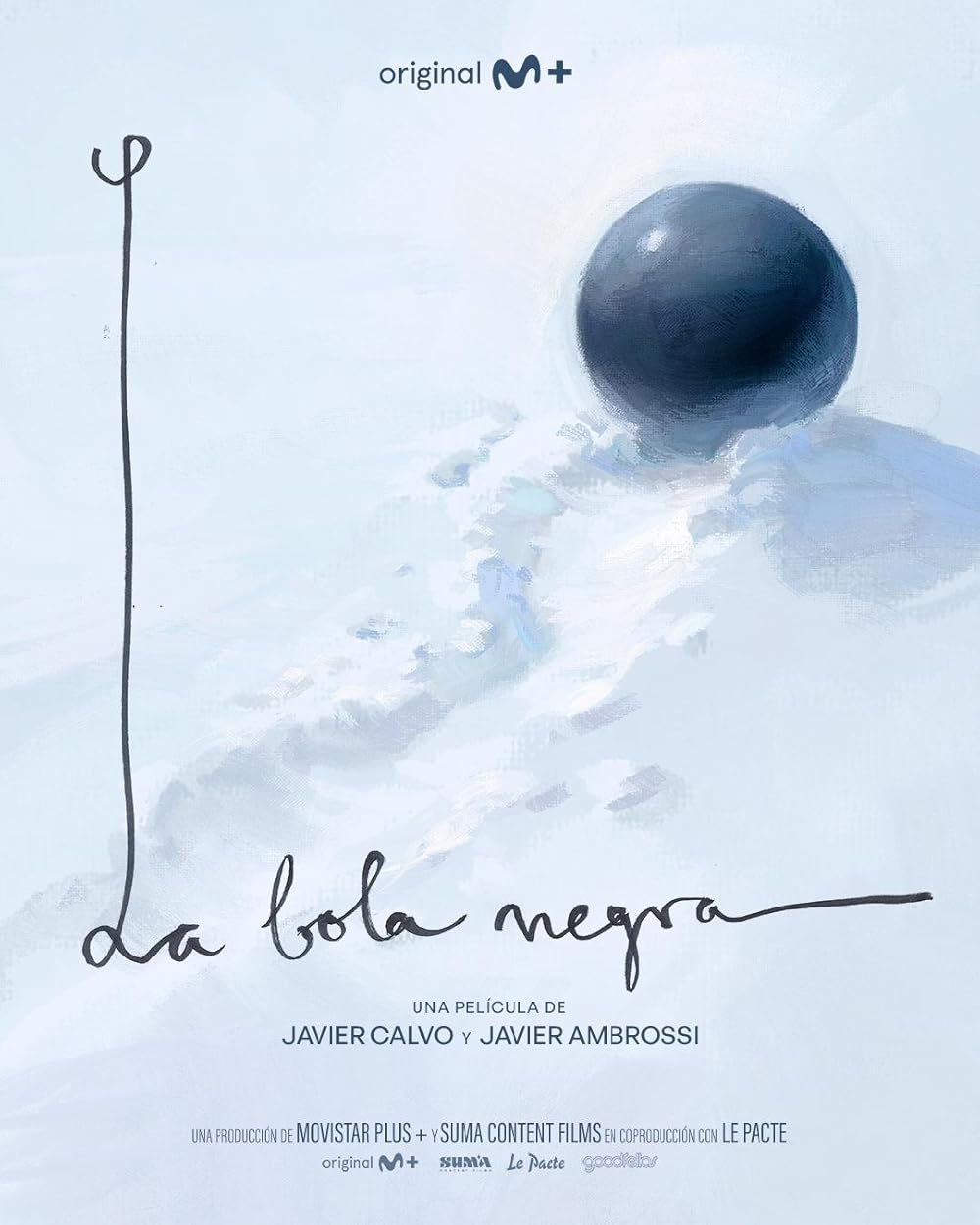
Poster of La Bola Negra by Javier Calvo and Ambrossi (2026 – Cannes Festival)
It is Alberto who ultimately binds the three narratives together, retracing the journey of his grandfather and his own discovery of homosexuality — presented in the film with clarity, yet never overstated. Everything is suggested with immense subtlety and infinite tenderness, compelling the viewer to empathize with the characters, with Lorca himself, and to reconsider, within its historical context, the repression of love as a political instrument.
The film also draws heavily on biblical imagery through recurring references to Saint Sebastian, patron saint of Spain, long reappropriated as a figure of androgyny and even homosexuality. Calvo and Ambrossi thus explore the idea of martyrdom in its broadest sense: a martyrdom that is at once political and religious.
Though the film remains a sophisticated meditation on the rewriting of history — no longer as a national narrative, but as the work of individual lives — though it serves as both an interpretation of Lorca’s oeuvre and his existence, and though it reflects on the progress of marginalized communities, it is above all a visceral work whose every idea is conveyed through sensation and emotion. Sebastián’s torment regarding his own homosexuality is expressed through glances, through intimate close-ups of Rafael’s body. Everything is implied without ever needing to be spoken aloud. La Bola Negra is a complex object, an interwoven narrative connecting three individuals, often through the use — it must be said — of an evocative musical score acting as a cement between the stories: a quest for an ideal, championing what fascist governments have always sought to bury — the right to a free love.