Written by Alexandra Touchard
On May 28, 2026, the fourth edition of the contemporary art exhibition Artivism Award — dedicated to ocean preservation — will officially launch. Blending initiatory voyage, artistic wandering, and scientific expedition, the project unfolds between land and sea. Beginning tomorrow, a team composed of artists and scientists will embark on a ten-day Mediterranean crossing aboard the sailing yacht SY Kyalami, traveling from Malta to Venice.
The voyage aims to observe the Mediterranean directly and to acknowledge it as a fragile space, a living ecosystem, but above all a territory deeply marked by human activity and climate change. The crossing will therefore become a moving artistic residency, drifting to the rhythm of the sea, within which artworks, research projects, and scientific archives will be produced.
Upon arriving in Venice, the artists will exhibit their work at the Yacht Club Venezia from June 5 to June 28. The exhibition will highlight a range of artists inspired — each in a deeply personal way — by the marine environment, as well as by the idea of a possible future for the oceans, whether imagined, controversial, or realistic.
The work of Kurt Arrigo occupies a central place within the exhibition. An underwater photographer renowned for his commitment to marine conservation, he develops a practice in which the image becomes an act of attention and responsibility. His photographs from the series The Blue Thread immerse the viewer in a luminous yet fragile underwater world, revealing threatened ecosystems whose balance remains precarious. Through a contemplative aesthetic, Arrigo seeks less to create spectacular images than to make visible a reality that often remains inaccessible. His works also contribute to concrete environmental action, as selected editions support seagrass restoration programs — ecosystems essential to biodiversity and climate regulation.
Through my photography, I try
to honour the fragility and
beauty of this hidden world —
inviting others to see what I feel:
a deep respect and responsibility
for the life below.
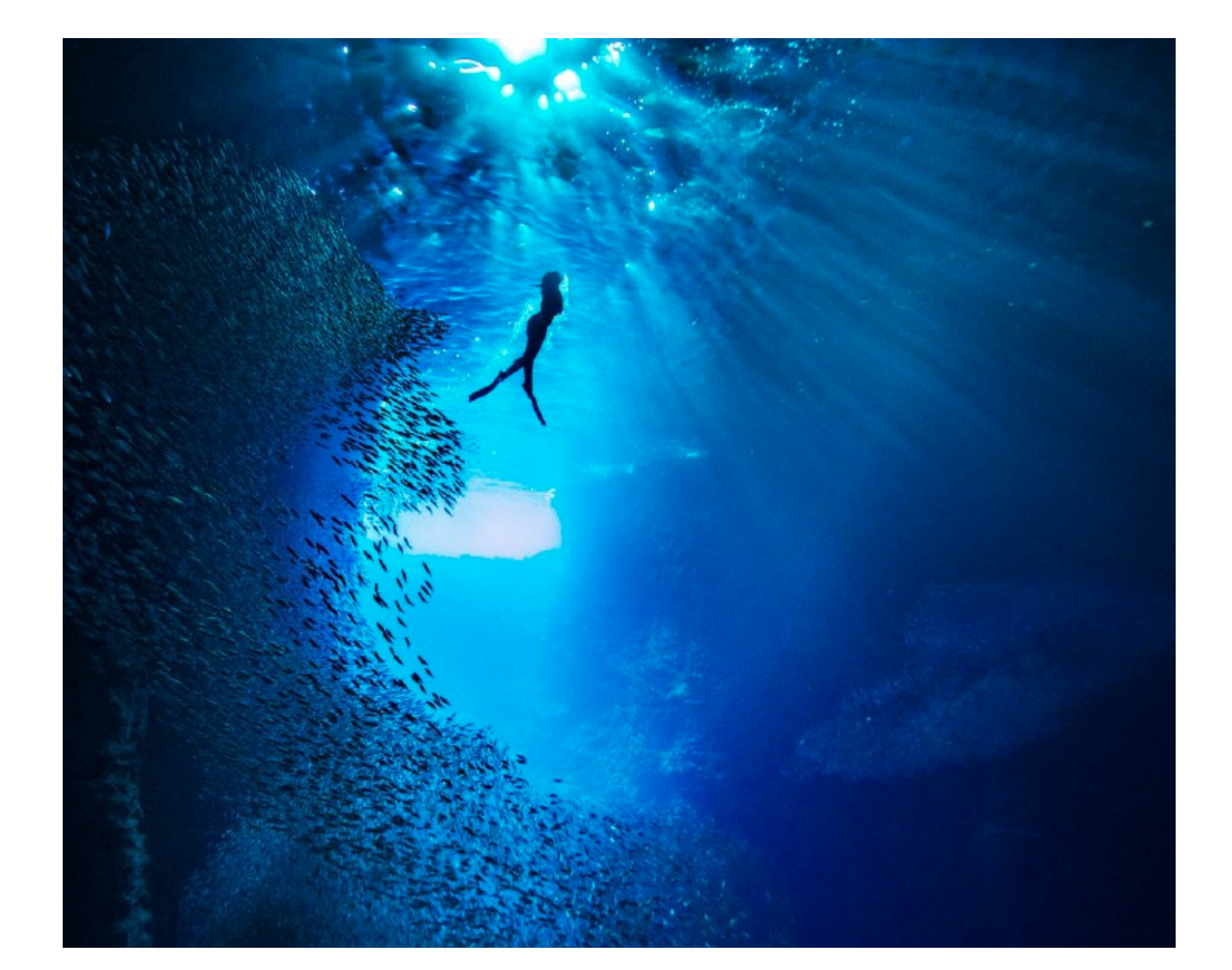
Kurt Arrigo – Photography from The Blue Thread
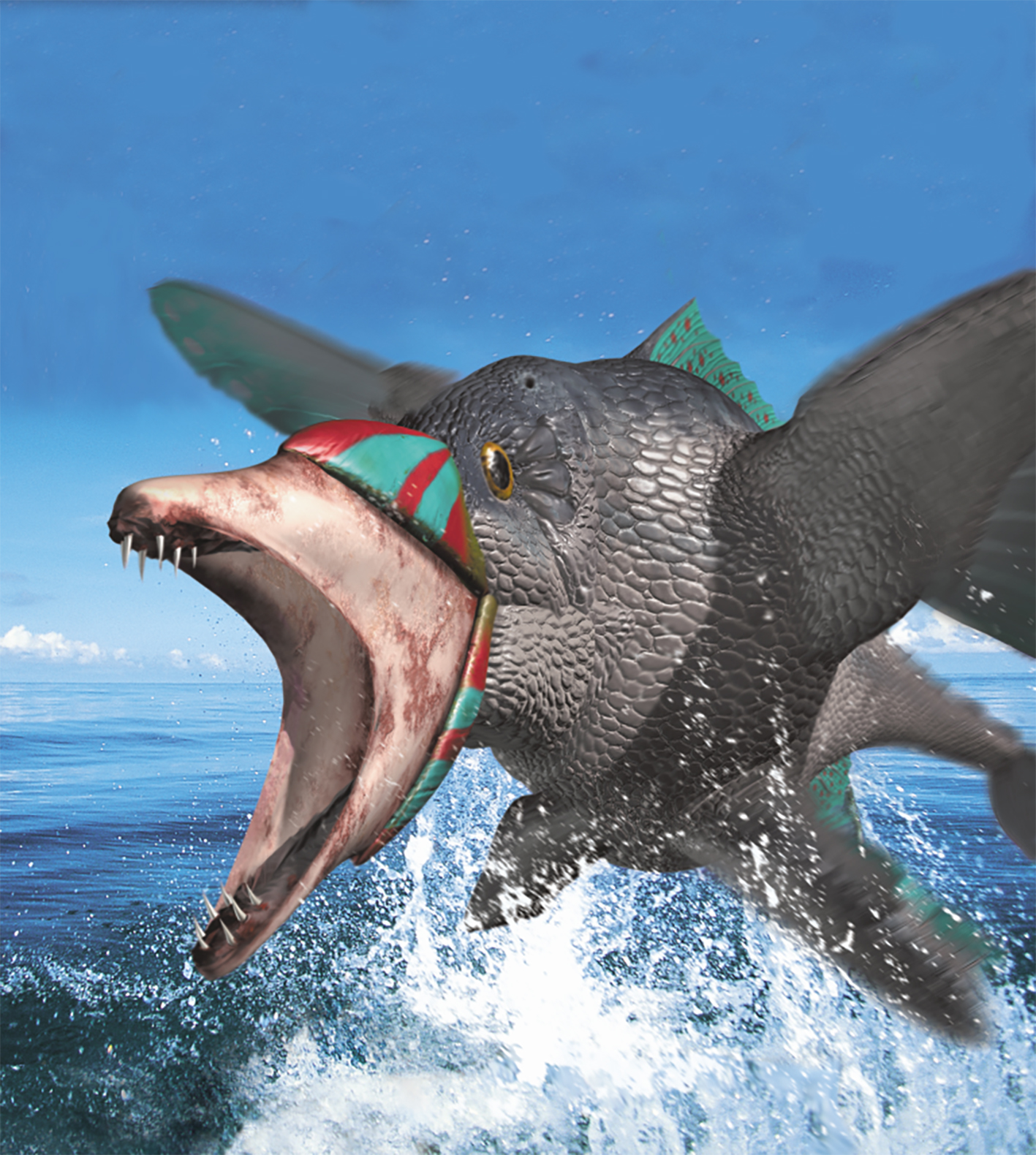
Ocean Flish – Joanna Adams
Joanna Adams presents The Future is Wild, a project combining speculative drawing, science, and ecological fiction. Her work imagines the forms of life that could emerge in a future profoundly transformed by climate and environmental change. Inspired by scientific research conducted in collaboration with academics and institutions such as the Natural History Museum, she constructs a universe oscillating between utopia and dystopia. The creatures and landscapes she invents question our relationship to evolution and the survival of living organisms. Her work is built upon a constant tension between imaginative fascination and ecological anxiety, reminding us that planetary upheavals no longer belong solely to the realm of fiction.
With Rigid Chamber (KAMMER), Lilo M. R. Hansen explores the extreme conditions of human labour in deep-sea environments during the expansion of offshore oil extraction in the North Sea. Through installations and archival material, she examines the technological dependency required for human survival within these hostile environments. Her work sheds light on the invisible and often overlooked dimensions of the industrial exploitation of the oceans. By confronting viewers with these technical and human realities, Hansen questions both the limits of industrial progress and the physical and psychological consequences of an economy built upon the intensive extraction of natural resources.
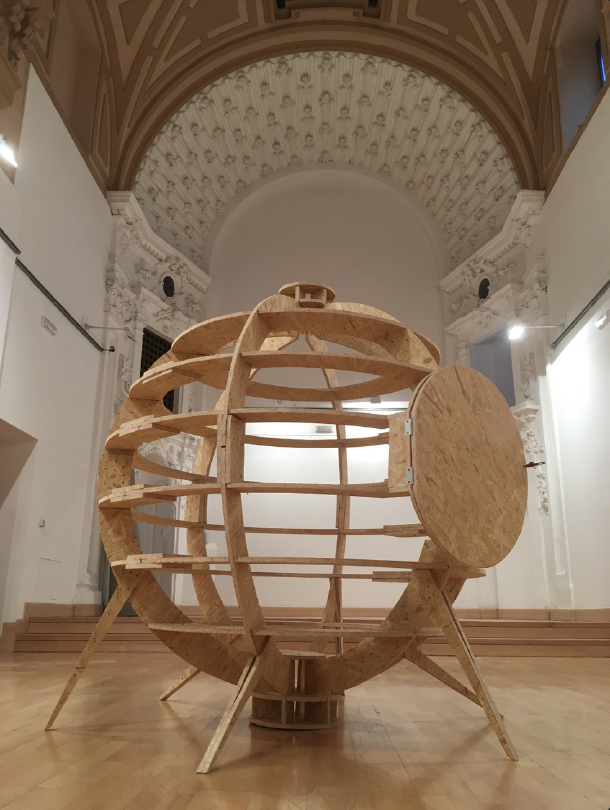
Kammer – Lill MR Hansen (installation at Lamosa Gallery)
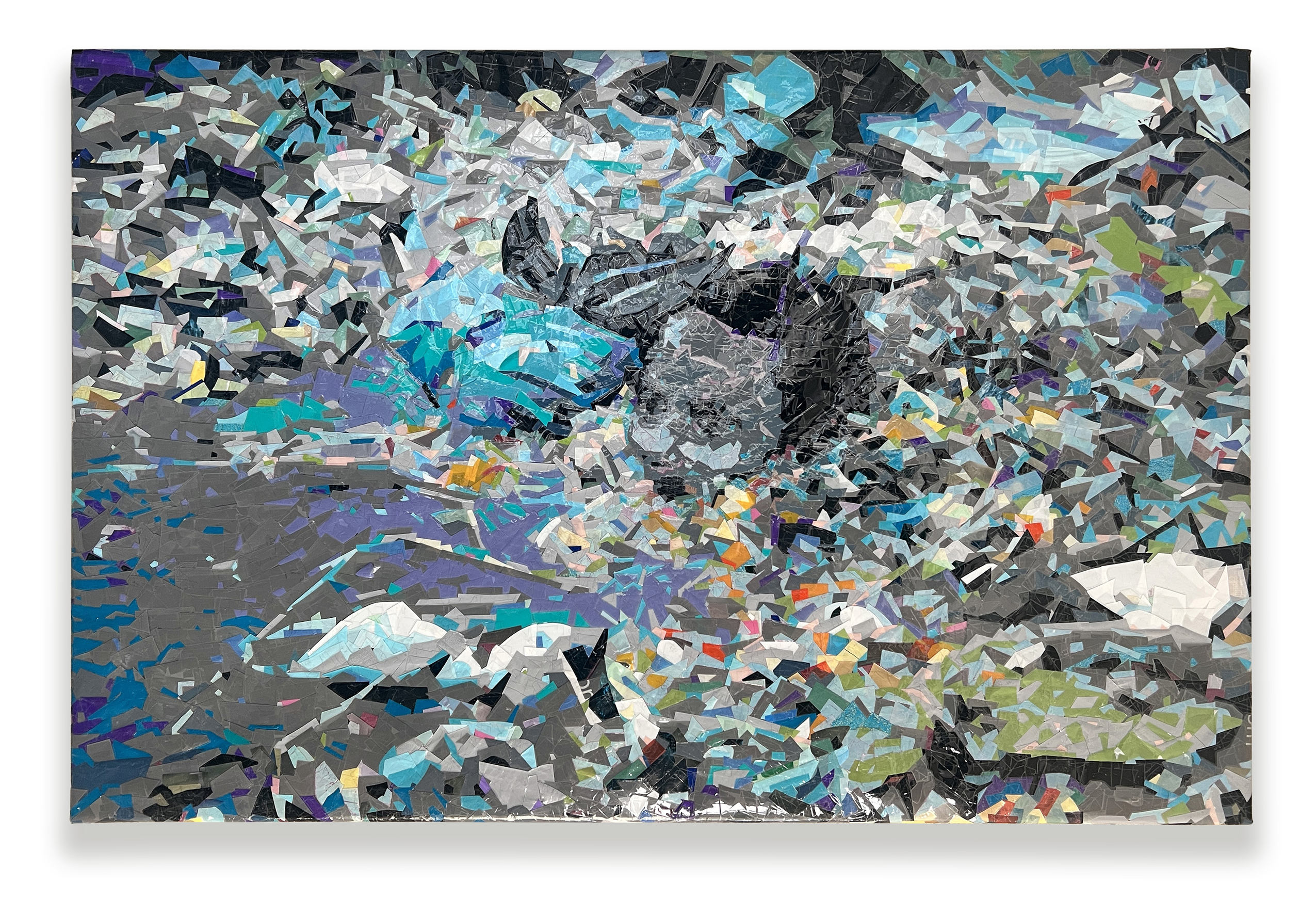
Dodi Reifengerg- Deep (2012)
Since the 1990s, Dodi Reifenberg has developed a singular artistic practice based on the recovery of plastic bags discarded into the ocean. His works are composed of thousands of meticulously cut fragments assembled into mosaic-like surfaces. From a distance, the image appears coherent; up close, the persistent materiality of the waste becomes visible. In this way, his practice transforms one of the most emblematic symbols of contemporary pollution into artistic material. Rather than concealing the ecological violence of plastic, the artist emphasizes its proliferation and omnipresence. His compositions function as visual archives of today’s environmental crisis.
In the series Calypso 2026 AD, Vera van Leeuwen explores the connections between mythological memory, Mediterranean landscapes, and the invisible presence of the ocean. Inspired by the figure of Calypso from Homer’s Odyssey, she photographs territories in Malta and Gozo without ever directly depicting the sea itself. Yet the ocean permeates each image through light, vegetation, and the colours of the landscape. Her work is grounded in the idea of a hidden, almost ghostly presence, where ancient myth continues to haunt contemporary territory. In doing so, the artist investigates the cultural, historical, and emotional traces left by the sea throughout Mediterranean spaces.
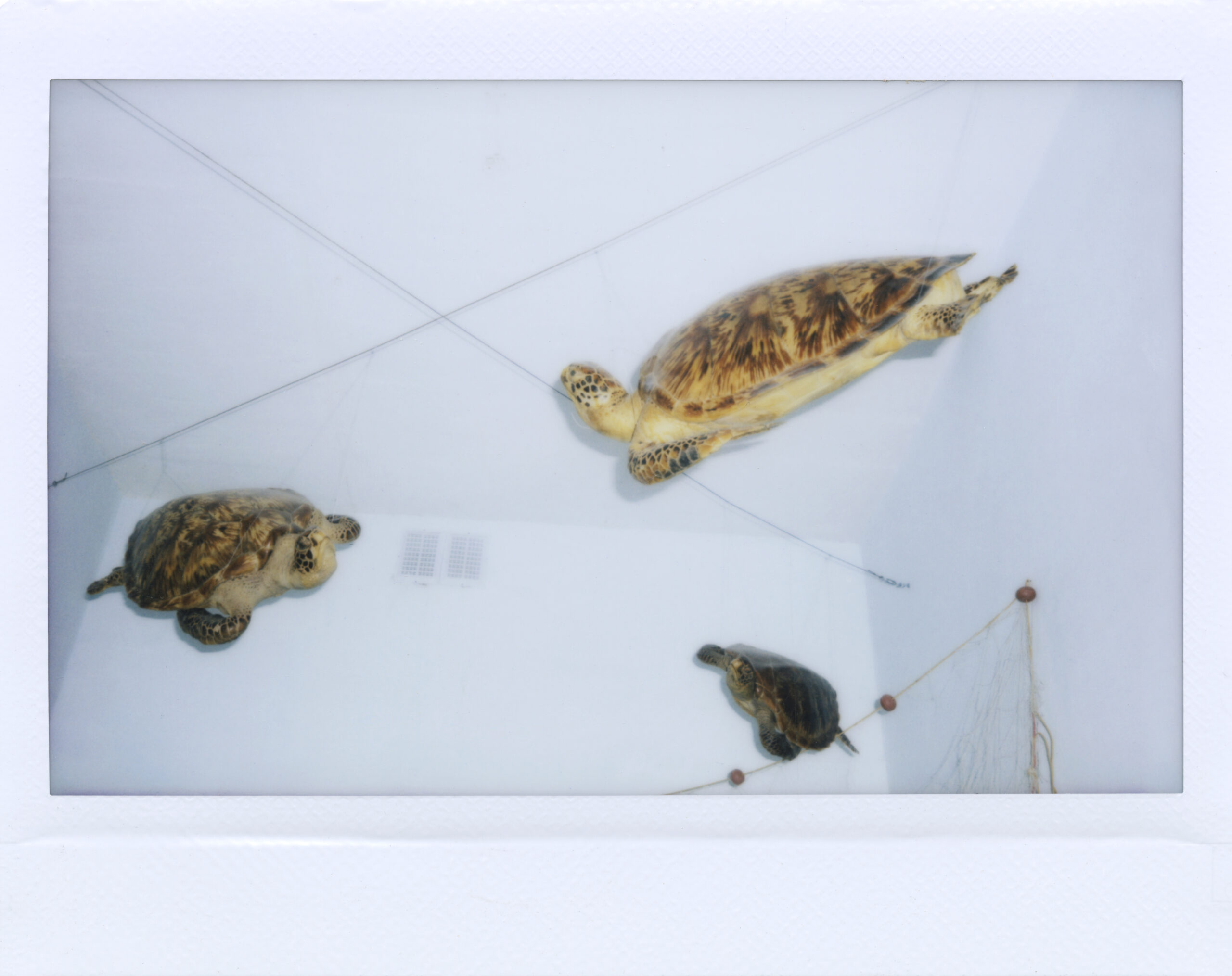
Vera Van Leeuwen – Calypso
Lavenair’s photographic work is defined by an extremely rigorous approach to colour and composition. In La Mer à L’Envers, he photographs the Mediterranean without digital intervention, allowing the natural variations of light and matter to emerge. His seascapes occasionally dissolve the boundary between sky and water, creating almost abstract images in which the viewer loses all sense of orientation. Time also plays a crucial role in his process, as some works originate from old negatives revisited years later. This temporal distance gives his photographs a meditative quality, where the sea becomes less a landscape than an inner space of perception and memory.
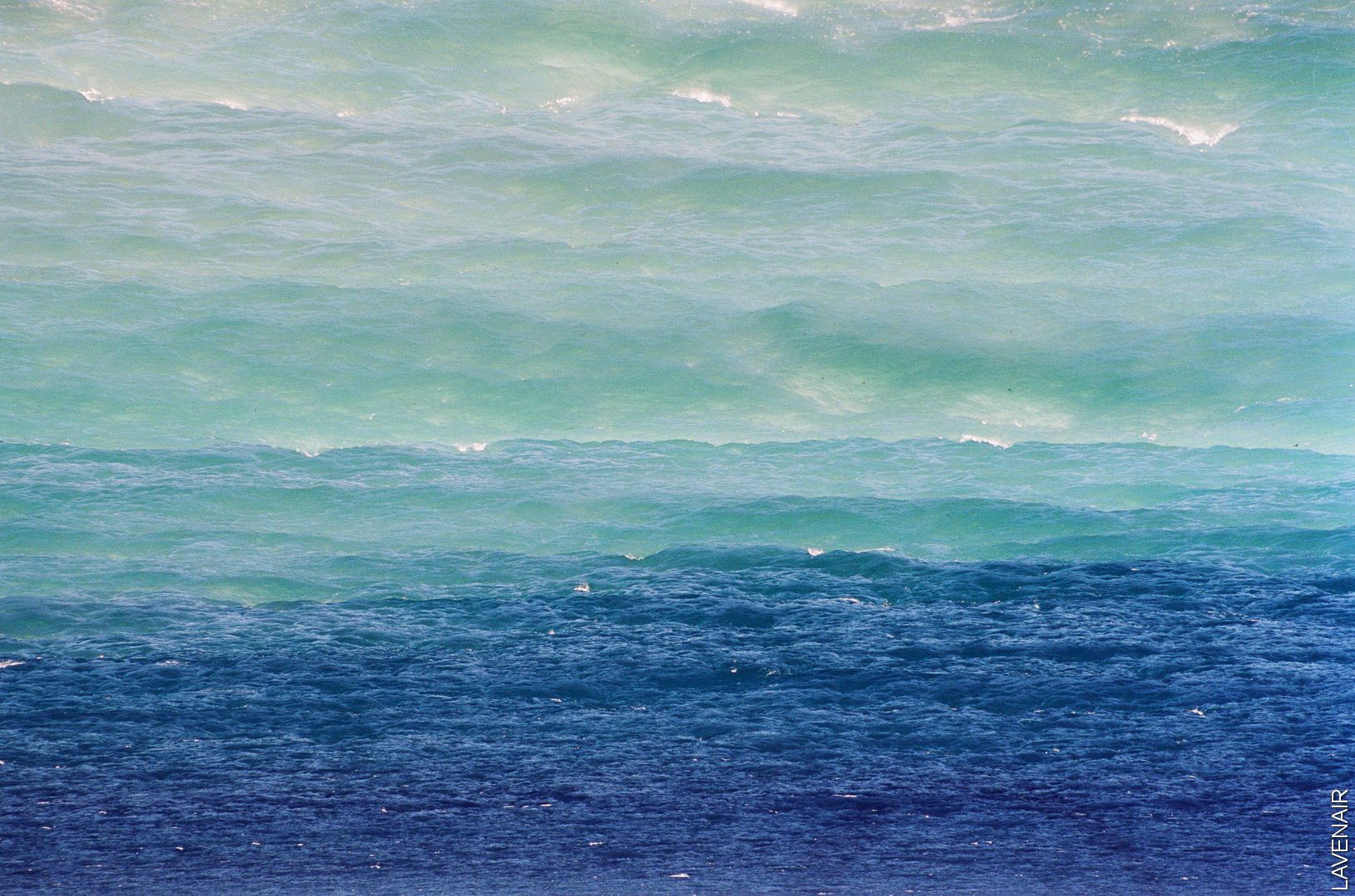
Lavenair –La Mer a l’Envers (60x85cm)
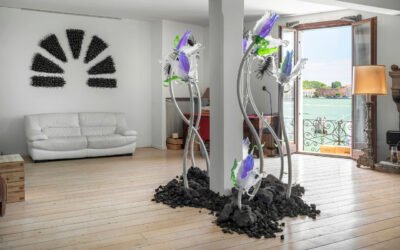
Marcy Axelrod develops a sculptural practice based on transparency, movement, and the play of light. Her installations evoke marine life without ever directly representing it. Translucent materials and suspended compositions recall the fluidity and fragility of underwater organisms. In Ocean Creatures, the exhibition space becomes an aquatic environment in which the sculptures appear to float and transform according to the movements of the viewer. Her work seeks to provoke a sensory experience rather than deliver an explicit discourse, inviting audiences to feel the vulnerability and shifting beauty of the marine world.
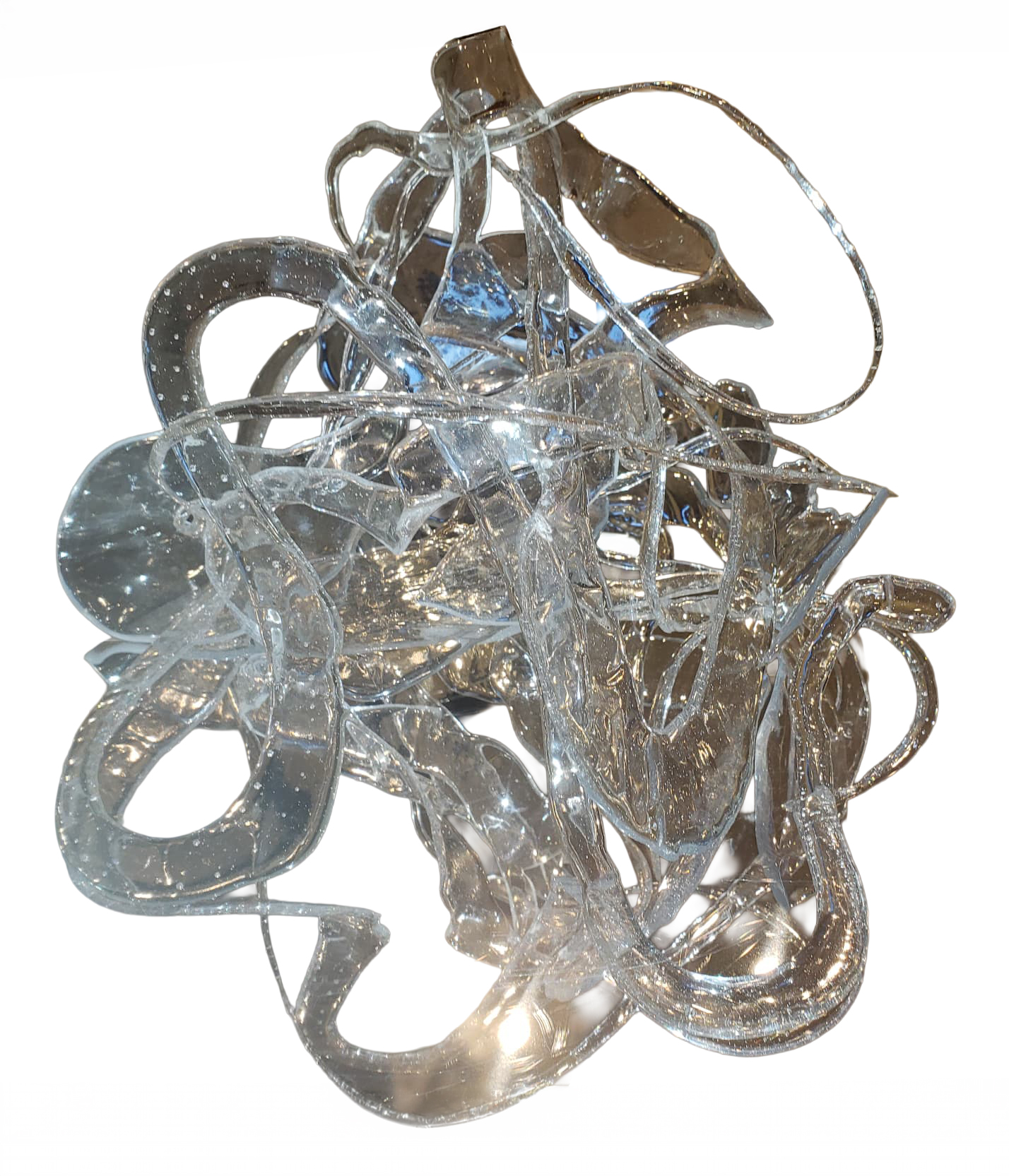
Marcy Axelrod – Sea Creature
With Mystic Waters, Alexandra Mas presents an immersive installation combining film and suspended drawings. Her work creates an environment saturated with organic forms, coral-like structures, and visual fragments that simultaneously evoke the beauty of the marine world and its gradual invasion by waste. The ocean appears as a space without clear boundaries, oscillating between aesthetic fascination and ecological anxiety. The viewer is immersed in a visual confrontation where the accumulation and density of images translate the pressure exerted upon contemporary marine ecosystems.
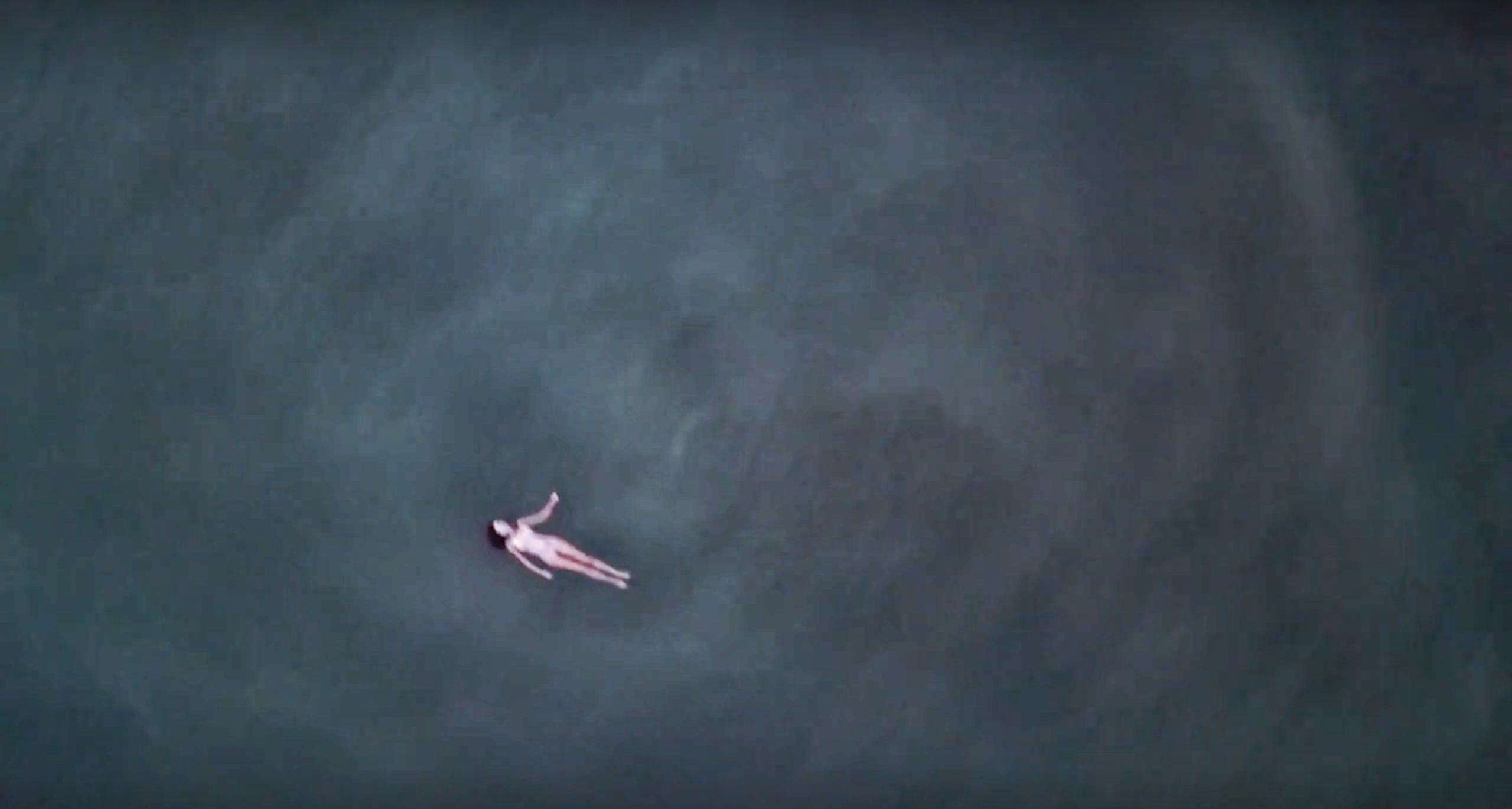
Alexandra Mas – Mystic Waters
Shoki Okumura presents Empathy Towards Things – Impermanence as a Living Ocean, a work inspired by the Japanese concept of mono no aware, the sensitive awareness of the impermanence of all things. His work establishes a parallel between this philosophy and the fragility of the oceans. Gold, often associated with permanence and wealth, becomes in his practice a material symbolizing continuous transformation and vulnerability instead. Through a minimalist and meditative aesthetic, Okumura develops a reflection on care, attention, and responsibility toward what is fragile precisely because it is transient.
Sarah Olson’s work exists at the intersection of performance, drawing, and environmental activism. In her project Rise All Boats, she directly exposes her works to natural elements — rain, tides, and wind — allowing the ocean itself to transform the material. The human body also becomes a tool of measurement and contact with the marine landscape. Her performances, often documented photographically, explore themes of migration, displacement, and collective memory linked to water. Olson considers the ocean as both protective and dangerous, a site of passage as well as survival. Her work is built upon this constant tension between human vulnerability and natural power.
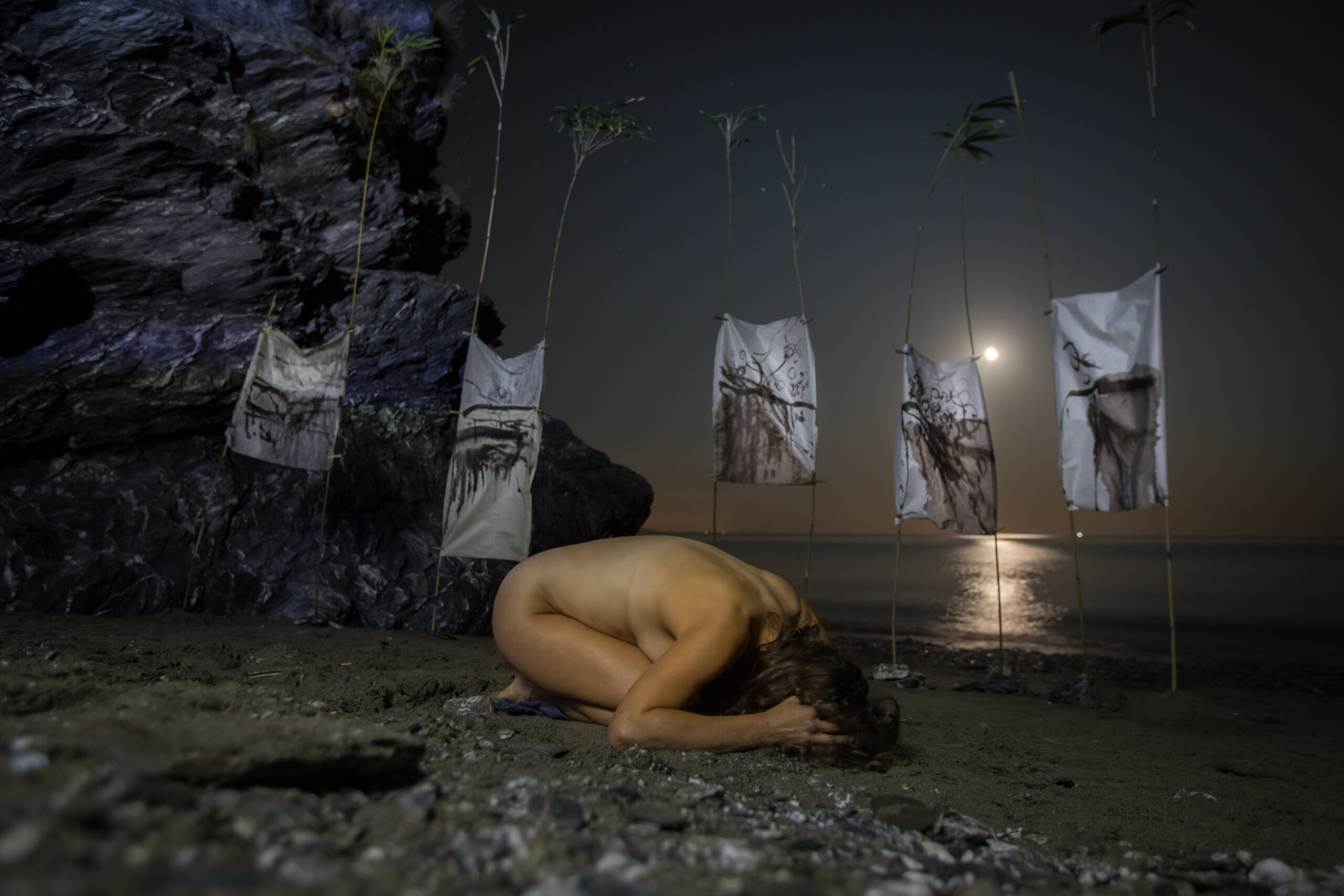
Sarah Olson – Photography by ©Matthew Facey