

Written by Alexandra Touchard
On the occasion of the 100th anniversary of the famous magazine The New Yorker, the New York Public Library has taken on the challenge of retracing not only the history but also the commitments of this media outlet, whose sketches have become iconic. Free and open to all, the exhibition also offers a way to discover the origins of The New Yorker.


Drawings of The New Yorker’s important characters
The Origins
In 1925, Harold Ross founded the magazine with the idea of combining information, art, and fiction while offering “a reflection in word and picture of metropolitan life.”
From the very beginning, The New Yorker stood out by providing not only text but also images reflecting New York’s current events in ways that were playful, sometimes parodic, or even biting. Many illustrators and reporters made their mark, including talented women highlighted in the exhibition—such as Katherine S. White, who worked tirelessly to showcase women’s writing in the magazine as well as the inclusion of serious poetry. This joyful collective devoted itself to promoting access not only to information but also to art, betting on the most promising authors for everyone.
Political Commitment
The New Yorker became especially recognized for its strong political engagement. Always siding with minorities and marginalized communities, it often put itself at risk to defend people’s rights and to take a stand. This was notably the case in the post–World War II context, when the poem “Song” by W.H. Auden was published, echoing the exile and dehumanization brought about by the war.
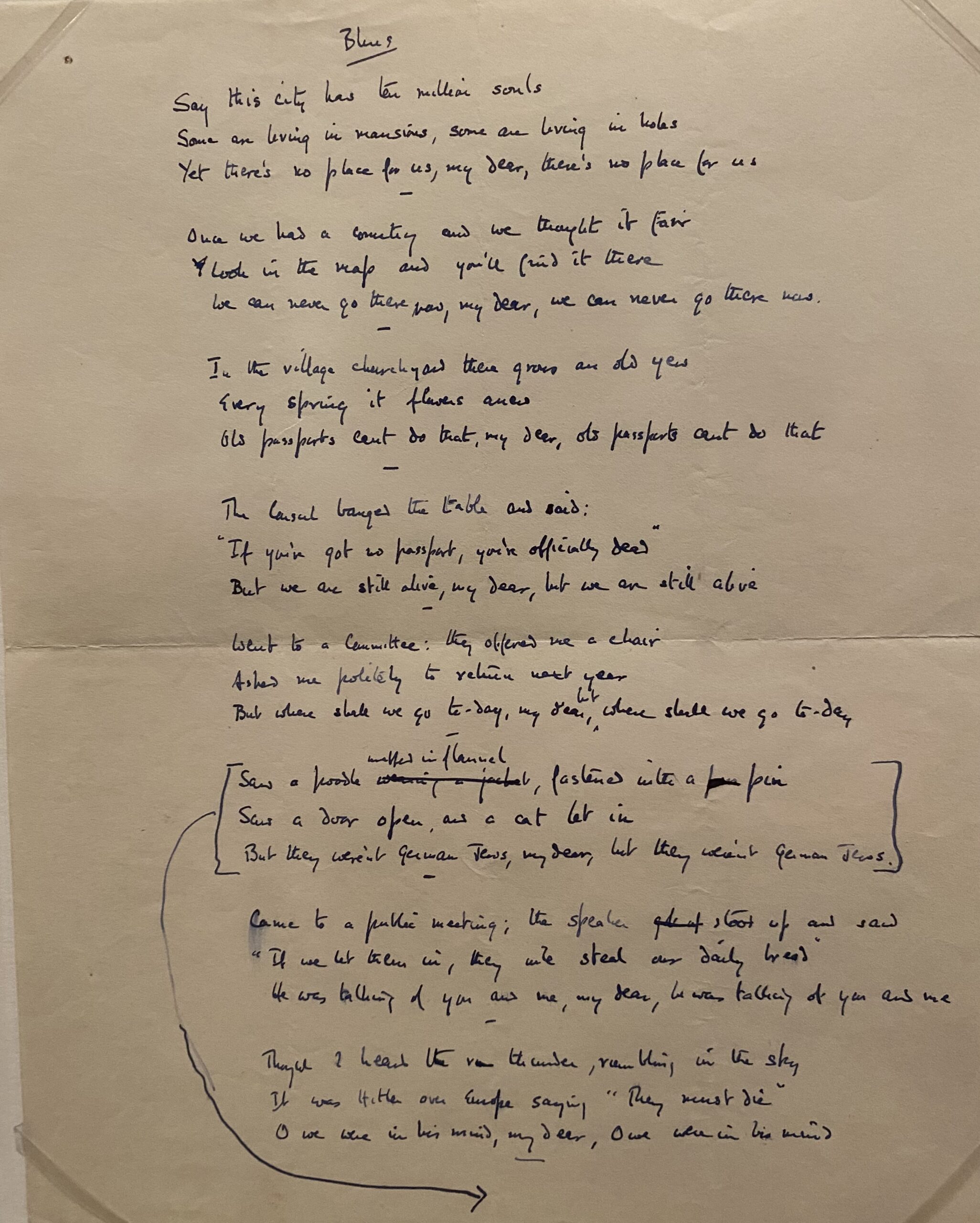
Draft of «Song » (first titled « Blues » or « Refugee Blues ») by W.H. Auden and presented at The New Yorker exhibition at New York Public Library.
In more recent times, the magazine has quickly taken positions on racial and feminist struggles, supporting both the Black Lives Matter and Me Too movements. After the tragic death of George Floyd, the magazine published a striking and moving cover commemorating the victims of racial violence in the United States. The cover was called “Say Their Names” in memory of those who lost their life.
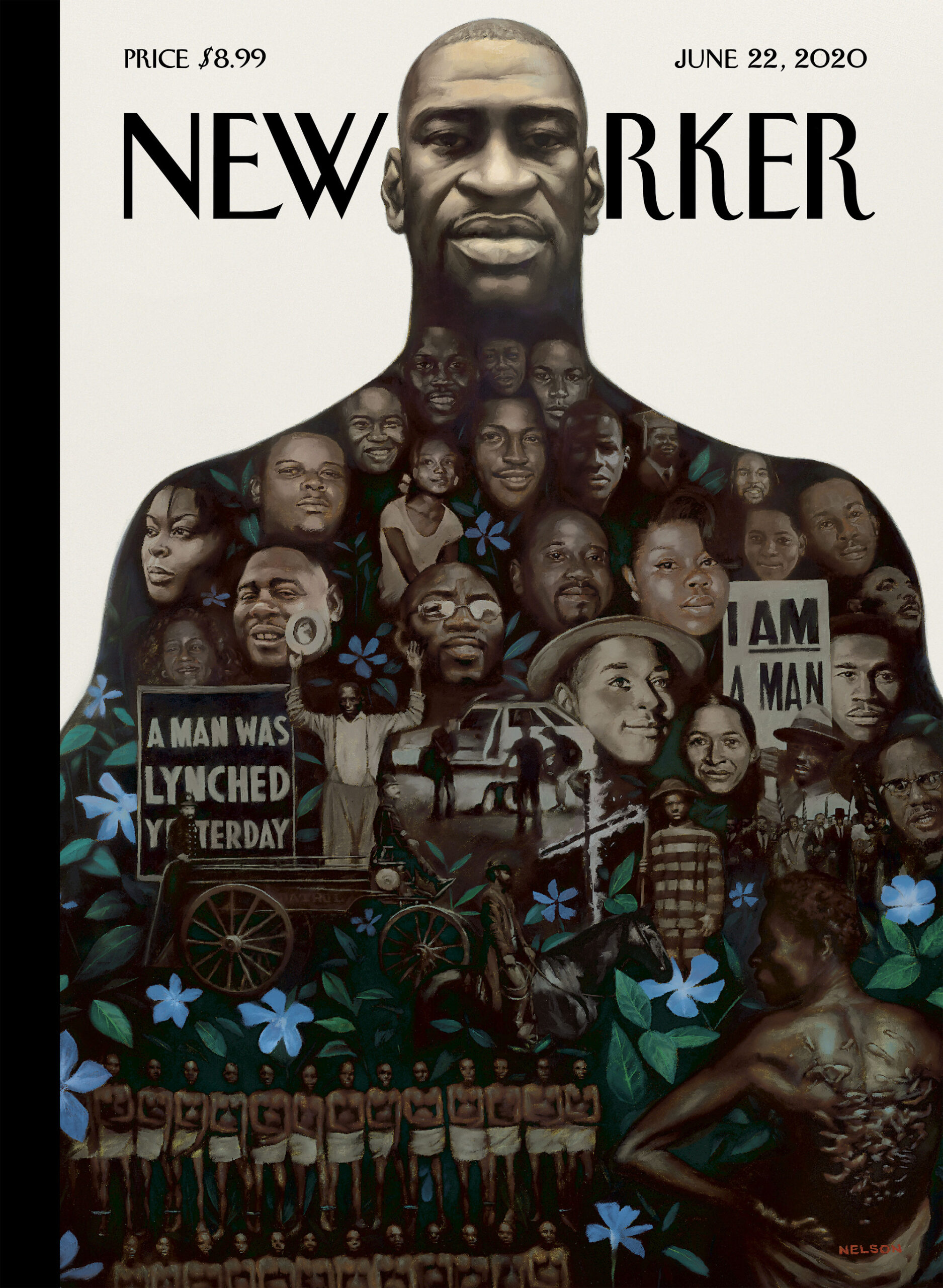
« Say their names » by Kadir Nelson, cover of The New Yorker, June22, 2020
Thus, through its style, its instantly recognizable typography, its ever-impactful covers, its care for illustration and symbolism, as well as its political and social commitments, The New Yorker has endured over time—amplifying, for the past 100 years, the most vibrant and cosmopolitan voices of the New York microcosm.