
by Alexandra I. Mas
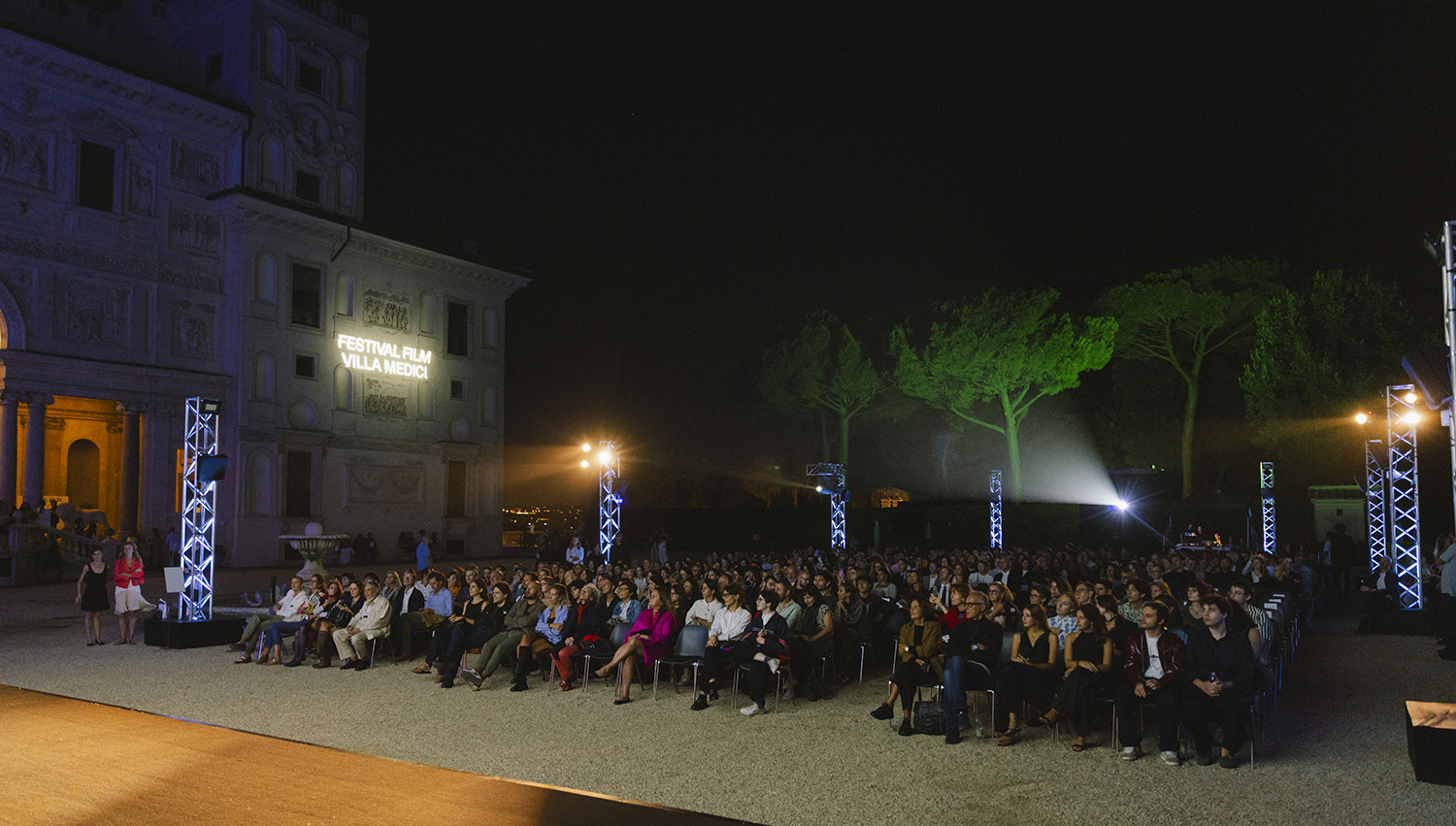
It is always with a certain emotion and curiosity that one crosses the threshold of the Villa Medici in Rome. A sanctuary of French culture, this remarkable meeting place steeped in history has welcomed generations of artists from diverse horizons, carrying forward the legacy of intellectual excellence. It comes as no surprise that for the past four years CHANEL has been an integral partner of the Villa Medici Film Festival.
This partnership reflects the House’s enduring dialogue with cinema – particularly Italian cinema – a bond first woven by Gabrielle Chanel at the dawn of the twentieth century. The couturière cultivated creative friendships with filmmakers of her time and dressed actresses both on and off screen, from Romy Schneider in Visconti’s Il lavoro (part of Boccaccio ’70) to Jeanne Moreau and Monica Vitti in Antonioni’s La Notte.
The Villa Medici Film Festival, founded in 2021 to celebrate the intersection of contemporary art and cinema, offers a stage for encounters that are as rigorous as they are poetic. As Elsa Heismann, Head of Cinema Partnerships at CHANEL, remarked:
“Fashion and cinema have never ceased to speak to one another. It is an ongoing dialogue.”
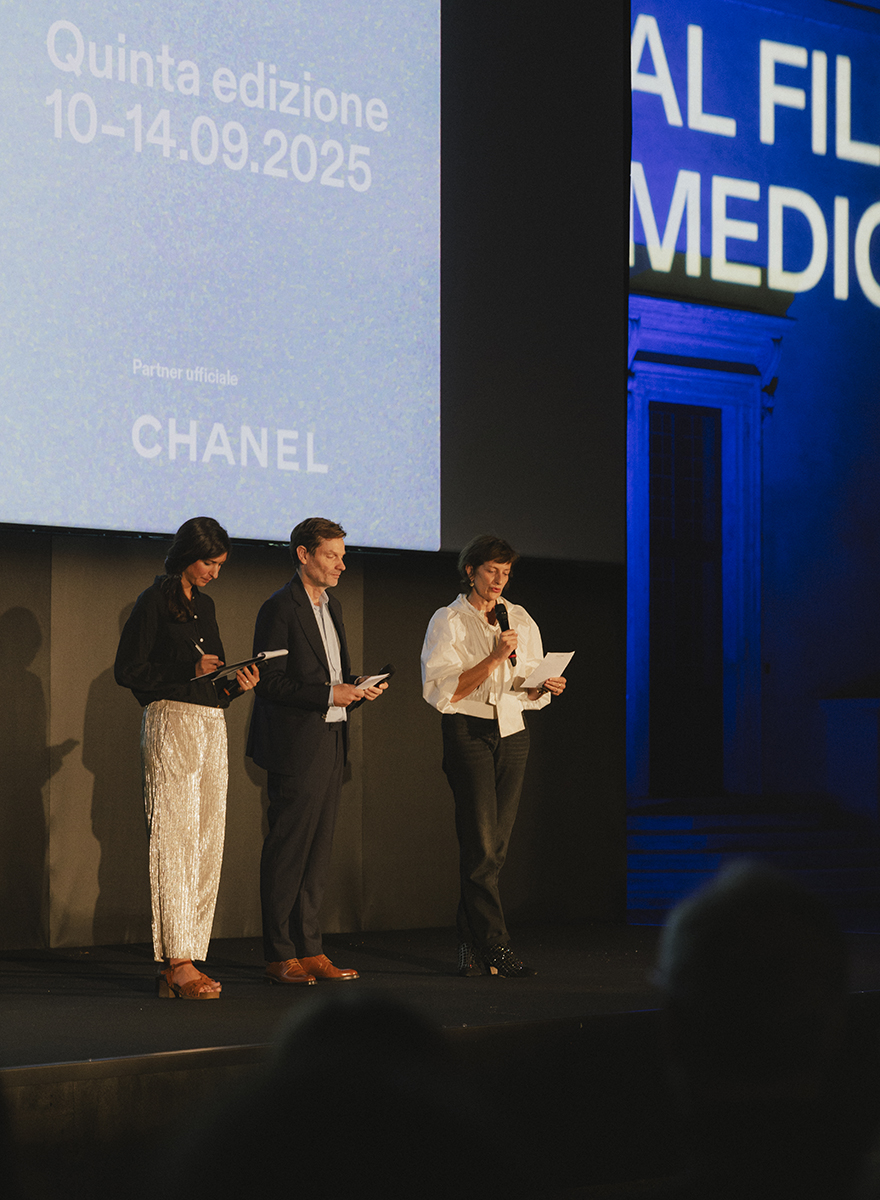
Sam Stourdzé, the Director of the French Academy in Rome and Elsa Heismann at the Villa Medici Film Festival- 2025
Her words echo the essence of the festival, which brings together screenings, debates, and exchanges between professionals and passionate audiences in a setting that embodies both heritage and creation.
“We are proud to celebrate all forms of cinema, particularly auteur cinema, fragile and in constant need of support… A festival exists to give a voice to filmmakers we would not encounter elsewhere.”

The Villa Medici Film Festival 2025 revealed itself once again as a crucible of experimentation, where contemporary cinema confronts history in a place steeped with centuries of artistic inquiry. Under the direction of Sam Stourdzé, the French Academy in Rome has shaped the festival into an arena where the moving image meets critical thought. Far from the industrial glamour of larger gatherings, the program affirmed its vocation as a space for audacity and reflection.
This year’s selection embraced contrasts: Laura Wandel’s L’Intérêt d’Adam (Adam’s Sake), already distinguished at Cannes’ Critics’ Week, dissected the fragile intersections of parenthood, ideology, and care within the closed world of a pediatric ward. Naomi Kawase returned with Yakushima’s Illusion, a meditation on nature and the elusive textures of memory. Kleber Mendonça Filho’s Retratos Fantasmas (Pictures of Ghosts) resurrected Recife’s lost cinemas in a work that oscillates between anthropology and ghost story. Jan-Ole Gerster’s Islands unfolded its Italian premiere as a portrait of isolation, while Kelly Reichardt’s The Mastermind extended her quiet excavation of artistic solitude. Akihiro Hata’s Grand Ciel (Grand Sky), with its Roman debut, offered a cinematic canvas of sky, light, and distance, an elemental counterpoint to the more intimate works.
On September 11th, Adam’s Sake (L’Intérêt d’Adam) by Laura Wandel was presented, featuring CHANEL ambassador Anamaria Vartolomei alongside Léa Drucker.
Vartolomei, absent due to promotion in Paris, sent a message filled with gratitude:
“It is a true privilege to be accompanied by a House as faithful and beautiful as CHANEL, with such a profound bond to cinema.”
She praised Wandel’s work with precision:
“What I loved was the visceral quality, the purity, the uncompromising sharpness of her script.”
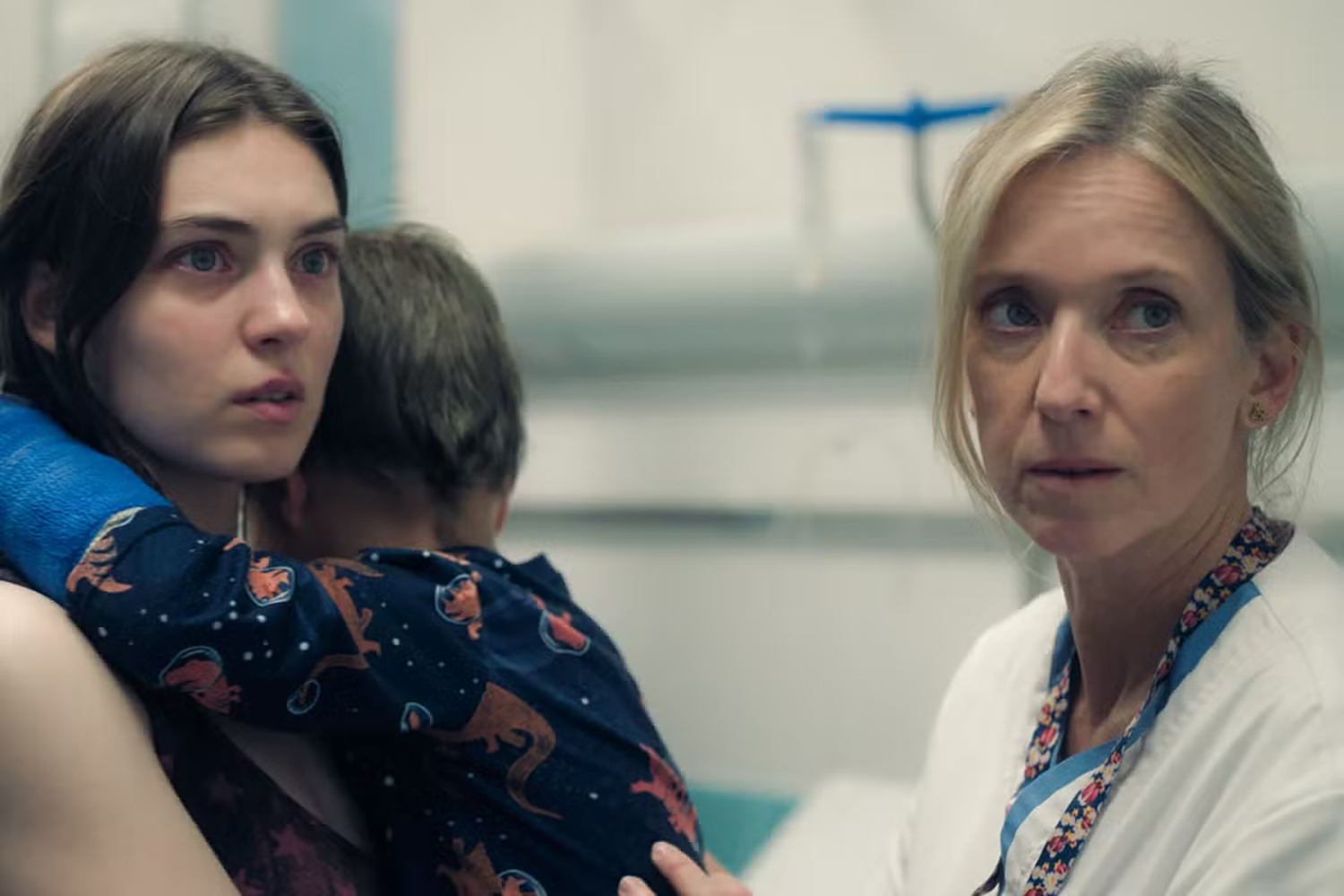
l’interet d Adam by Laura Wendel
Anamaria Vartolomei, Jules Delsart and Léa Drucker
The choice to showcase Adam’s Sake at the Villa Medici is no coincidence. Presented earlier at Cannes’ Critics’ Week, the film stages a harrowing confrontation between a mother and a pediatric nurse, where love, denial, and the rights of the child intertwine with unsettling force. Unlike familiar hospital dramas, Wandel creates a claustrophobic chamber piece, almost theatrical in intensity. Her camera trembles close to the skin of her characters: Drucker embodies an exhausted caregiver determined to navigate tragedy with resilience and compassion.
Wandel herself explained her process:
“I am drawn first to places, rather than characters. That is what gives me the desire to write.”
Immersing herself in the world of a children’s hospital, she observed not only the dedication of the medical staff but also the fragile balance between parents and caregivers—discovering, as she says,
“that the bond between parent and child is often decisive in healing.”
Yet the film also underlines the paradox: legal and preventive procedures sometimes clash with a child’s immediate needs. At its heart, the story elevates empathy—
“a fundamental value I wanted to place at the center of the film.”
The narrative dares to probe uncomfortable questions. Here, the mother, perhaps blinded by ideology, refuses to recognize the malnutrition weakening her child, whose fracture betrays a body in crisis. Between maternal devotion and unconscious harm, Wandel crafts a film that unsettles and demands reflection.
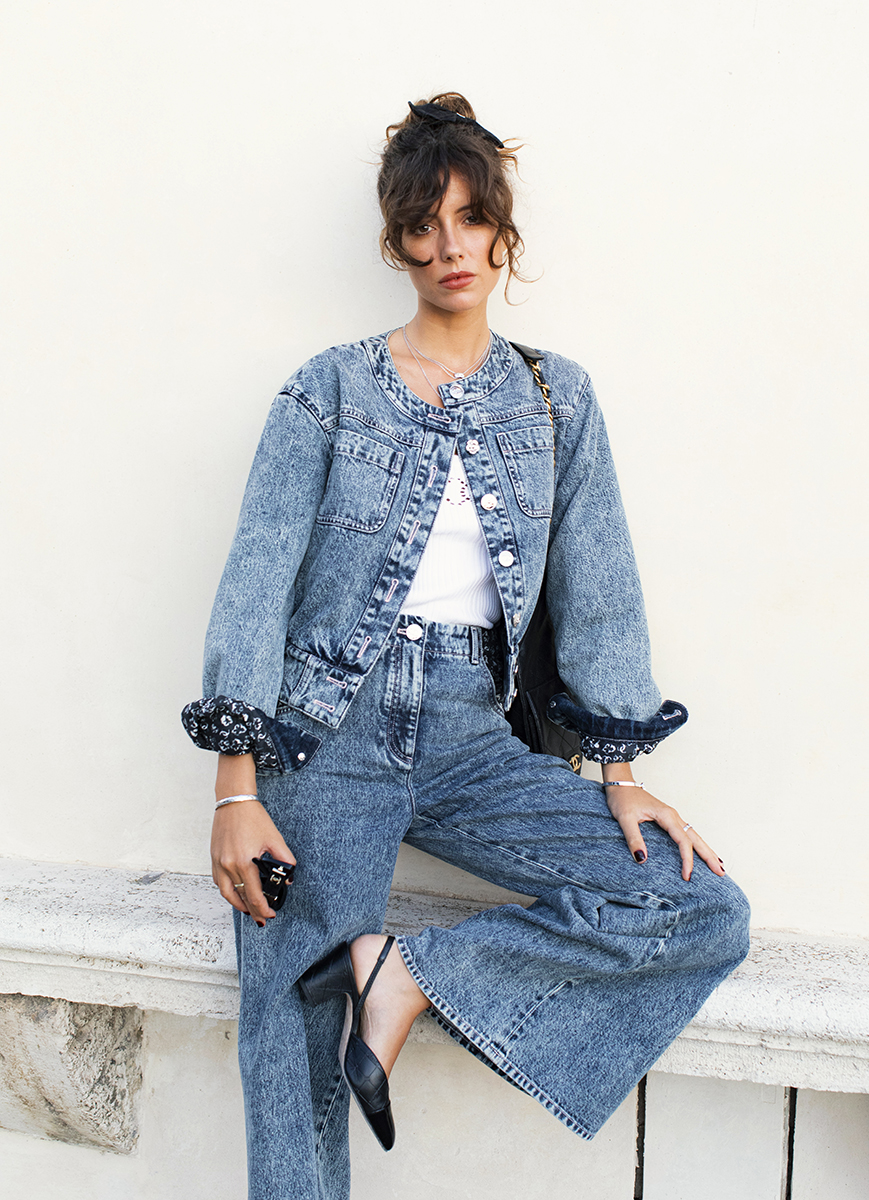
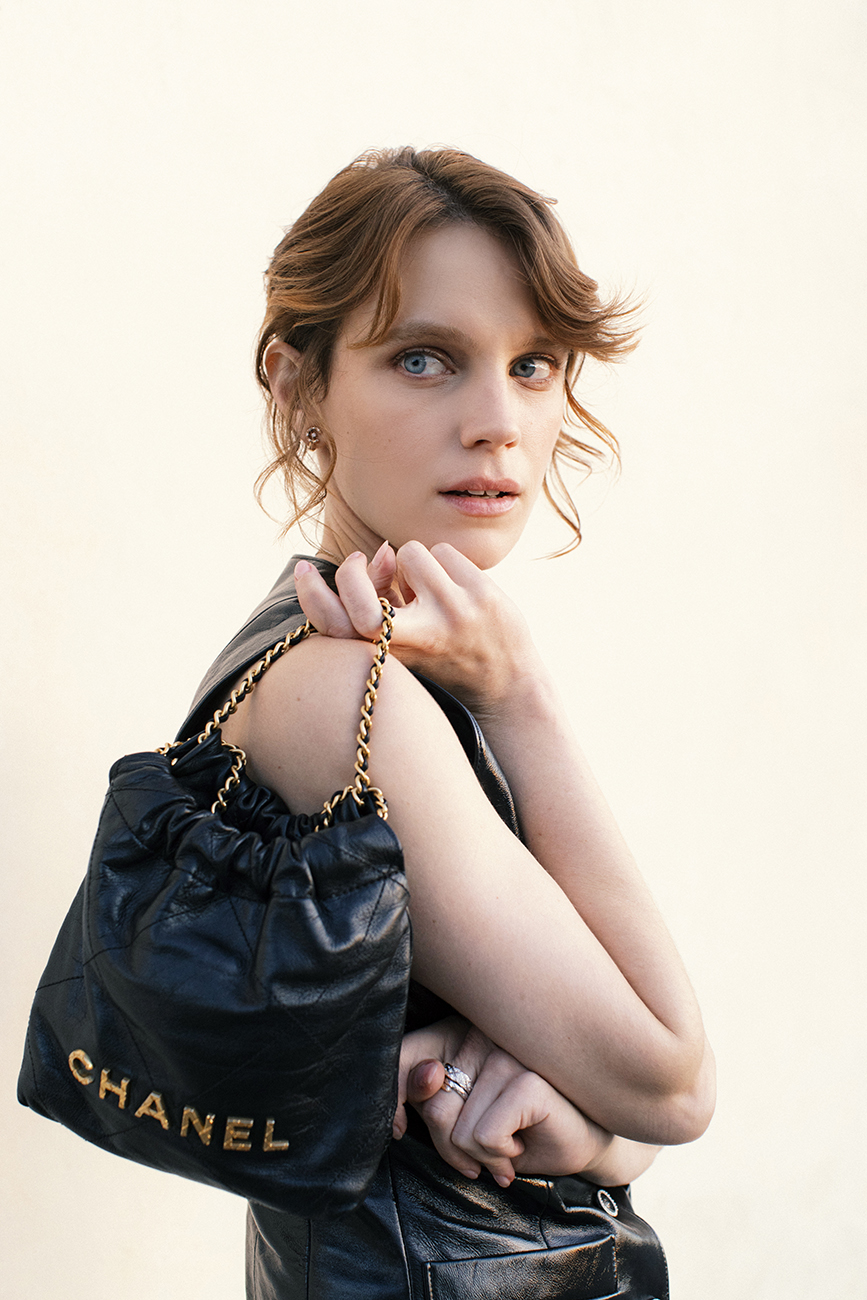
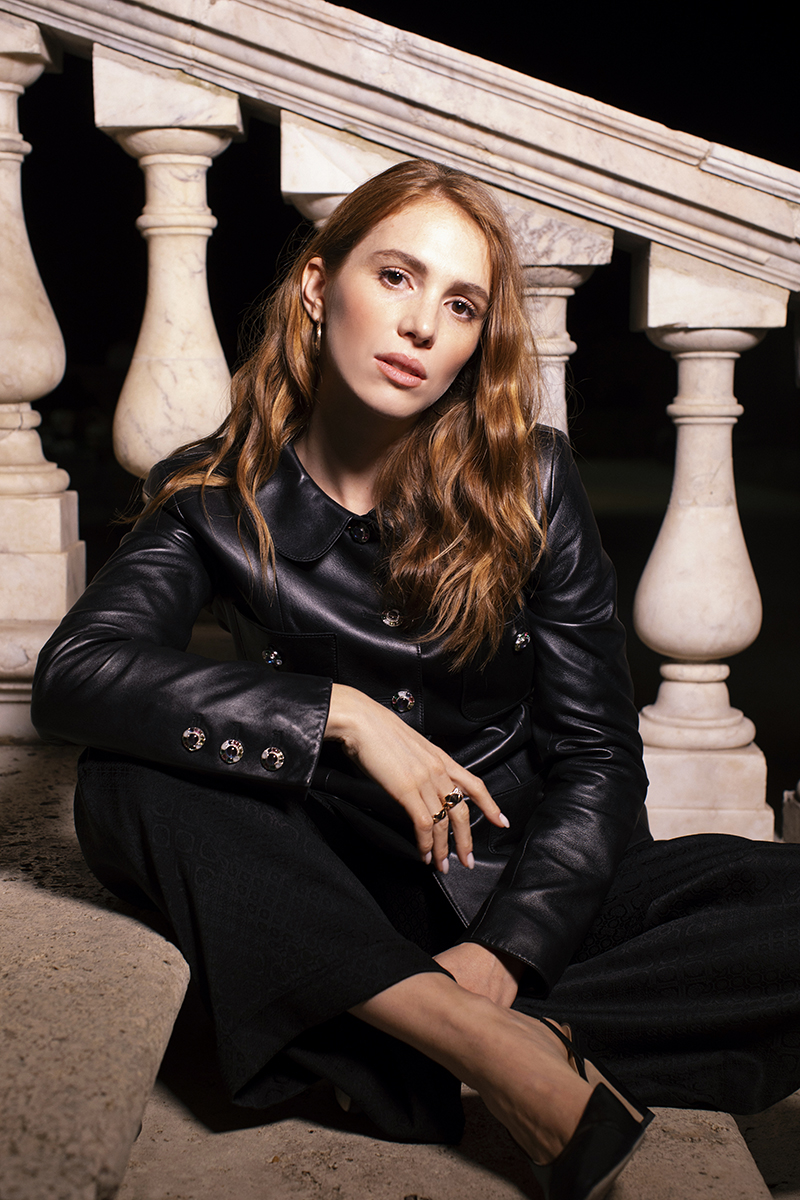
The screening drew a constellation of personalities – Celeste Dalla Porta, Carlotta Gamba, Ludovica Martino, Romana Maggiora Vergano, Sebastiano Pigazzi, Ginevra Francesconi – alongside young directors, costume designers, and residents of the Villa Medici, underscoring once again the festival’s role as a crucible for artistic dialogue.
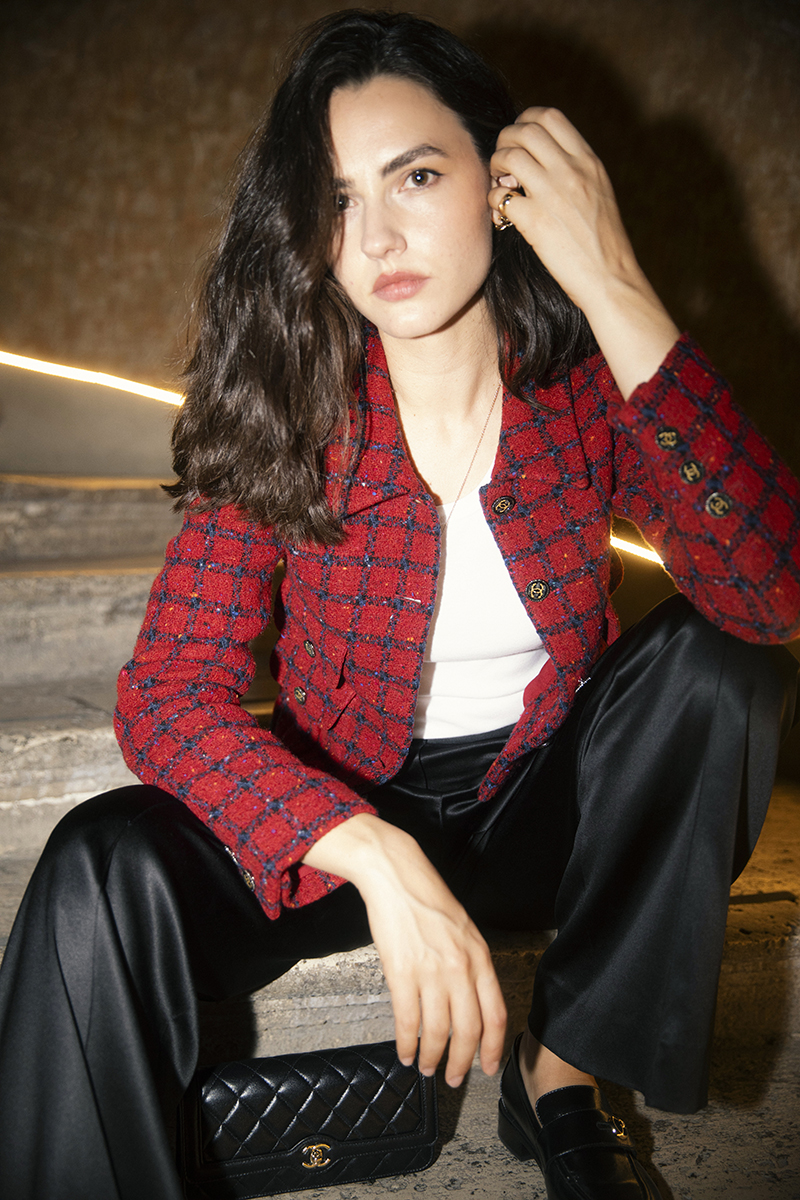
At the evening event, they wore CHANEL along with jewelry from the Coco Crush and Eternal N°5 collections by CHANEL Joaillerie.
The 2025 Villa Medici Film Festival competition assembled twelve singular works, each interrogating the evolving language of cinema. Among them, Gala Hernández López’s +10K dissected the lure of self-optimization and digital speculation, while Pauline Bastard’s Bonne Journée elevated the routines of second-hand shop workers into gestures of creation. Nguyễn Lê Hoàng Phúc’s Bury Us in a Lone Desert staged an improbable companionship between burglar and homeowner, and Haig Aivazian’s Children of Darkness reflected on artificial light in a city plunged into blackout. Caroline Poggi and Jonathan Vinel’s Comment Ça Va? imagined a coastline inhabited only by animals, an echo of post-human solitude, while Jocelyn Charles’s Dieu est Timide followed three passengers into a dreamlike journey by train. Igor Bezinović revisited the 1919 occupation of Rijeka in Fiume o Morte!, Danielle Dean’s Hemel traced a portrait of an English new town through the voices of its residents, and Lesley Loksi Chan’s Lloyd Wong, Unfinished reanimated the fragments of a Chinese-Canadian artist’s incomplete film into a renewed act of memory.
The 2025 Villa Medici Film Festival thus delineated the contours of a cinema in transition, attentive to fragility, unafraid of risk, and unwavering in the conviction that film endures as an art of revelation as much as confrontation. Each screening, set against the charged architecture of the Villa, unfolded as an encounter: across disciplines, across generations, across singular visions of the world.
This year’s awards crystallized that spirit. The Prize for Best Film was presented to Lloyd Wong, Unfinished by Lesley Loksi Chan, a moving gesture of collaboration across decades that reanimates the fragments of an unfinished film into a new act of creation. The Jury Prize honored Comment Ça Va? by Caroline Poggi and Jonathan Vinel, a work that destabilizes genre itself, where play, parody, and rupture become instruments of meaning.
In these two laureates, as in the program as a whole, the festival affirmed its distinct place on the European cultural map, not as a reflection of industry fashions, but as a space where cinema is wrestled back to its essence: a practice of thought, of sensitivity, of imagination.
Alexandra I. Mas, 2025