by
Alexandra i. Mas
From its opening frames, Ink offers a particular visual pleasure: the image appears to emerge from the very substance of print. Halftone dots, enlarged and exposed, remind us that for generations the photographs through which we saw the world were built from accumulations of tiny marks of ink. Step back, and the dots disappear. The image appears. The news becomes real.
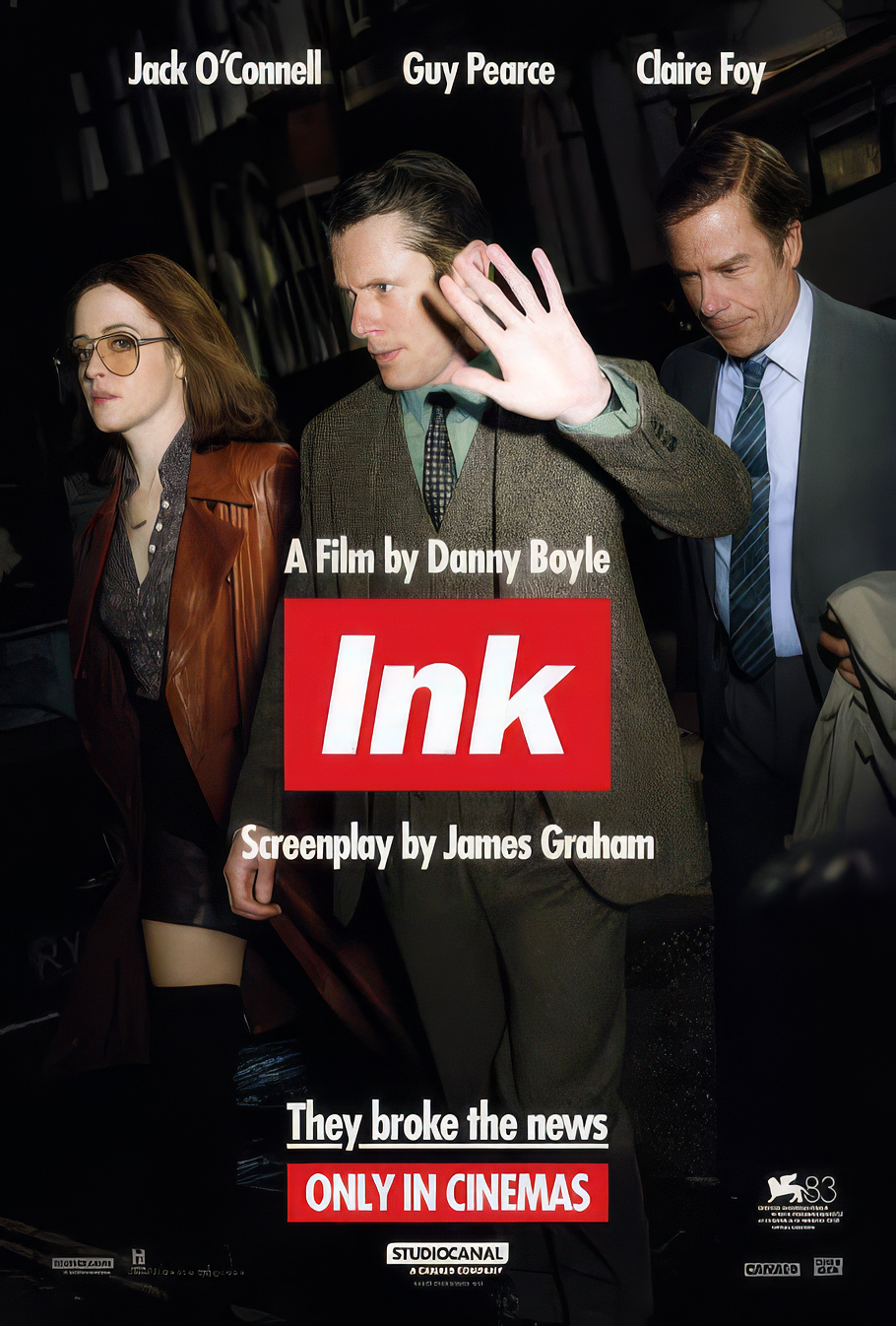
It is an astute beginning for Danny Boyle’s account of the reinvention of The Sun in 1969, when Rupert Murdoch and editor Larry Lamb took a failing newspaper and set about turning it into something louder, faster and infinitely more dangerous. James Graham adapted the screenplay from his own play, and Boyle transforms its essentially verbal material into something restless and fiercely visual. Ink was presented in competition as the opening film of the 83rd Venice International Film Festival.
The old questions of journalism are there from the beginning: Who? Where? When? What? Why?
But behind them lies another, more troubling question: what is a newspaper actually for? To educate or to entertain? The distinction seems almost innocent now. In Ink, we watch it become combustible.
Murdoch and Lamb understand that the newspaper they are inventing cannot simply report the world. It must seduce its readers into wanting to look at it. They want something loud. Something dangerous. Something sexy. Something fun. The gloves, in every sense, must come off.
And so a newsroom is assembled almost like a ship of undesirables: Fleet Street’s restless minds, difficult characters, gamblers, provocateurs and assorted journalistic misfits brought together under one roof. Boyle shoots their recruitment with the exhilaration of a heist film. They are not hiring journalists; they are assembling a gang.
Among them is Jules Davies, played by Claire Foy, a fictional composite inspired by women working in Fleet Street at the time. She enters a newspaper culture in which the female reader had too often been confined to recipes and domestic advice, and argues instead for pages concerned with what women were actually living: relationships, desire, sex, the private questions that respectable newspapers preferred not to print.
There is something genuinely exhilarating in this initial rebellion against the hypocrisy of the establishment. The new Sun wants to look where polite society has been trained not to. It wants a window onto the world rather than another solemn portrait of how the world ought to behave.
Its formula gradually becomes brutally simple: win, free, love. And above all: keep things fresh.
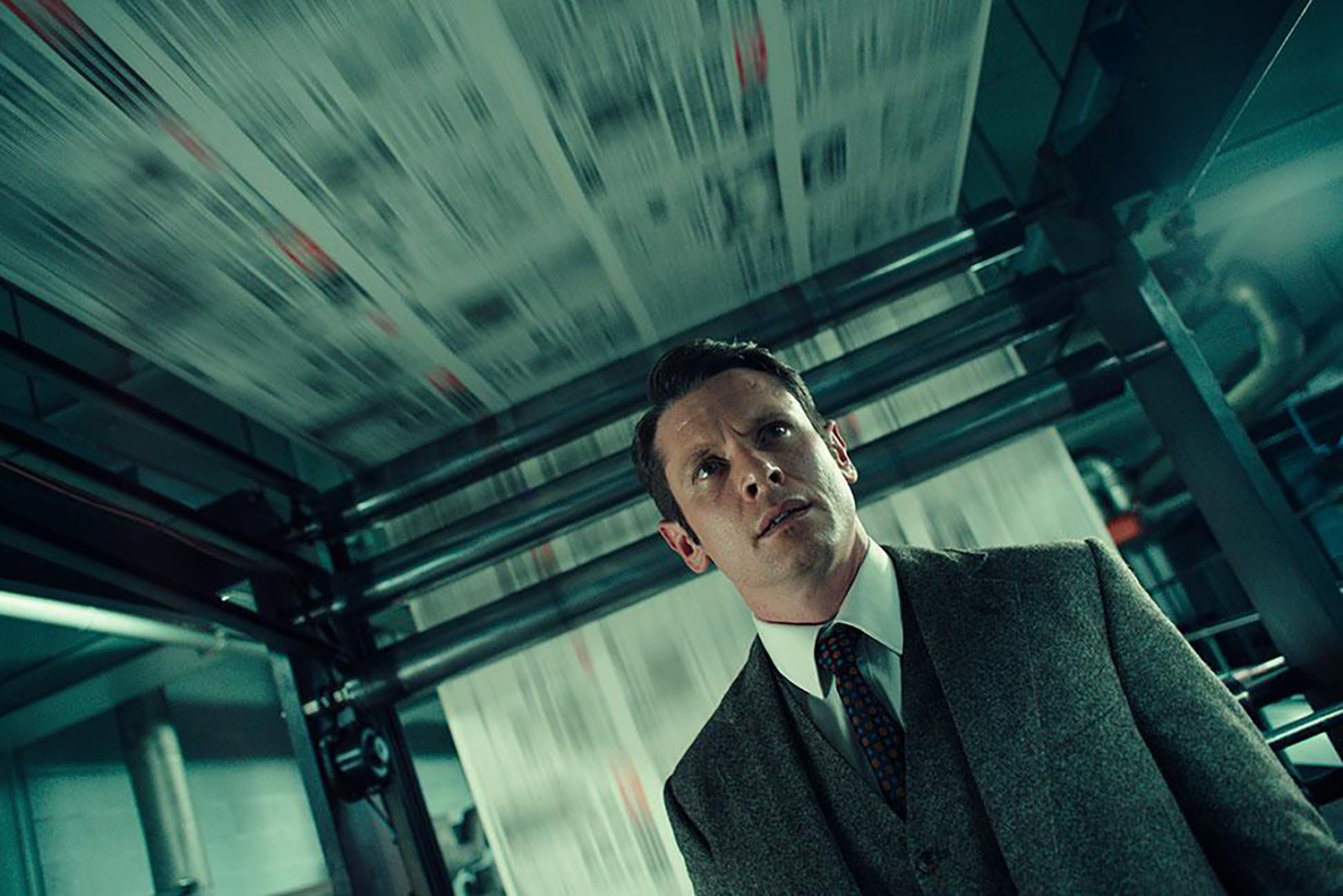
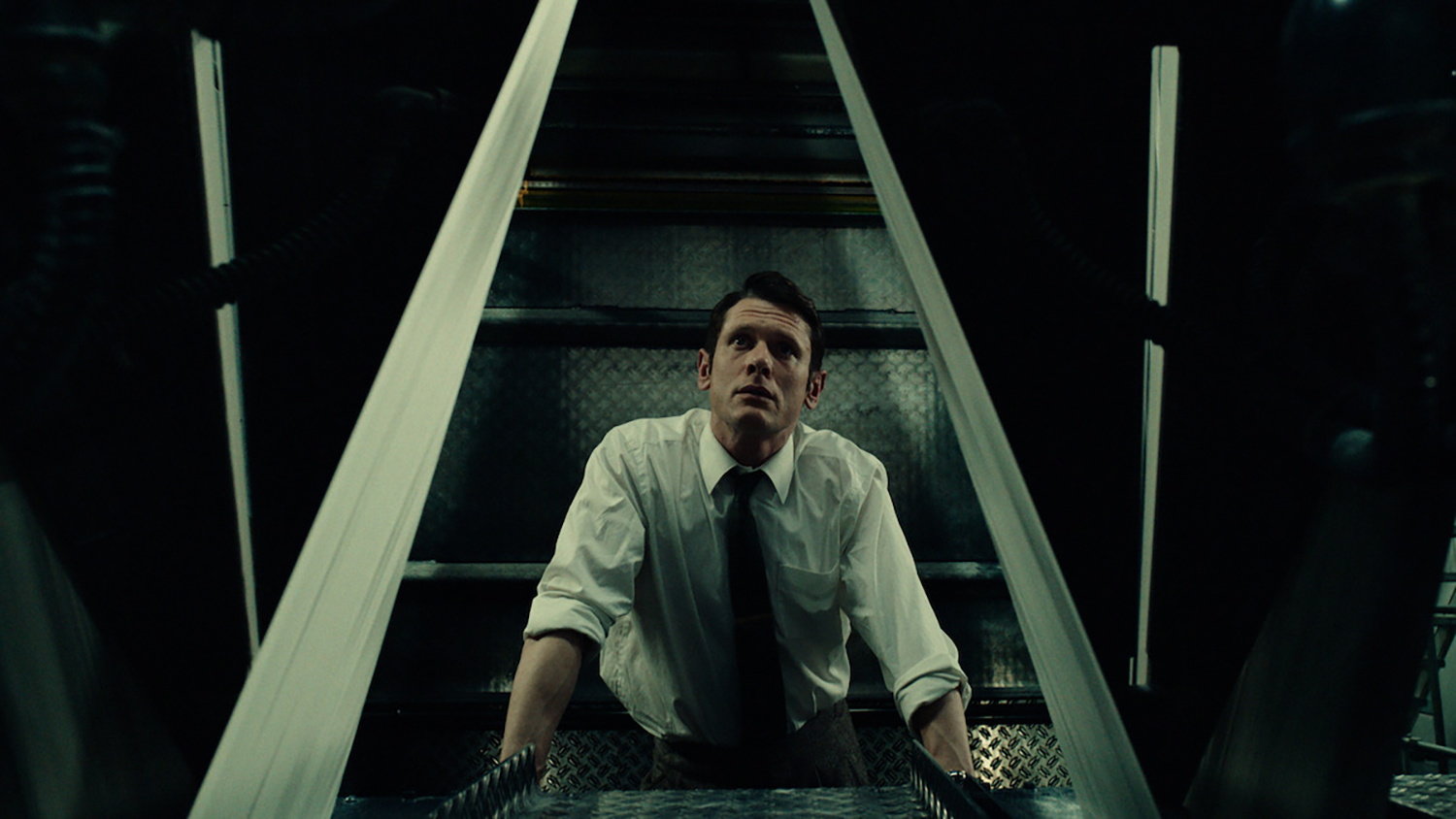
Boyle understands that such a revolution could never be told through dialogue alone. The cinematography of Alwin H. Küchler is one of the film’s great pleasures. At moments, the frame seems less composed according to the conventions of cinema than designed according to the magnificent graphic language of post-war print: severe crops, diagonals, enormous faces, blocks of type, saturated contrasts and images broken into halftone grain.
There are shots that could almost have escaped from a poster of the late 1960s.
This is where Ink becomes particularly beautiful. Photography, typography and cinema begin to contaminate one another. Faces become headlines. Bodies become layouts. The newsroom, a porter composition. Boyle does not simply reconstruct the period; he borrows its graphic grammar.
And that grammar matters, because The Sun understood something fundamental: before a reader can think about an image, the eye must first be captured by it.
The same principle governs Boyle’s film. Yet underneath all this glorious visual insolence lies the question Ink cannot escape. Once journalism discovers that entertainment sells, where does entertainment stop and information begin?
The men who wanted to tear down the decorum of the establishment were also constructing a machine capable of turning intimacy into merchandise, desire into circulation and scandal into power. The exhilarating freedom of saying what others would not say gradually acquires another face: the necessity of finding something still louder tomorrow.
And suddenly the story of a newspaper born in 1969 feels remarkably close to our own. Long before clickbait, social media and the endless hunger of the algorithm, the mechanism was already there. Capture the eye. Provoke the emotion. Make them turn the page. Then make them come back tomorrow.
Boyle has made a film about the Sun’s ink. But what stains the fingers here is something much more difficult to wash away.