by Alexandra I. Mas
There are lives in which art arrives as a revelation. In François Reboul’s, it seems more like a return. At fifteen, he wanted to be an artist. Fascinated by Abstract Expressionism and the New York School, he travelled to New York, already drawn towards a language of gesture, freedom and raw pictorial energy. Then he chose another path, perhaps an even more vertiginous confrontation with life itself, medicine. For fifteen years in Paris, Reboul worked in some of its most demanding hospital departments, from severe burns to paediatric cancer, before specialising in oncology. He later left for Stanford and, on returning, created his own hospital in the south of France. It was, he recalls, an extraordinarily demanding and passionate professional life. A life spent fighting cellular chaos.
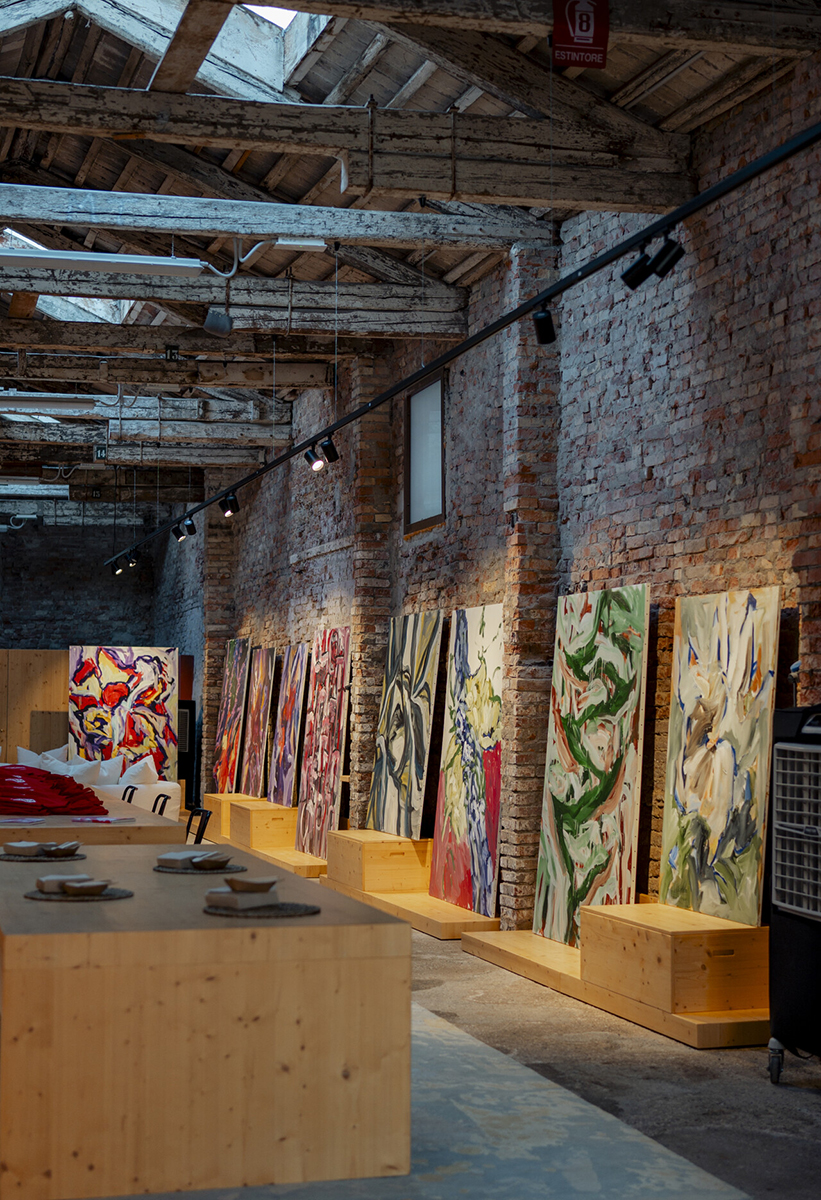
Today, in an old boat garage opening directly onto a Venetian canal, that struggle has changed its substance. The cells have become colour. The body has become time itself. And chaos remains.
“I spent my whole life fighting cellular chaos. Now I fight pictorial chaos.”
It is difficult to imagine a more precise key to François Reboul’s work.
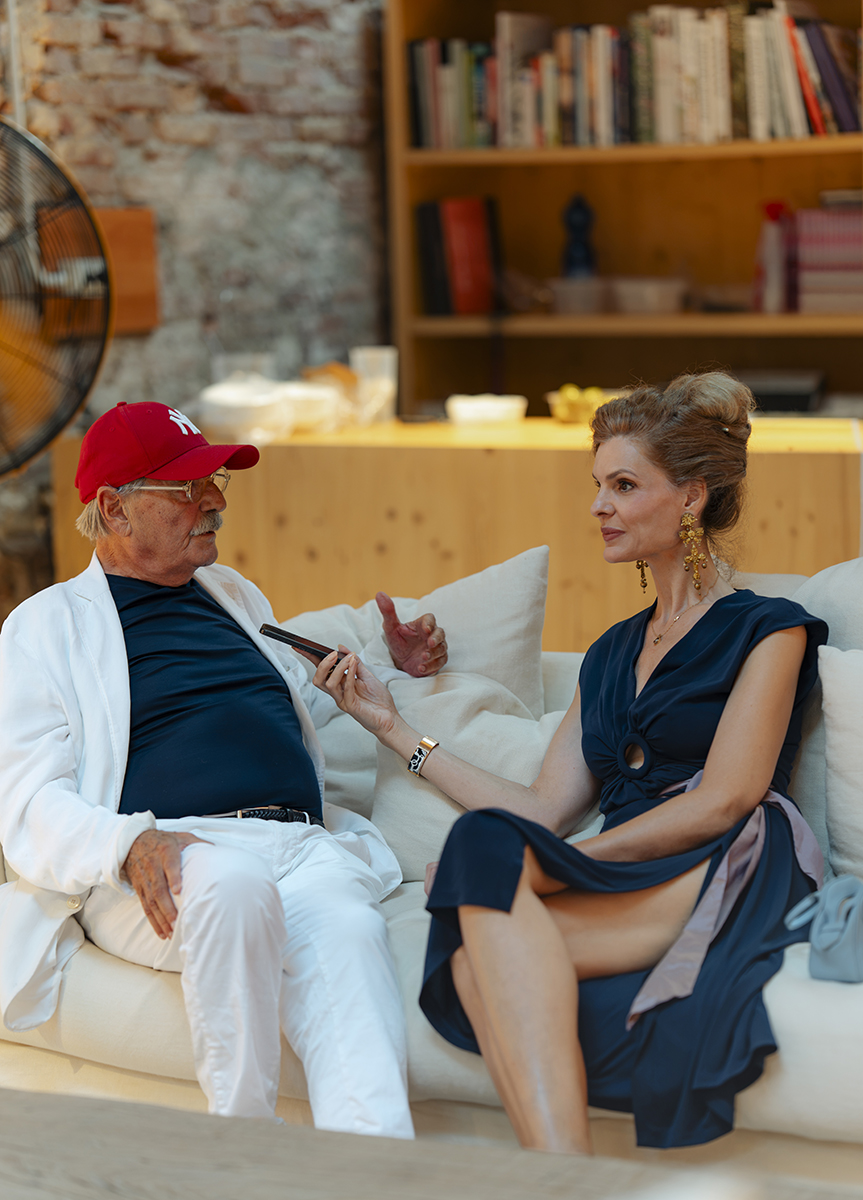
Alexandra Mas & François Reboul
From Cellular Chaos to Pictorial Chaos
Every painting begins, he explains, with disorder.
“Each time I start a painting, I first create chaos. Then I fight against it, or transform it, until I find a form of serenity.”
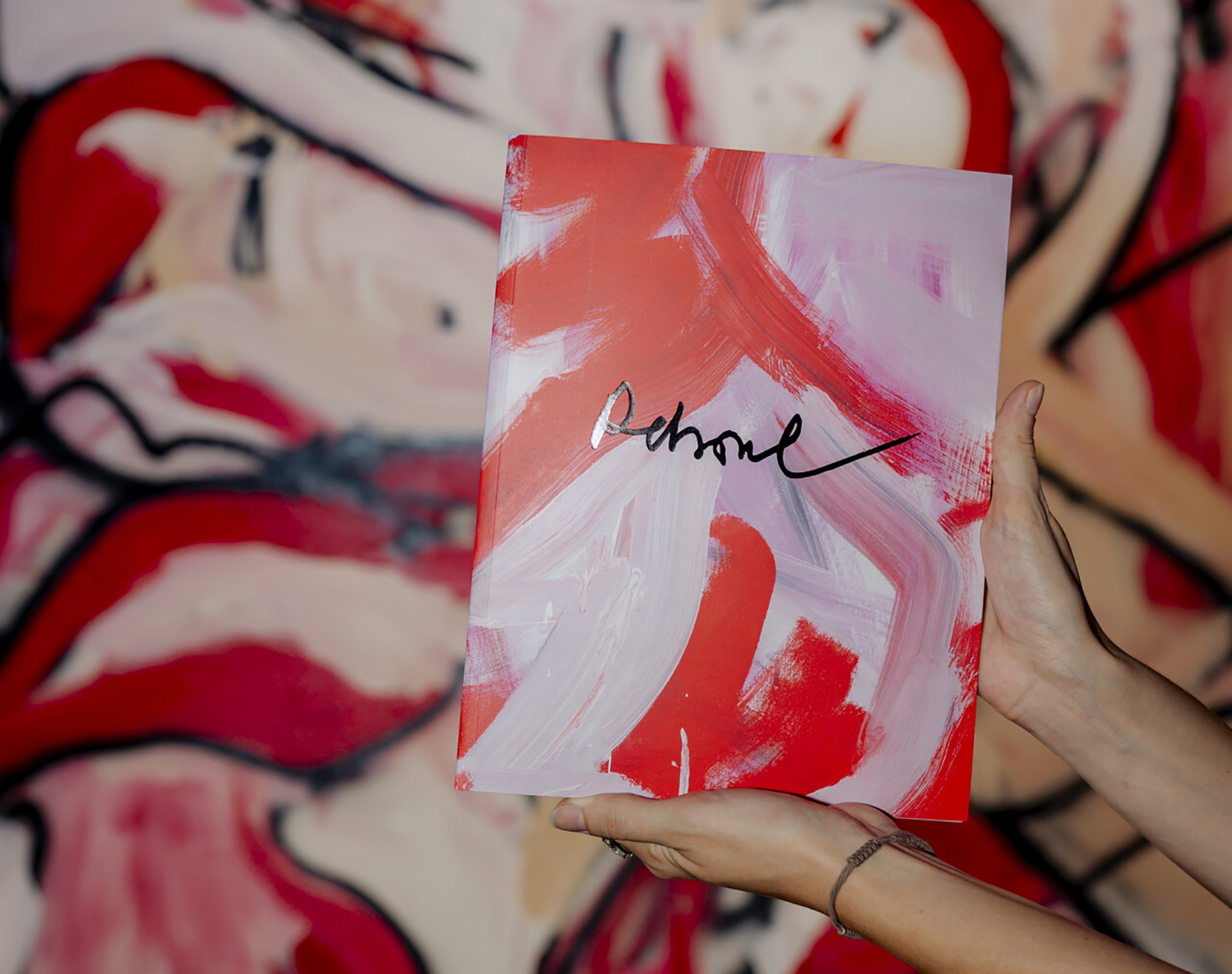
The process is less a question of imposing order than discovering something within instability. Gesture accumulates. Colour collides. Forms appear, resist, disappear. The painting becomes a territory of confrontation until, somewhere inside the turbulence, an equilibrium emerges. Reboul invokes Nietzsche: one must carry chaos within oneself to give birth to a dancing star. He waits for that star in every painting.
“Each painting is an adventure.”
The connection between his former and present lives is tempting to romanticise, but it is more interesting than a simple conversion from science to art. Medicine taught Reboul to confront systems whose apparent disorder conceals extraordinarily complex internal mechanisms. Painting gives him another arena in which unpredictability must be observed, challenged and ultimately transformed. The objective is no longer to defeat chaos. It is to transfigure it.
Venice, Finally
Venice, too, is the consequence of a long return, as for years, every visit prompted the same thought: Why not live here? Retirement initially took Reboul elsewhere. After leaving medicine in 2010, he and his wife Sissi travelled extensively before settling in England, where friendships had long anchored him to London. But after close to a decade, another move began to impose itself. They returned to Venice.
Six years ago, Reboul found a house with a garden in Castello. Then came another encounter: this old boat garage from the previous century, untouched enough to still carry the marks of its former existence. Its owner intended to renovate it completely. Reboul stopped her. “No, no. Leave it exactly as it is.” Today it is his studio.
Part workspace, part viewing room, almost a private gallery, it sits at the edge of a canal, an unusually appropriate place for a painter preoccupied with movement and transformation. And Venice has introduced another presence into the studio. Emilio Vedova.
“I have the impression that he is here with me in the studio, telling me: ‘Don’t do that!’”
Reboul is currently writing a tribute to the Venetian master, examining both Vedova’s importance to his work and the distance between their respective practices. The lineage matters, but so does emancipation from it. Reboul describes his trajectory simply: he began with the New York School, arrived at Vedova, and is now finally on his own path. That final movement is perhaps the most important. Influence becomes interesting only when it ceases to be imitation.
The Emotional Temperature of a Painting
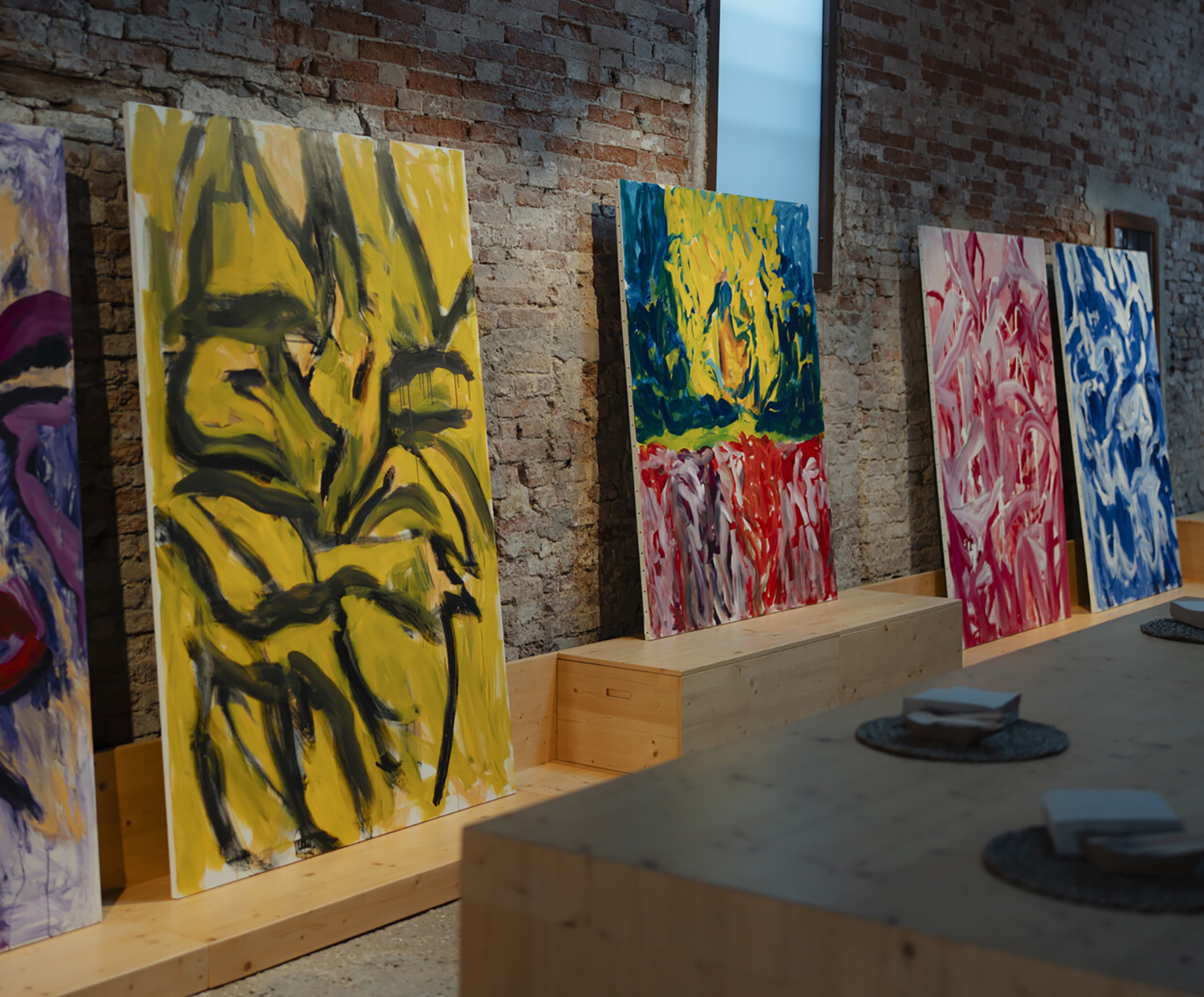
Standing among Reboul’s works, their differences are striking. Some are unexpectedly serene. Others seem to contain a scream. The contrast is never predetermined. For Reboul, every canvas is a journey whose point of departure depends upon the emotional and psychological state in which he begins it.
“When I am scandalised by what is happening in the world, wars, famine, death, sometimes I make quite hard paintings. And when I feel well, I make softer ones.”
The canvas therefore absorbs an emotional temperature without becoming illustrative. There are no narratives to decode, no event translated literally into image. What remains is pressure: anger becoming gesture, disturbance becoming density, tranquillity opening space.
Basquiat is another artist Reboul openly admires, having followed his exhibitions for many years. At moments, one can perceive distant echoes, that urgency, that mark-making, an almost physical insistence upon the surface. Yet these references now belong to a broader pictorial vocabulary that Reboul has increasingly made his own. This may also explain why serenity in his work should not be confused with calmness. It is something earned. It exists only after chaos.
From Chaos to Freedom
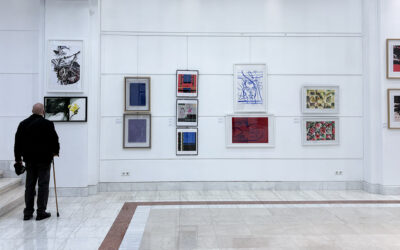
That progression finds an appropriate title in From Chaos to Freedom, his current exhibition that you can visit both in Spazio San Vidal, Campo san Zaharia, Venice, and in his intimate atelier gallery. The phrase could equally describe the internal mechanics of his practice. Freedom does not arrive through the absence of disorder but through the act of moving through it. Reboul creates instability deliberately, then works inside it, controlling it where necessary, surrendering to it elsewhere, waiting until the painting begins to establish its own logic.
Among his recent explorations are large diptychs reaching approximately 2.60 metres across. Around twenty-five have already been created, although much of this body of work remains deliberately unseen, reserved for a future presentation.
There is something revealing in that restraint. After a professional life defined by extraordinary responsibility, Reboul appears remarkably uninterested in treating painting as another career to be conquered. Showing the work matters. But it is not the objective.
“My principal goal is to paint. And to progress in my painting.”
The distinction is essential.
Sublimating Chaos
Perhaps this is why François Reboul’s story should not be read as that of a doctor who retired and became an artist. The chronology is correct. The meaning is not. The artist was there first, at fifteen, looking towards New York. Medicine gave him something no art school could have provided: an intimate knowledge of fragility, disorder, survival and the extraordinary tension between destruction and life.
Now Venice gives him the space in which those experiences can be transformed. Not represented, not explained, but transformed. His studio on the canal becomes the unlikely point at which a teenage fascination with Abstract Expressionism, decades of oncology, the ghosts of the New York School, the presence of Vedova and the emotional turbulence of the contemporary world begin to coexist.
Reboul speaks of his future with striking simplicity. He wants to live in Venice. He wants to paint. Above all, he wants to continue exploring what he calls his metaphysics of chaos. How do we control chaos? How do we transform it? And, ultimately, how do we sublime it? After a lifetime spent confronting chaos in the human body, François Reboul no longer needs to cure it. He allows it onto the canvas, and waits for the dancing star.
photos courtesy of the artist, by ©IZago