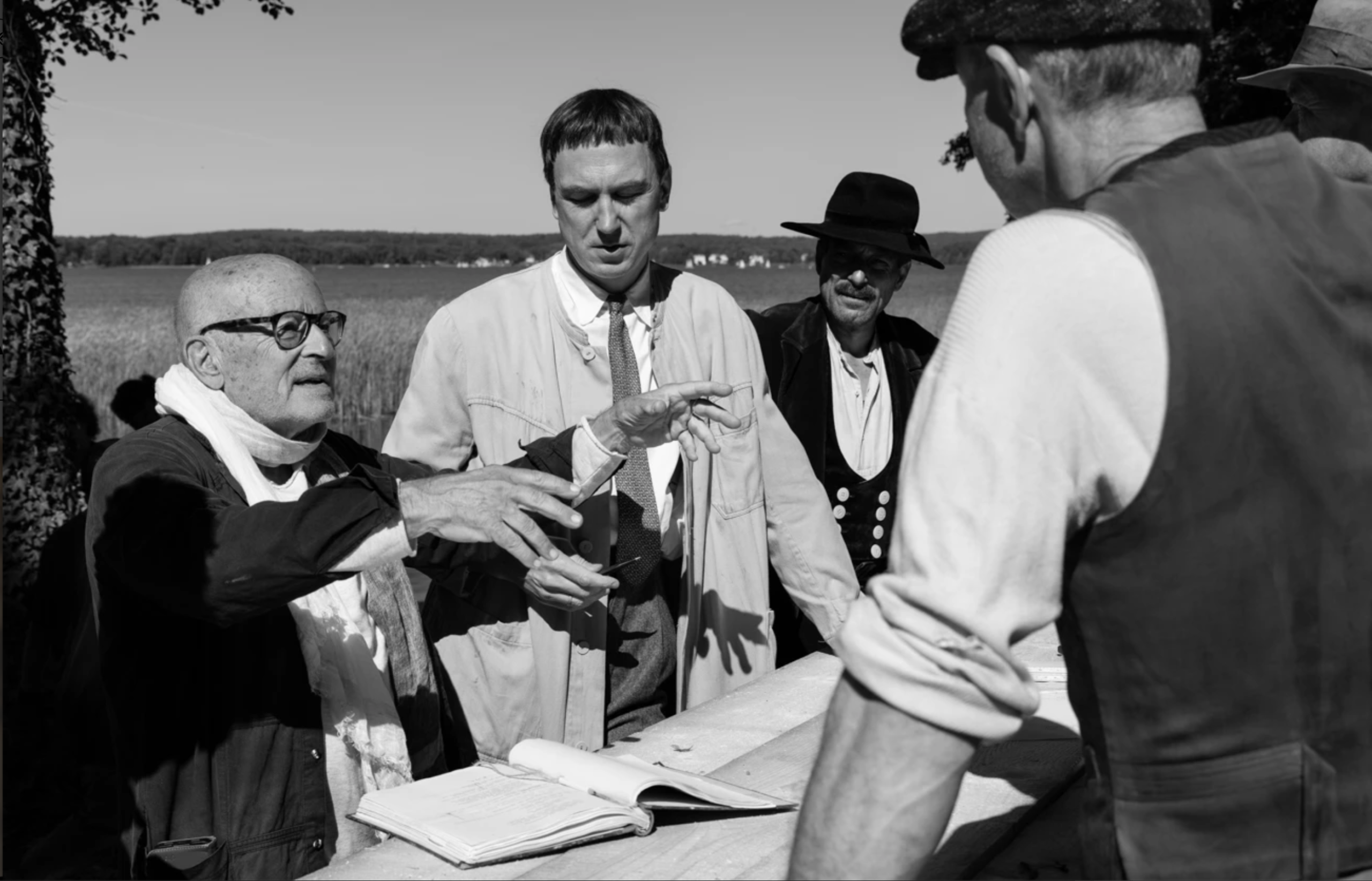
photo © Ann Ray
The House That Watched the Century Pass
by Alexandra I. Mas
With Visitation, presented at the Cannes Film Festival, Volker Schlöndorff returns to the territory that has haunted his entire cinema: the fragile point where private lives collide with the force of political systems and historical upheaval.
Nearly fifty years after receiving the Palme d’Or for The Tin Drum, Schlöndorff arrives in Cannes with a film of remarkable serenity and lucidity. HEIMSUCHUNG (Visitation) carries the weight of a lifetime spent observing how ideologies move through human existence while places endure across generations.
At the centre of the film stands a house near a lake outside Berlin. But before the house comes the forest, older than memory itself, and the lake, perhaps the true protagonist of the film. From the very first scene, where generations appear superposed within the mist, Schlöndorff offers the key to his work. Time here is layered rather than linear. Human lives drift across the landscape like temporary passages.
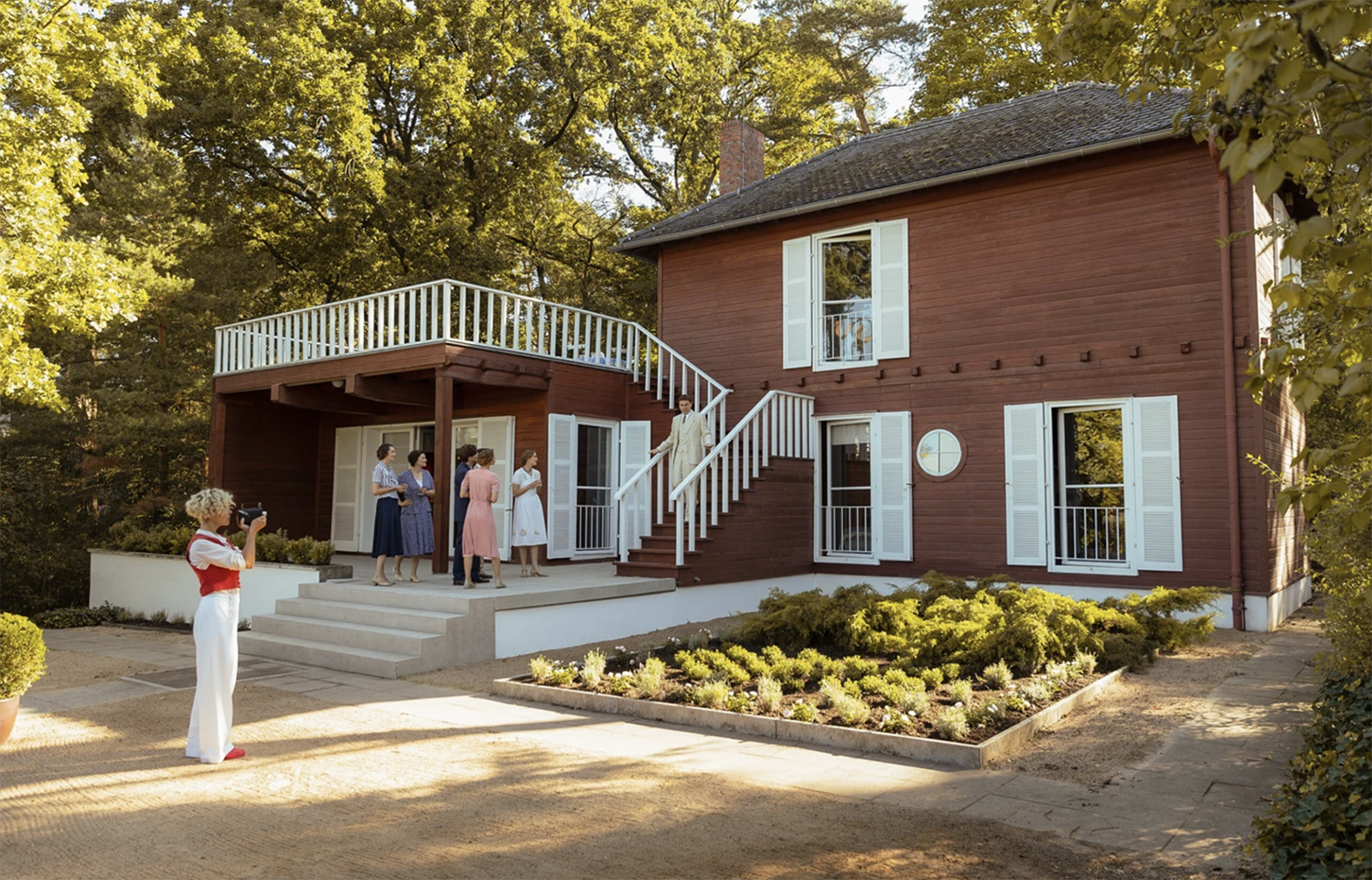
Then enters the house. Not simply a house, but a home built to endure, carrying within itself an ideal of harmony, cultivation and human dignity. Families inhabit it, abandon it, inherit it and lose it. Through its rooms passes an entire century of European fracture. Bauhaus idealists searching for renewal within socialism. A Jewish family whose disappearance leaves an indelible trace upon the place itself. The wheel of history turns endlessly; ownership changes, and with it the very meaning of ownership, a socialist German writer returning from Soviet exile is attributed the house by the lake. Entire generations arrive carrying dreams repeatedly reshaped by history.
Yet the true protagonist gradually emerges elsewhere.
The place itself.
The forest.
The lake.
The garden.
The rhythm of seasons.
The camera lingers there patiently, and time itself seems to stop. Humanity appears at its most beautiful precisely within these suspended moments: the orchard, the snow, the silence over water, summer light filtering through trees. The film breathes through these contemplative passages.
History enters indirectly: through archival fragments, distant bombardments, radio voices, changing administrations, new systems replacing old certainties. Beyond the frame, wars unfold and regimes collapse. Inside, life continues with unsettling calm. Meals are served. Trees are planted. Children grow. Snow returns each winter with complete indifference to ideology.
This tension gives the film its extraordinary emotional precision.
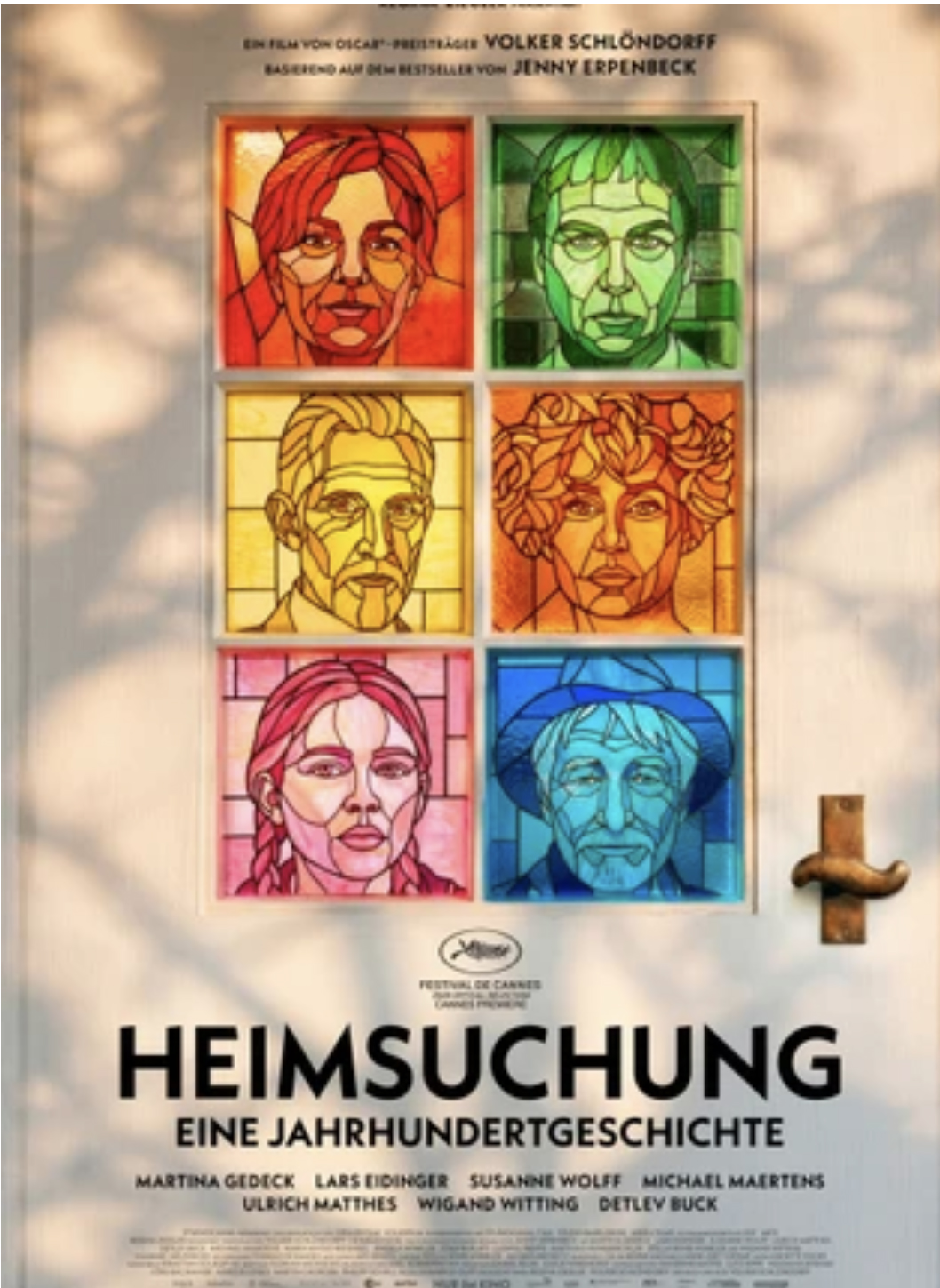
Across successive political eras, cultivated and often deeply idealistic individuals adapt with bothering fluidity to each new system. Every regime arrives carrying promises of justice, order or progress. Each produces its beneficiaries. Schlöndorff observes these moral accommodations with immense subtlety. Violence remains largely outside the frame, while compromise settles quietly into the domestic fabric of the house itself. And even when violence reaches the house, the place absorbs and protects in strange upheaval, as though shelter itself possessed memory.
The film unfolds as a meditation on opportunism, inheritance and the fragility of ideals. Then comes the sentence that lingers over the film like a final curtain:
“We did too much and not enough.”
Spoken by a communist intellectual who knows how to navigate for her own interest the very structures she once believed in, the phrase carries the exhaustion of an entire century. Within it echoes the collapse of ideals alongside the tragic persistence of human blindness.
And yet the film breathes with profound tenderness. Schlöndorff continuously returns the viewer toward elemental anchors: water, sky, silence, gardens, snowfall, summer light over the lake. Long contemplative sequences restore the sensation of temporal continuity beneath political violence. These images form the emotional architecture of the film. They remind us what civilisation was meant to preserve.
At the centre of this quiet metaphysics stands the gardener.
An ageless, wordless figure drifting through decades untouched by chronology itself. He plants, repairs, cultivates and observes. The inhabitants barely acknowledge him, yet they depend upon him with deep and quiet respect, as though he belonged to another dimension of time altogether. Schlöndorff described him almost as a floating presence, opening the film toward fable and metaphysical reflection.
The gardener becomes permanence itself.
Visually, Visitation unfolds through a remarkable fusion of fiction and archive. Historical footage enters the narrative like memory surfacing through matter. Time loosens. Personal destinies and collective history begin inhabiting the same emotional landscape. Schlöndorff approaches history through domestic space, through gestures, habits and seasonal returns, through the fragile persistence of beauty during periods shaped by ideological certainty and political collapse.
The house absorbs everything, the forest remains, the lake remembers. History passes through like weather.