
by Alexandra I. Mas
In an era of economic uncertainty and shifting cultural tides, the Art Basel and UBS Survey of Global Collecting 2025 arrives as a signal. Commissioned by two pillars of the art world, the survey draws on 3,100 high-net-worth individuals (HNWIs) from ten key markets — from the US and UK to Mainland China, France, Japan, Brazil, and beyond — to map emerging trends in collecting up to mid-2025.
The Fair and the City
From October 24 to 26, Art Basel Paris returns to the Grand Palais, reaffirming the French capital as the world’s beating artistic heart. 206 galleries from 41 countries will converge beneath the glass nave into this breathtaking intersection of commerce and culture. Among them, 25 newcomers (including Crèvecœur, Jan Kaps, David Nolan Gallery, and Stevenson) mark the fair’s growing plurality of voices. Over a third of exhibitors have spaces in Paris, and hundreds of participating artists maintain close ties to the city. Paris remains what it has always been: a meeting ground for the avant-garde and the refined, a crossroads of ideas where the dialogue between past and present never ceases.
The fair unfolds across three distinct sectors:
Galeries, the core program, spans 20th-century masters to ultra-contemporary figures;
Emergence brings radical new projects from rising artists;
Premise expands art history’s frame with curatorial propositions that reach even before 1900.
Beyond the Grand Palais, the Public Program — supported by Miu Miu — activates the city. Highlights include Mouna Mekouar’s exhibition in the Jardin des Tuileries (in collaboration with the Musée du Louvre) and the Conversationsat the Petit Palais, where artists, curators, and thinkers will debate the evolving language of art. The two-day experiment Oh La La! invites galleries to rehang their booths mid-fair, a playful challenge to curatorial convention.
As Paris’s institutions — from the Fondation Louis Vuitton’s Gerhard Richter to Otobong Nkanga at the Musée d’Art Moderne — open landmark exhibitions, the fair becomes more than an event: it is the pulse of a city that never stopped speaking art’s language.
Generations and Gender Unbound
One of the survey’s most revealing outcomes is the rise of younger and female collectors. Millennials and Gen Z now represent 74% of respondents, bringing new appetites and ethics. Younger buyers extend beyond traditional art forms into digital, film, design, and lifestyle objects, while women collectors — particularly from these generations — outspent men by 46% in 2024, often favoring works by women artists. Their portfolios are bolder, less conventional, driven by conviction rather than caution.
A Values-Driven Market
As Paul Donovan, Chief Economist at UBS, notes, the great wealth transfer is not only economic but moral.
“Younger generations and more women are shaping collecting choices that reflect personal values and social awareness.”
Art Basel Paris mirrors this new order: reflective, cross-disciplinary, and deeply human.
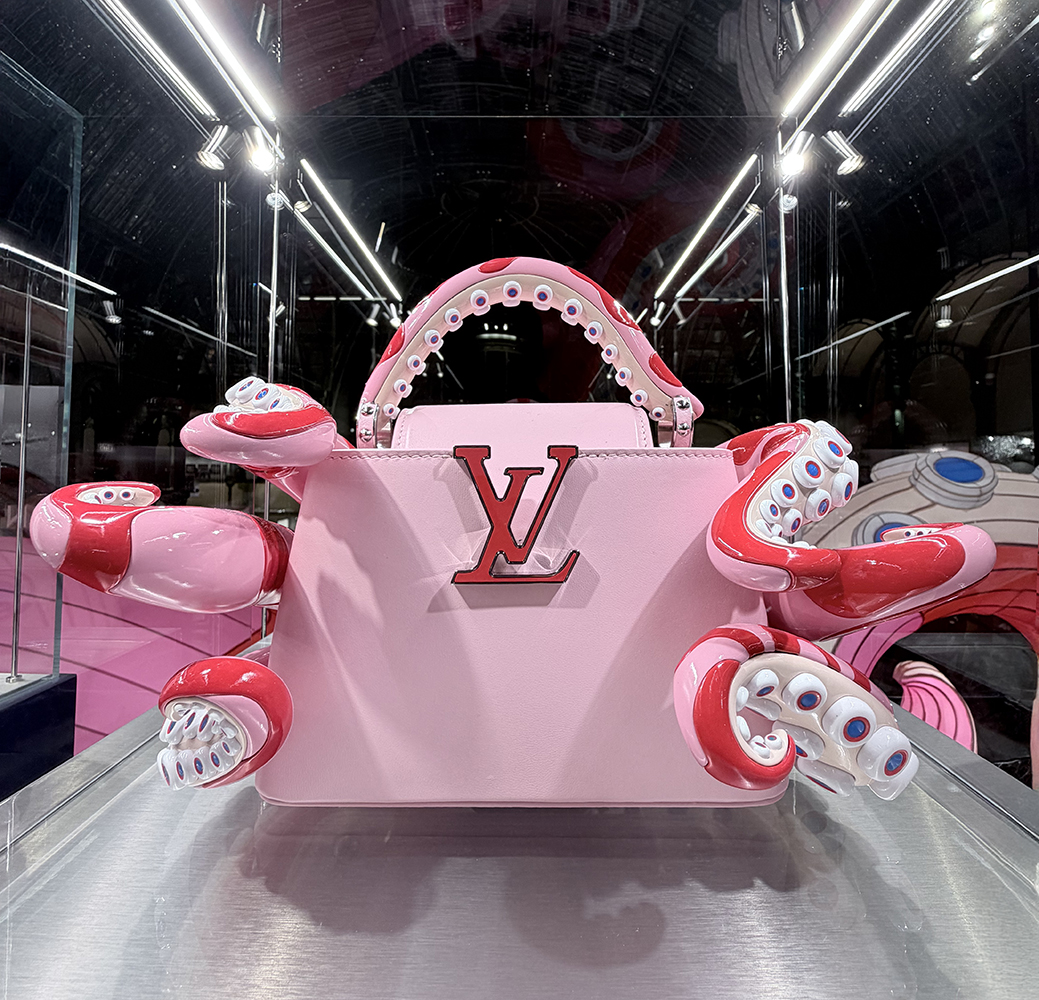
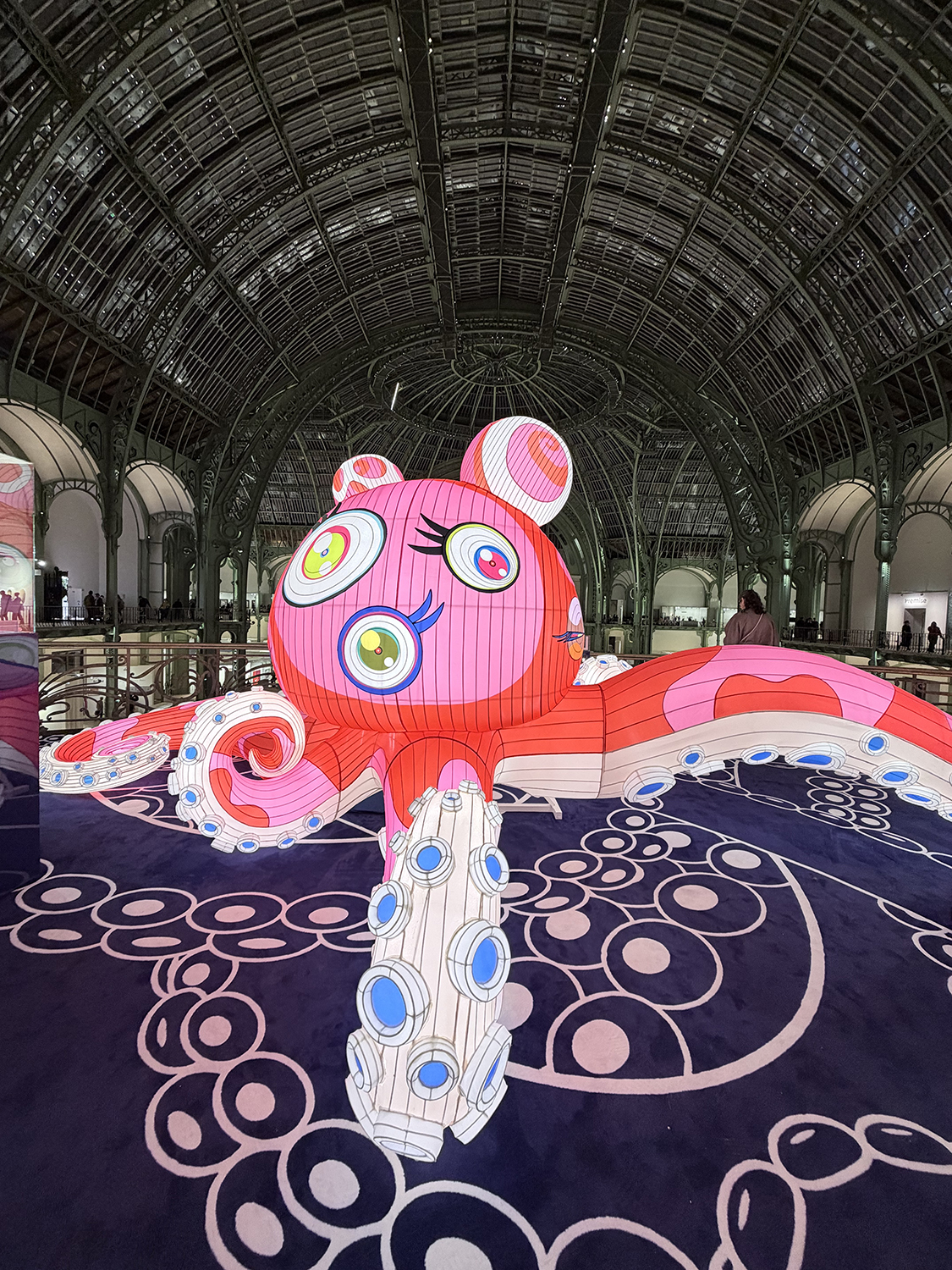
Takashi Murakami x Louis Vuitton — Artycapucines 7th Edition
Photographs by Marco Tassini
Takashi Murakami brings his irreverent universe to life with an immense, pink, tentacular creature, a playful guardian of Louis Vuitton’s Artycapucines Collection.
Murakami’s creation is both playful and subversive, fusing kawaii innocence with postmodern critique. His Capucines, adorned with curling tentacles, becomes a surreal hybrid, part luxury object, part living artwork. Within the grandeur of the Grand Palais, Murakami reaffirms his position as a master of joyful excess, where fashion, art, and the subconscious intertwine in luminous chaos.
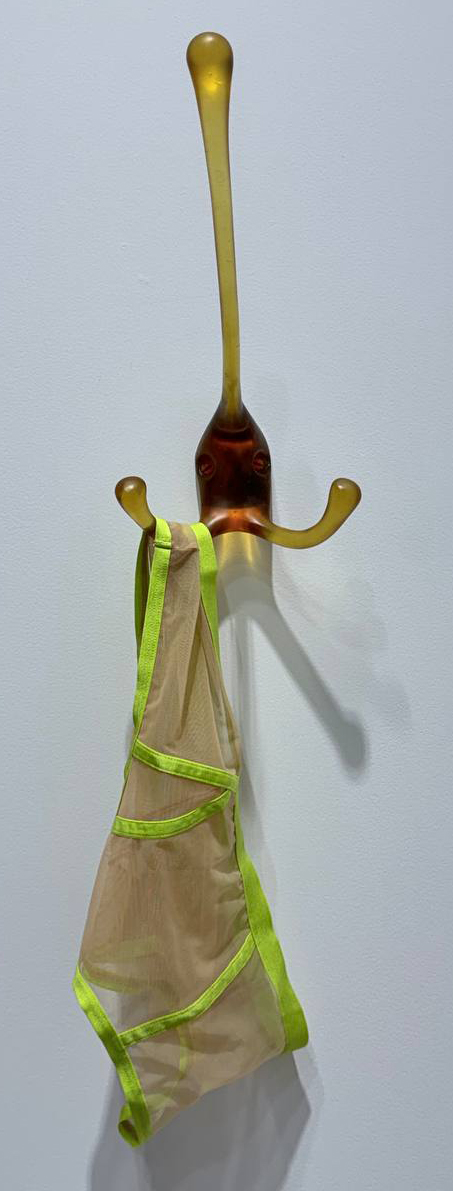
Monica Bonvicini, Hot, Chill & Feisty Daffodil Yellow (2025) — single cast, cold-worked glass and textile, courtesy of Petzel Gallery. Photography by Marco Tassini
It’s a striking piece: the sensual fragility of glass confronting the ordinary intimacy of the hanging fabric, a meditation on domesticity, gendered gaze, and the coded language of desire. Bonvicini continues her long exploration of how architecture and everyday objects become instruments of power and exposure.
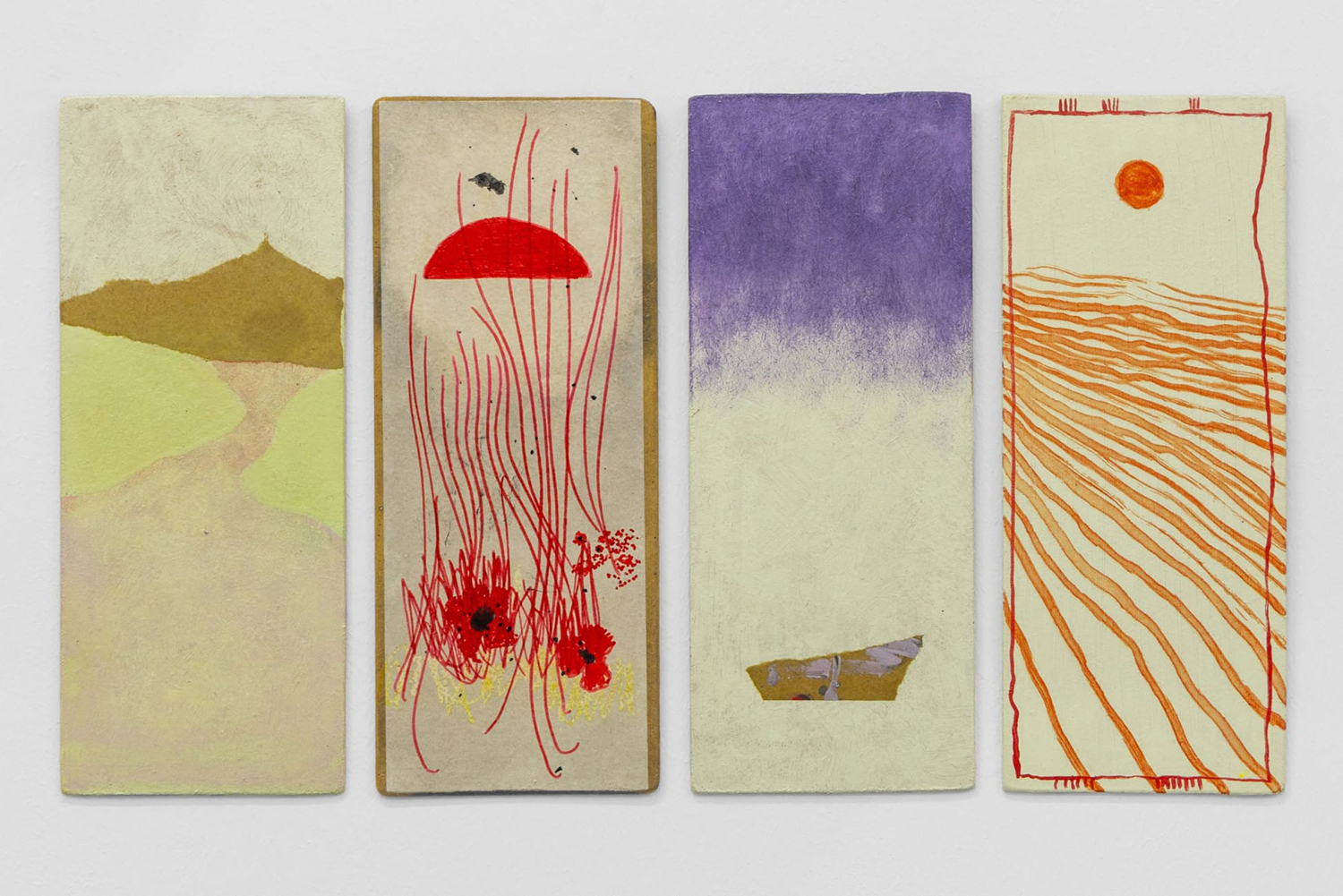
Exhibition view of Blerta Hashani’s exhibition ‘MEMORIZONIM’, LambdaLambdaLambda, Prishtina, 2024- Courtesy of LambdaLambdaLamdba.
The Rebirth of Painting and the Rise of the New Vanguard
While the market diversifies into digital and cross-collectible territories, painting, the most ancient of mediums, continues to reinvent itself. Two major institutions — Ghent’s S.M.A.K. and MCA Chicago — have recently dedicated exhibitions to this paradox. Both “Painting after Painting” and “The Living End: Painting and Other Technologies, 1970–2020” began from the provocation that painting might be exhausted, only to reveal its endless adaptability.
Indeed, at Art Basel Paris, the vitality of the brushstroke is undeniable. Younger artists are reclaiming the gesture, not as nostalgia but as rebellion, an act of resistance against the dematerialized image economy. Francesca Mollett (b. 1991, UK), whose fluid abstractions echo the pulse of consciousness itself, has seen her work soar from modest estimates to auction heights, her lyrical surfaces acquired by ICA Miami and the K11 Art Foundation.
From Roméo Mivekannin (b. 1986, Ivory Coast), who re-inscribes Black identity into European canonical works, to Blerta Hashani (b. 1997, Kosovo), whose pastoral miniatures hum with serenity, to Oliver Bak (b. 1992, Denmark), whose spectral flowers bloom between beauty and decay, each asserts painting as living thought, as existential inquiry.
Equally magnetic is Samuel Hindolo (b. 1990, US), whose figures and grids hover between cinema and dream. His refusal of digital presence turns absence into allure. Stanislava Kovalčíková (b. 1988, Slovakia) approaches figuration as invocation: her mythic, erotic tableaus exude both humor and menace, establishing her as one of Europe’s most compelling provocateurs.
Evelyn Plaschg (b. 1988, Austria) transforms the banal into the uncanny — zippers, seats, and folds become meditations on fragmentation — while Libasse Ka (b. 1998, Senegal), still in his twenties, conjures atmosphere through abstraction, his compositions floating between geometry and shadow. His recent sell-out presentation at Art Basel Paris confirms that young painters are defining new aesthetic grammars.
Liza Lacroix (b. 1988, Canada) burrows into darkness: her smudged black expanses evoke a post-romantic confession. Her inclusion in Unlimited at Art Basel Basel, followed by solo exhibitions at Chantal Crousel and Gisela Capitain, marks her as a voice of this psychological era. Reina Sugihara (b. 1988, Japan) dives inward, her earthy canvases resemble anatomical or geological cross-sections, organs of pigment and patience.
Their presence across galleries such as Sprüth Magers, Emalin, and LambdaLambdaLambda signals a wider movement: painting as conversation, painting as resistance, painting as renewal. As one observes these canvases within the grand architecture of the Grand Palais, it becomes evident that while technologies evolve, the human need to make a mark, to leave a trace of consciousness on surface, persists undiminished.
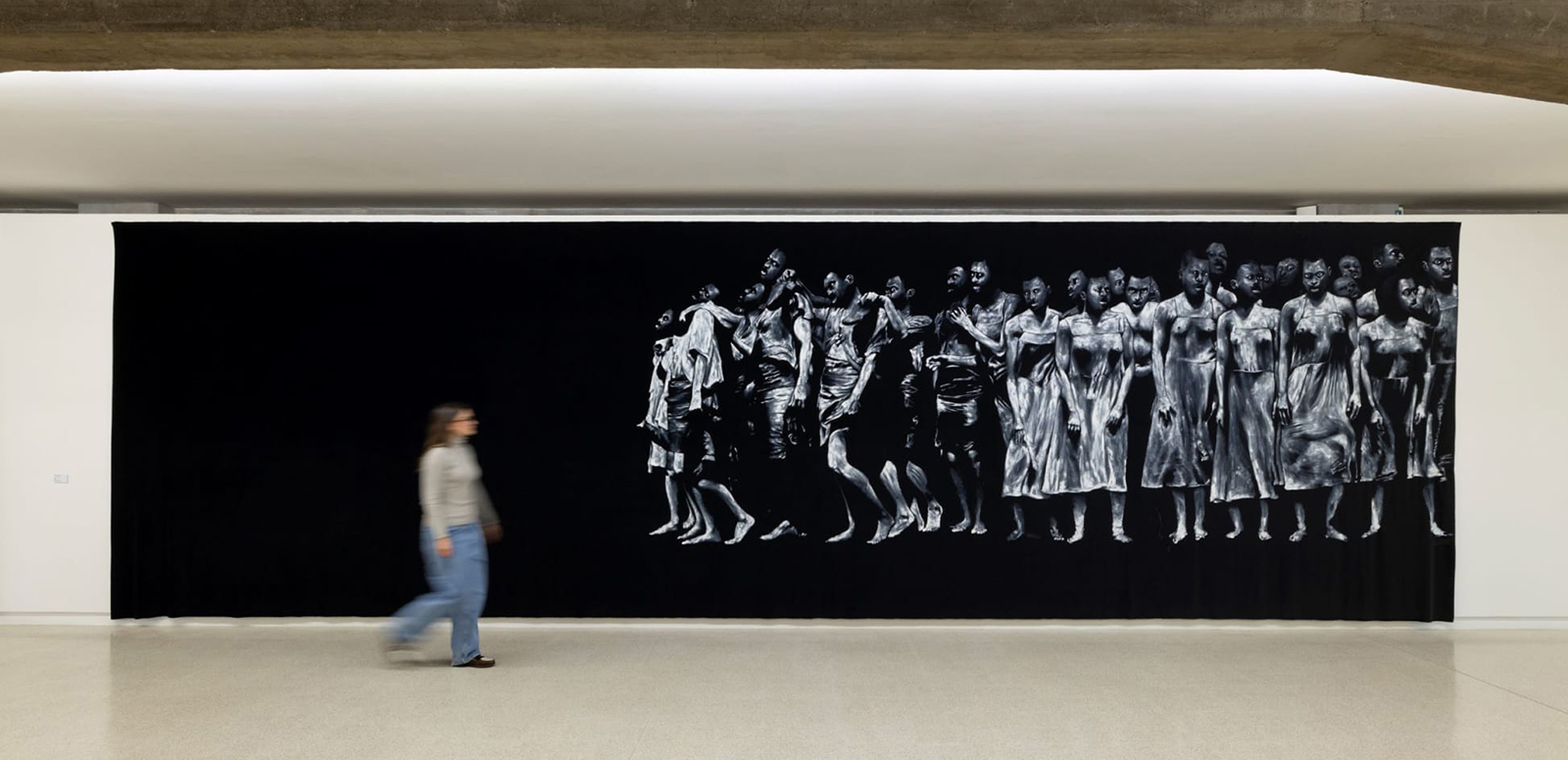
Installation view of Roméo Mivekannin’s exhibition ‘Black Mirror,’ Collezione Maramotti, Reggio Emilia, 2025. © Roméo Mivekannin, by SIAE 2025. Courtesy of the artist, Galerie Cecile Fakhoury, and Galerie Barbara Thumm. Photography by Roberto Marossi.
Material Faith in a Digital Age
In the language of markets, one could say that painting’s resilience defies prediction. Yet its endurance is more than economic, it is metaphysical. According to the Art Basel & UBS Survey of Global Collecting 2025, Millennial and Gen Z collectors now account for 74 percent of active buyers, and they are investing not only in the digital realm but in the tactile, the trace of the hand, the aura of material presence. Many of them are women, shaping new standards of taste and risk.
“Contrary to the stereotype of caution,” notes Dr. Clare McAndrew, “female collectors are expanding into less traditional media and embracing emerging artists.” This shift mirrors what is seen on the ground at Art Basel Paris: young collectors gathering around canvases that hum with life, color, and defiance. Their acquisitions are not about ownership but participation, gestures of empathy in a fractured world.
As Noah Horowitz, CEO of Art Basel, observed, “The rising influence of women collectors and the championing of female artists are markedly impacting the trade.” In the glass nave of the Grand Palais, this statement feels prophetic. Here, where generations and aesthetics converge, the act of collecting itself becomes a form of authorship, a dialogue between intellect and emotion, between permanence and flux.
Art Basel Paris 2025 thus stands as a marketplace but as well as a mirror of our cultural consciousness: a city, a survey, a fair, and a reaffirmation that, despite every technological acceleration, art remains our most human form of continuity.
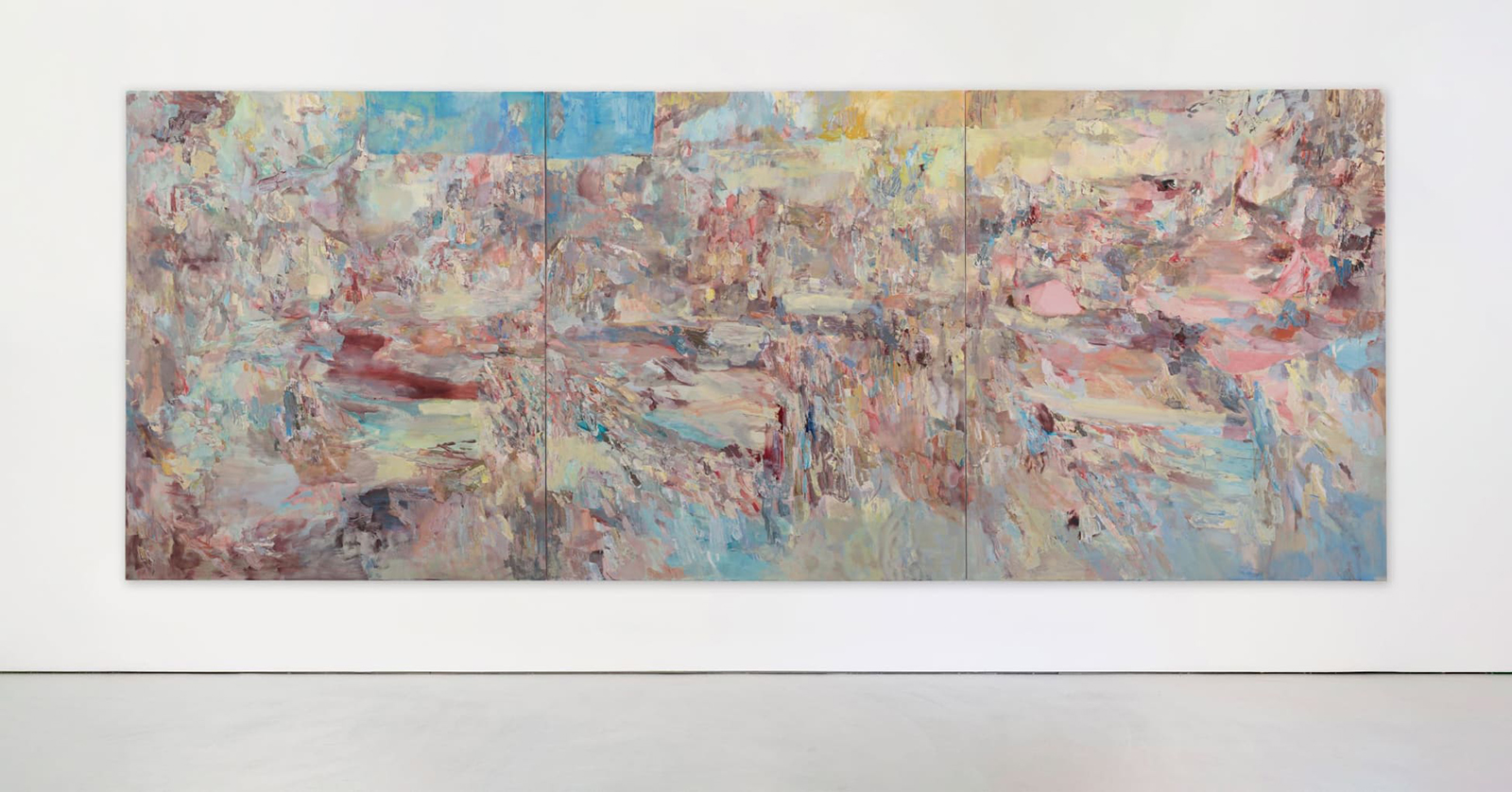
Francesca Mollett, Poikilos, 2024. Courtesy of the artist and Grimm. Photography by Peter Mallet.