by Alexandra I. Mas
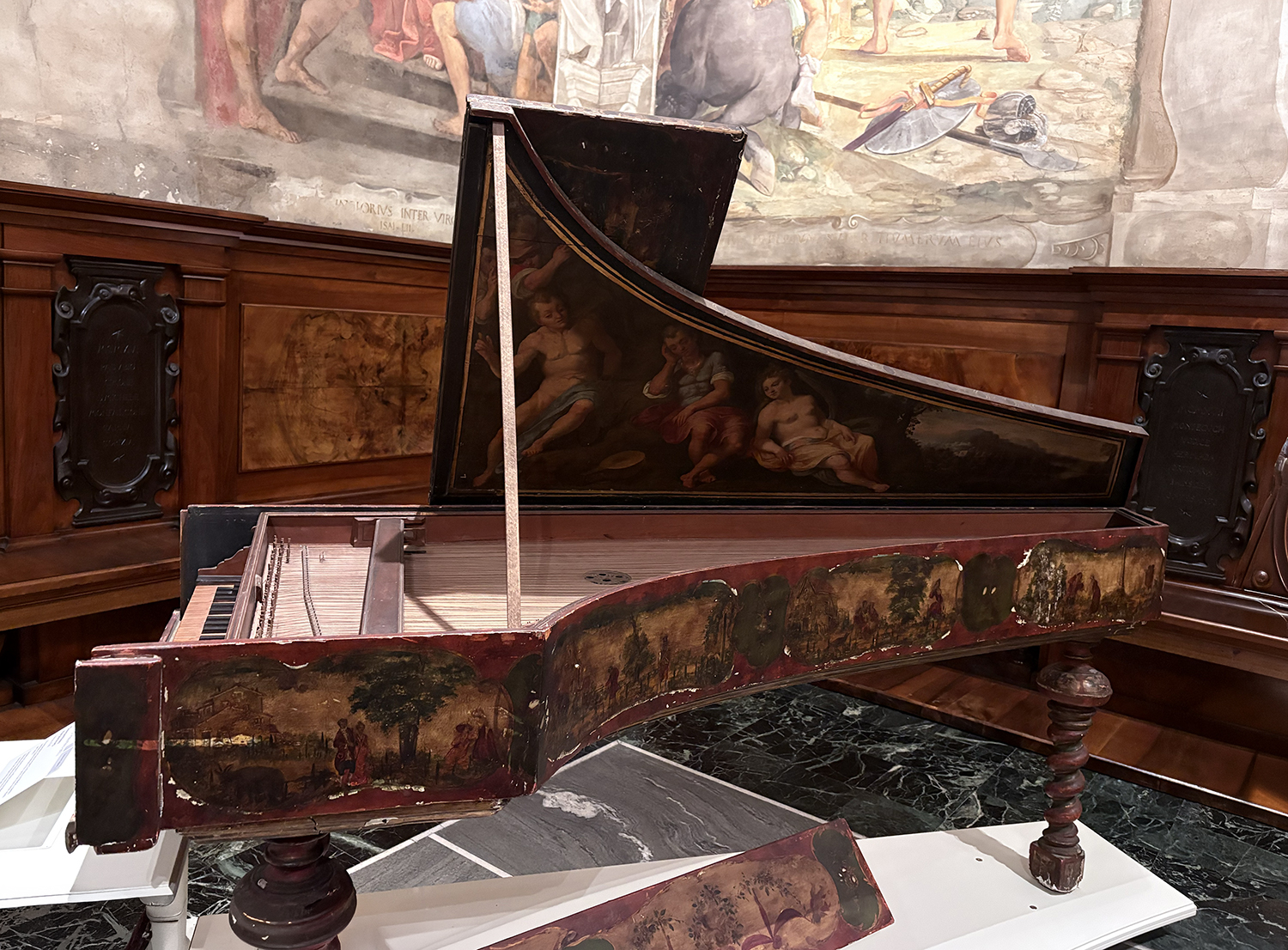
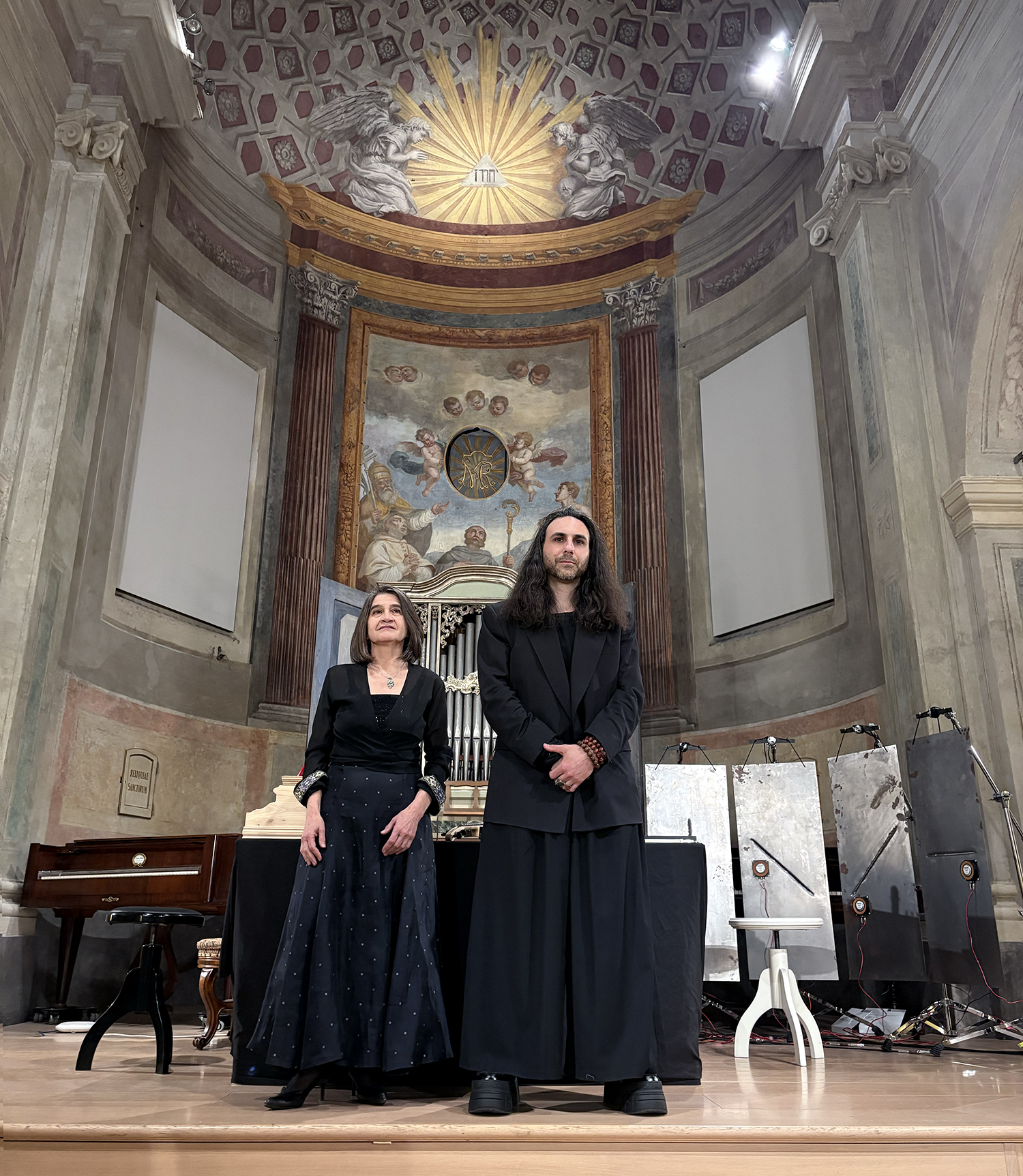
At Museo di San Colombano – Collezione Tagliavini in Bologna, something quietly radical unfolded. An experiment in temporal archaeology: a dialogue between centuries, technologies and forgotten acoustics. Composer Gadi Sassoon and harpsichordist Maria Luisa Baldassari, supported by the ERC NEMUS project directed by Michele Ducceschi at the University of Bologna, proposed a strange and compelling question: how does one return a voice to an instrument of the past?
As Michele Ducceschi remarked: “dare voce agli strumenti del passato.” How does one restore sound to a keyboard instrument from 1547 that no longer speaks? The question itself feels almost metaphysical.
The harpsichord has always occupied a curious symbolic territory. It belongs to a world of courts, geometry and order, an instrument carrying within it the architecture of the Renaissance. Unlike the piano, whose dynamics mirror emotional turbulence, the harpsichord arrives from a civilisation where harmony reflected cosmic structure. It speaks of measured joy, ritual and proportion, of a vanished world. And perhaps this is precisely why it resonates today. Because beneath our accelerated, urban and increasingly digitised present, another desire has quietly emerged: a form of neo-romanticism. Not nostalgia in its sentimental form, but a longing for depth, intimacy and emotional density. A desire to recover slowness, mystery and ritual from within technological culture itself.
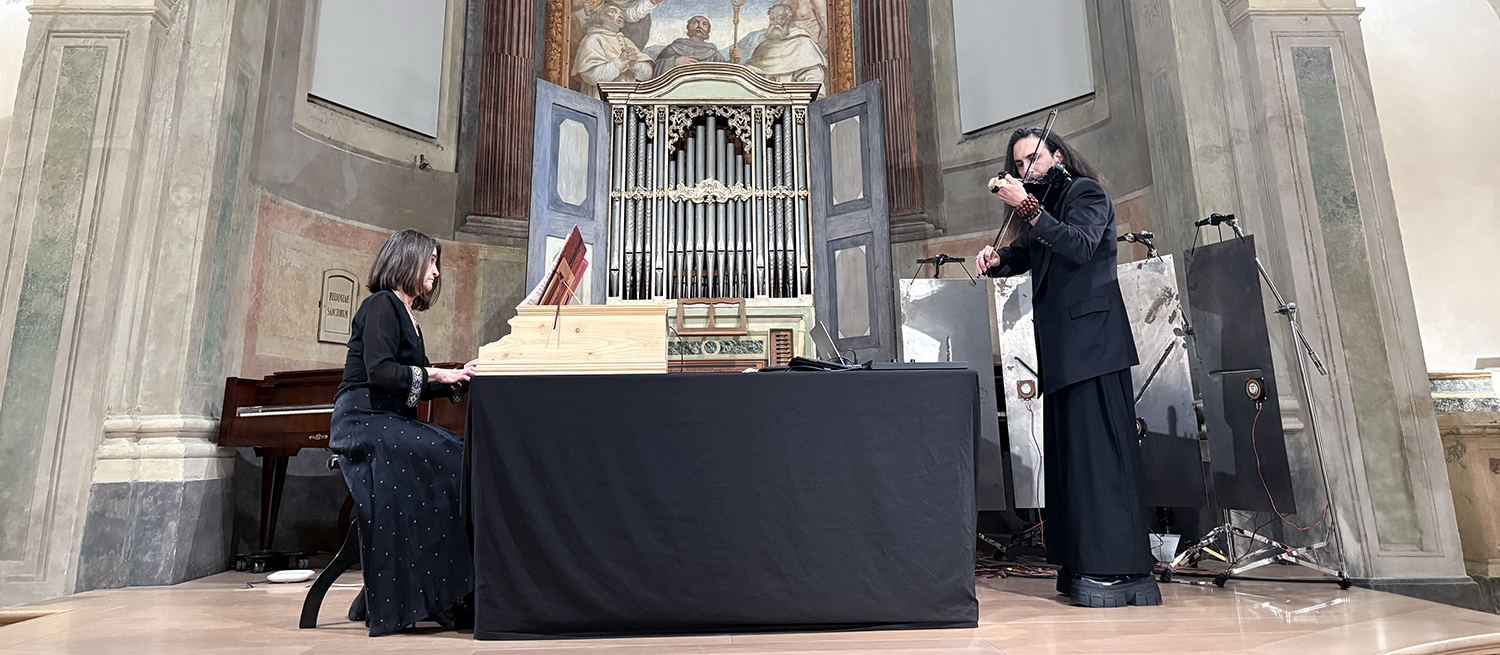
Yet what emerged was not the coldness often associated with generated or cybernetic sound. Quite the opposite. Through this research, Sassoon seems to reintroduce human interiority into computational systems themselves. Sensibility enters the machine. Emotion infiltrates structure. The algorithm ceases to function merely as calculation and becomes once again vibration, gesture, breath.
At moments one encountered sounds so archaic they seemed older than composition itself. Something nearly Aboriginal in resonance, ancestral in structure, as though the first human gestures toward sound had entered the room. A pulse. A repetition. Perhaps originally an accident. Perhaps rhythm itself.
The performance, Sassoon explained, remained nearly fifty percent improvised. And one could feel it. Sounds appeared like ghosts inhabiting the performance. Not melodies, but presences.
The evening moved through curious scales of perception. Reduction before expansion. Sound stripped back until only fingers brushing surfaces remained. And then a sort of evolutionary texture emerged, not crescendo, but something more organic. A gradual unfolding. A slow reassembly of matter and resonance itself. One sensed a journey suspended somewhere between stellar cartography and cybernetic dreaming. Fragments separating and reconnecting. The infinitesimal becoming immense.
At one point the metallic frequencies approached something almost cosmological — a dark and celestial crossing where one could imagine, absurdly perhaps, the sound of origins itself. A kind of sonic Big Bang suspended above the measured geometry of the harpsichord.
The result was neither electronic music nor historical reconstruction. It was a fiercely contemporary harpsichord, working in delicate equilibrium with Renaissance composition while opening an entirely new acoustic territory.
As Ducceschi observed: “Gadi opened an entire universe to explore.”
Indeed he did. Not by replacing the past, but by listening closely enough to hear it speaking a contemporary language.
Facing him, Maria Luisa Baldassari inhabits a radically different temporal territory. Harpsichordist, musicologist and specialist in Renaissance and early Baroque repertoire, her work has long been dedicated to the recovery of forgotten musical worlds. Trained in piano, harpsichord and musicology, founder of Ensemble Les Nations and researcher of historical keyboard practices, Baldassari occupies a rare position where scholarship and performance become inseparable. She no longer approaches the harpsichord as a museum object. She restores to it its original condition: a living body. For decades she has worked around manuscripts, critical editions and historically informed performance, returning breath to voices that history itself nearly silenced.
And perhaps this explains the force of the encounter. One artist searching for future sound, the other rebirthing forgotten ones. Between them stood the harpsichord itself, an instrument suspended between archaeology and technology.
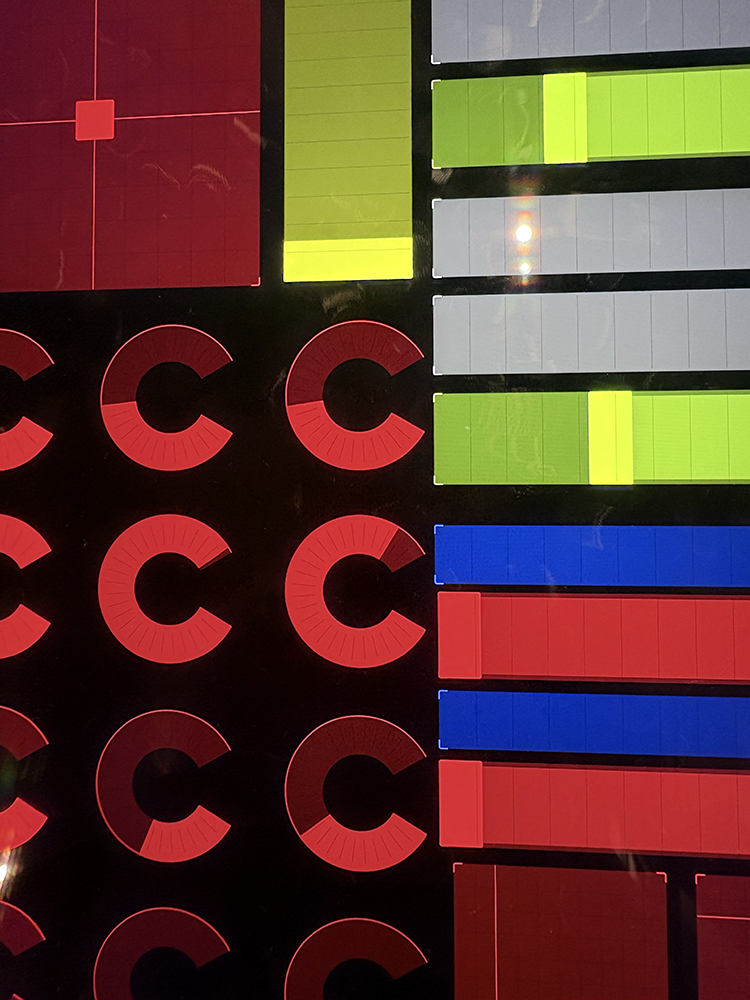
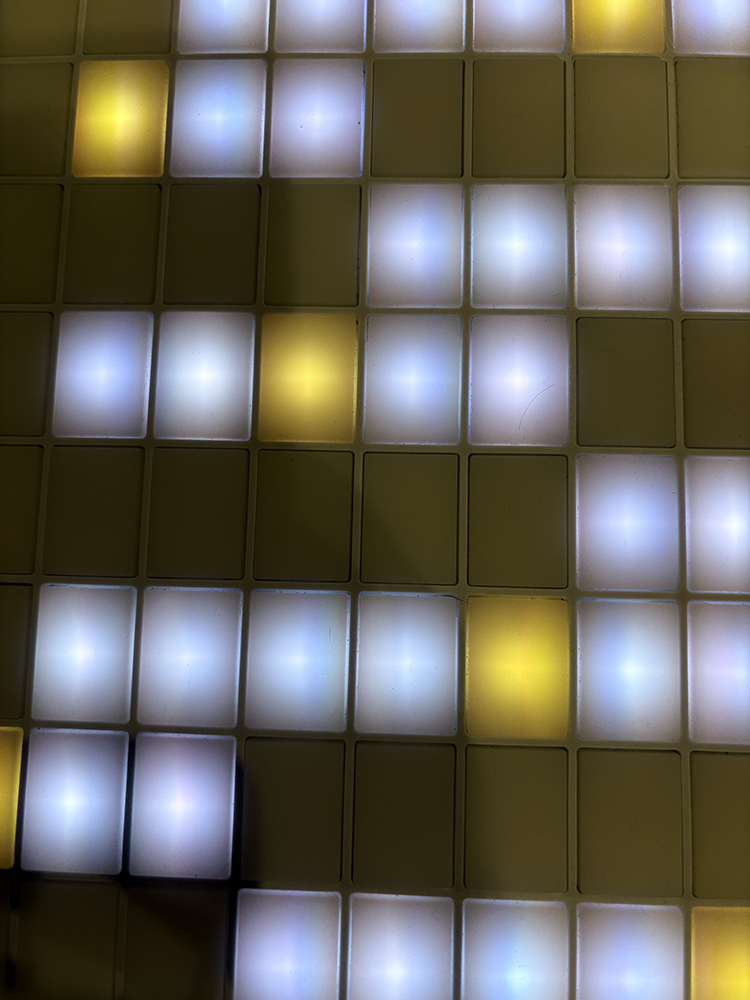
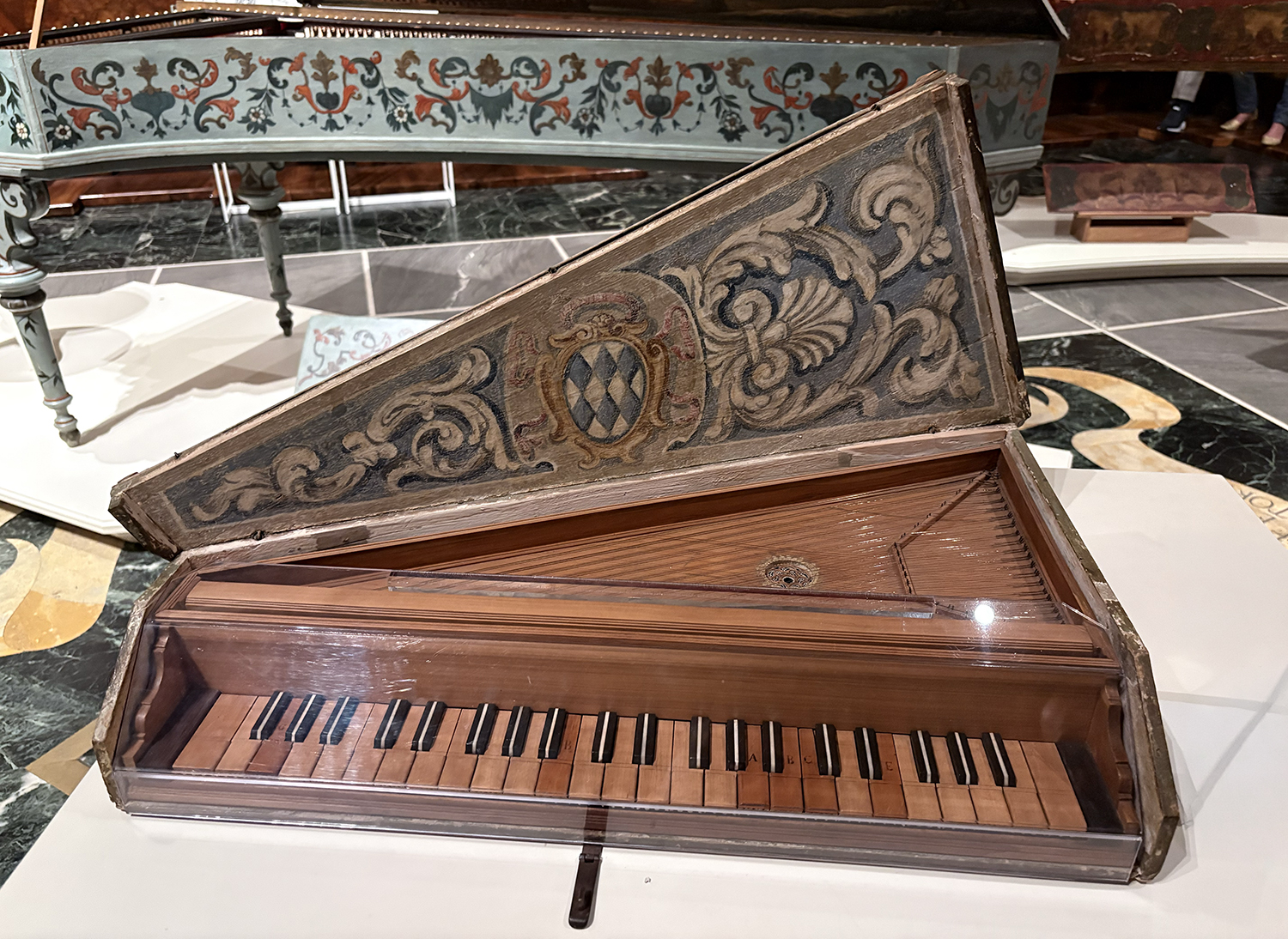
Octave Spinet, Roma 1617
NEMUS is dedicated to the digital restoration of historical instruments, integrating musicology, acoustics, advanced sound synthesis and digital simulation so that these instruments no longer belong solely to the past, but enter future possibilities and become accessible to new generations of composers and performers.
This first encounter, developed between two profoundly distinct artistic sensibilities, was not a collision between ancient and contemporary worlds.
It felt closer to a love story across centuries.
A love story that found its perfect cradle inside Museo San Colombano and the extraordinary Tagliavini Collection: more than five centuries of “sonorous monuments” gathered together, many still playable, opening a window onto a resonant and decorative world perpetually searching for the ideal sound.