
Venice, city of thresholds between water and stone, past and future, hosts a provocative meditation on art in the exhibition The Idea of Sculpture. From the Hand to the Robot. Curated by Roberta Semeraro, the show situates sculpture at the fault line between science and humanism, asking how the most ancient of arts can survive, and even thrive, in the age of robotics and artificial intelligence.
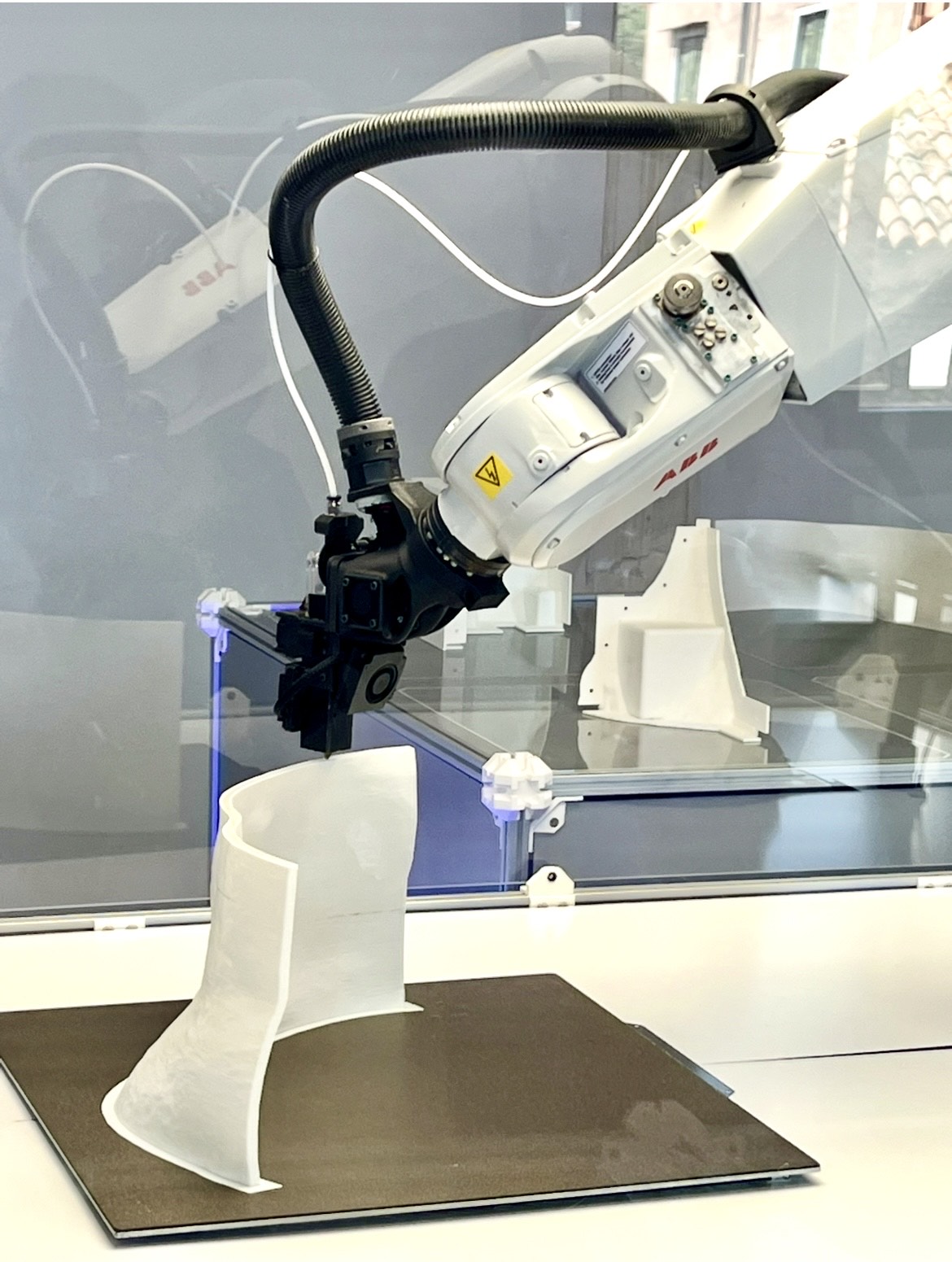
Robot sculpting live in Palazzo Bollani, Venezia, photo © Chervin Dalaeli
TEMPUS FUGIT, bronze, 2025 Helena Bacardi, behind you can see CONCORDIA, 2020, Giuliano Vangi, resin model, photo © Marco Tassini
Michelangelo , matter and origins
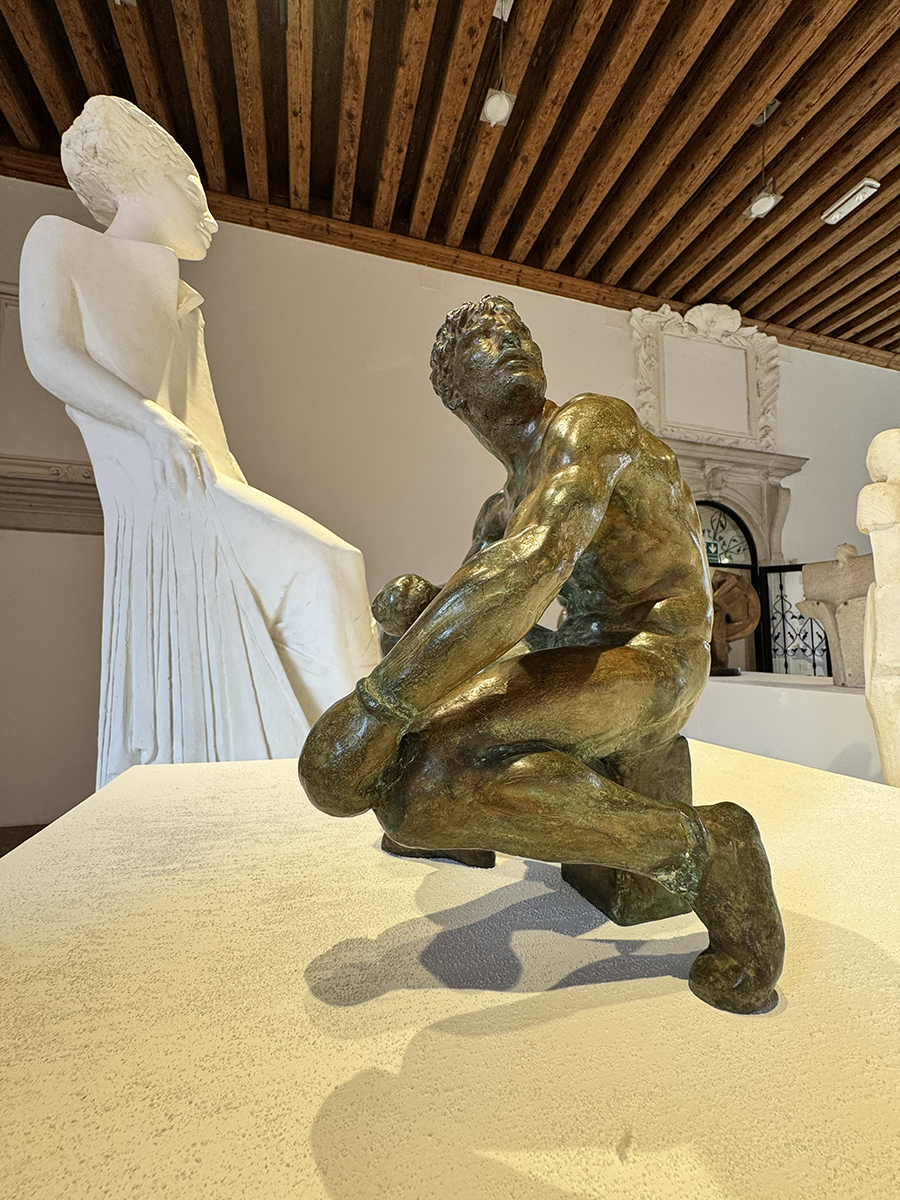
At the heart of the exhibition lie extraordinary loans from Casa Buonarroti in Florence: a rare selection of Michelangelo’s original drawings and a bronze torso. Rarely shown together, these works embody art at its origin -gesture, error, the intimacy of the hand inscribing form. To encounter these drawings in Venice is to confront the raw genius material, to sense the trembling line where thought first meets matter.

Michelangelo, bronze, courtesy Casa Buonarroti, photo © Chervin Dalaeli
“ Michelangelo’s legacy is presented as a symbol of human genius, creativity, and the Tuscan roots of artisanal sculpture. Together, the sections contrast human invention with advancing technology, raising questions about how identity, art, and intelligence will evolve,” is telling us photographer Chervin Dalaeli
From Pietrasanta: tradition and its double
Surrounding these relics of humanist mastery, the Museo dei Bozzetti of Pietrasanta lends plaster studies by Lipchitz, Botero, Mitoraj, and Giò Pomodoro – works that still pulse with the artisan’s immediacy. Yet these are mirrored, and unsettled, by the presence of ROBOTOR, Carrara’s robotic sculptor, whose tireless precision can now carve in days what once took years. This confrontation is not incidental but central: the exhibition stages the dialogue between the hand and the machine, imperfection and perfection, human fragility and mechanical endurance.
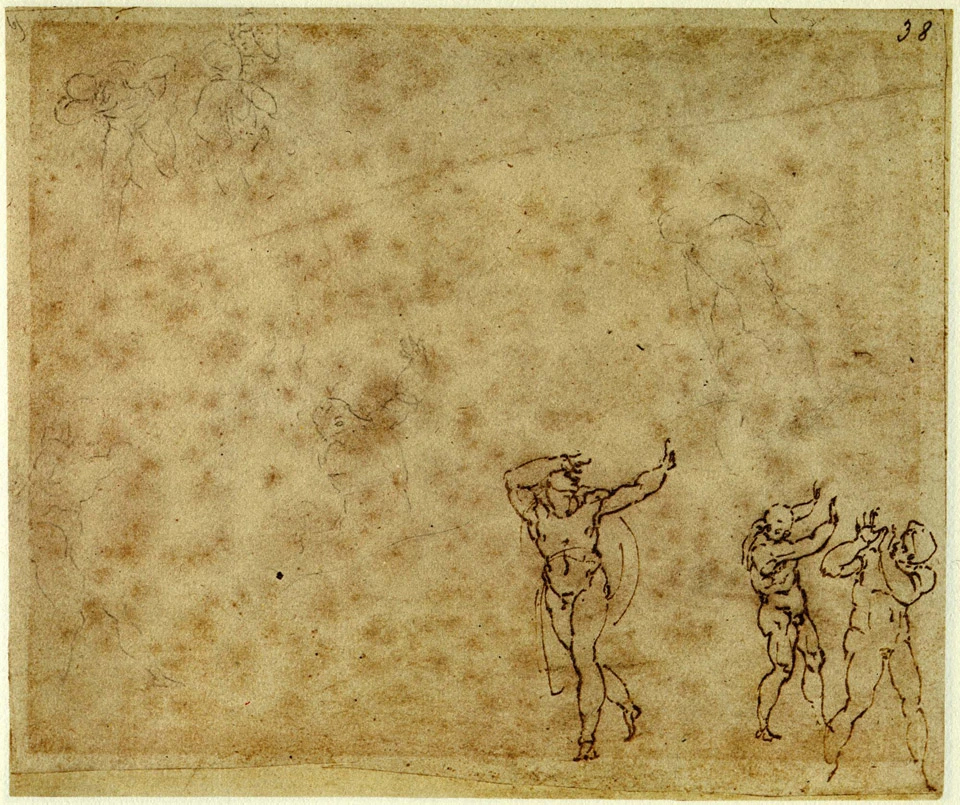
Study of Three Nudes for a Transfiguration, executed in pen with brown ink and black pencil, by Michelangelo, courtesy Casa Buonarroti
Bernard Bezzina: the persistence of fragility
Among the living artists, Bernard Bezzina stands out. Already profiled by The EDGE, Bezzina’s sculptures are charged with raw corporeality. His fractured hands and bodies refuse completion, as though insisting that the trace of human labor must remain visible, irreducible to the smoothness of the machine. In the context of Venice, his works act as witnesses: they carry the memory of touch, but also its defiance against erasure.
Helena Bacardí and contemporary memory
The exhibition highlights Helena Bacardí, whose trajectory spans Madrid, New York, and Carrara. Working in marble, bronze, resin, and robotics, Bacardí embodies the paradox of our time: an artist who embraces technology yet insists on memory as the ground of creation. For her, artificial intelligence is reflection rather than invention, dependent on the archives of human culture it seeks to simulate.

FORCE ET FRAGILITÉ, Self-portrait Poing Divition III, 57×41×41 cm, Bernard Bezzina, 2013
Beyond opposition: toward a dialectic
The exhibition refuses easy binaries. It neither glorifies the hand nor demonizes the robot. Instead, it situates sculpture in the friction between them. Works by Rosalba Gilardi, Dani Karavan, and others expand this dialectic: the organic forms, the metaphysical absences, the invocations of peace and universality. Together, they underscore that sculpture has always been more than object—it is philosophy in matter.
Venice becomes a resonance chamber, here, where past and present are constantly in negotiation, The Idea of Sculpture reasserts art as a field where science and humanism must confront each other without resolution. In the drawings of Michelangelo, in the broken hands of Bezzina, in the robotic arms of Carrara, the exhibition insists on the same truth: to sculpt is to remember, and memory remains an irreducibly human act.
by Alexandra I. Mas, 2025
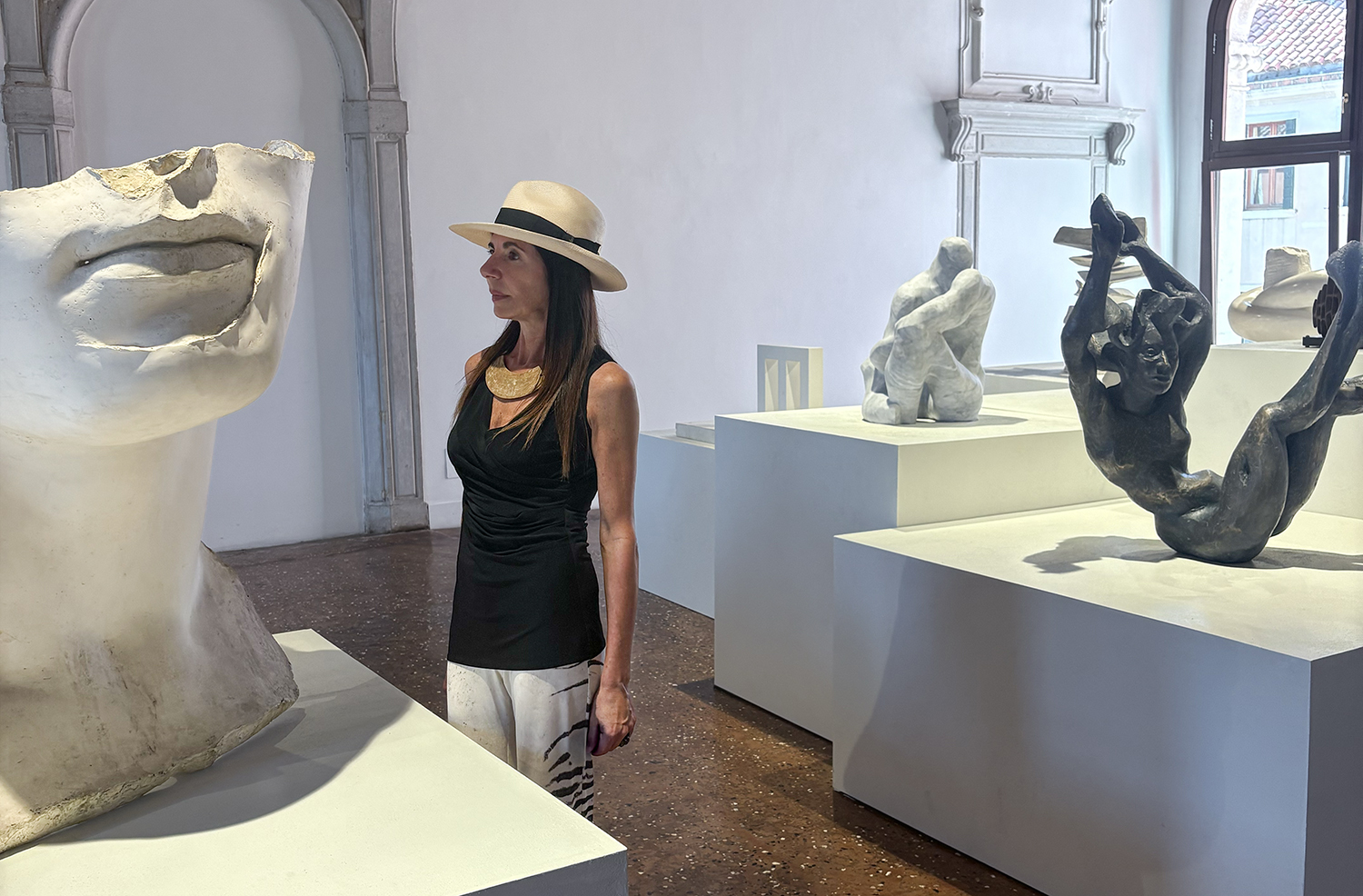
curator Roberta Semeraro looking at HORIZON, 1984, Igor Mitoraj fiberglass model, 104×107×75 cm
you can also see ONDINE, bronze, 2013 and DON EMILIO, marble, 2025 by Helena Bacardi