Luca Guadagnino has always been a master of capturing gestures — of hands brushing across a table, of silences weighted by privilege, of brilliant conversations that open wounds. In After the Hunt, he turns this gift toward the cloistered world of academia, where intellect and desire blur, and where tragedy belongs not to the downtrodden, but to the beautiful and the privileged.
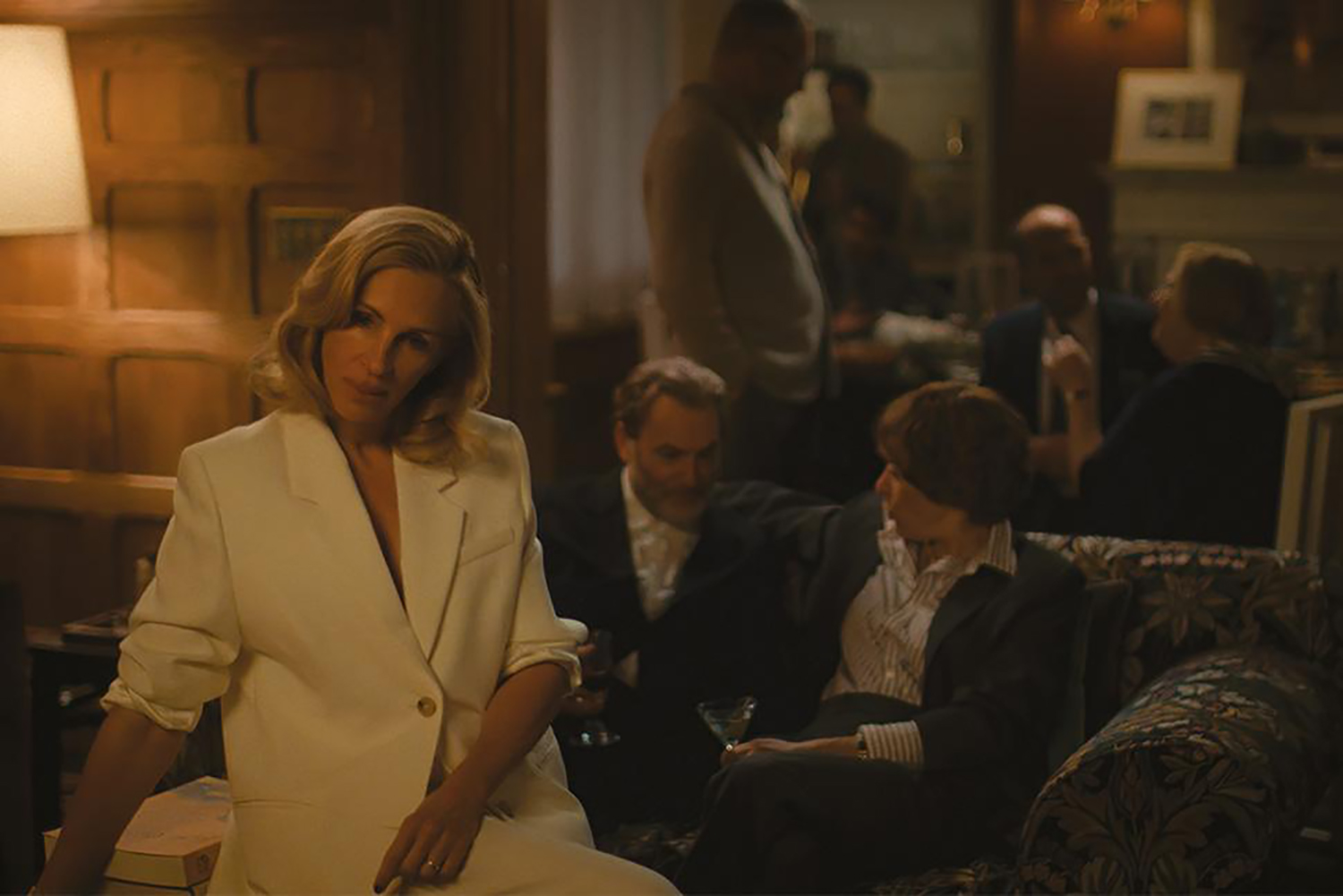
At the centre stands Julia Roberts, luminous and commanding as a university professor. She carries herself with a natural elegance — refined, sensual, unforced — embodying authority without losing vulnerability. Guadagnino frames her as both mentor and mirror, a woman whose poise conceals tremors of passion and doubt.
Around her orbit the students: upper-class youth who, as the film suggests, “own their tragedy.” Whether the heartbreaks are slight or devastating, they are rendered inevitable, almost aestheticised. The Electra complex lingers in the air, as love and power become entangled in ways that unsettle the very foundations of their privileged world.
After the Hunt is a film of tremors. Guadagnino’s cinema, once again, transforms dialogue into choreography, and in Julia Roberts he finds the perfect vessel, a professor who seduces through intellect as much as presence, carrying the tragic weight of a generation too rich to be spared its own shadows.
Alexandra I. Mas, 2025
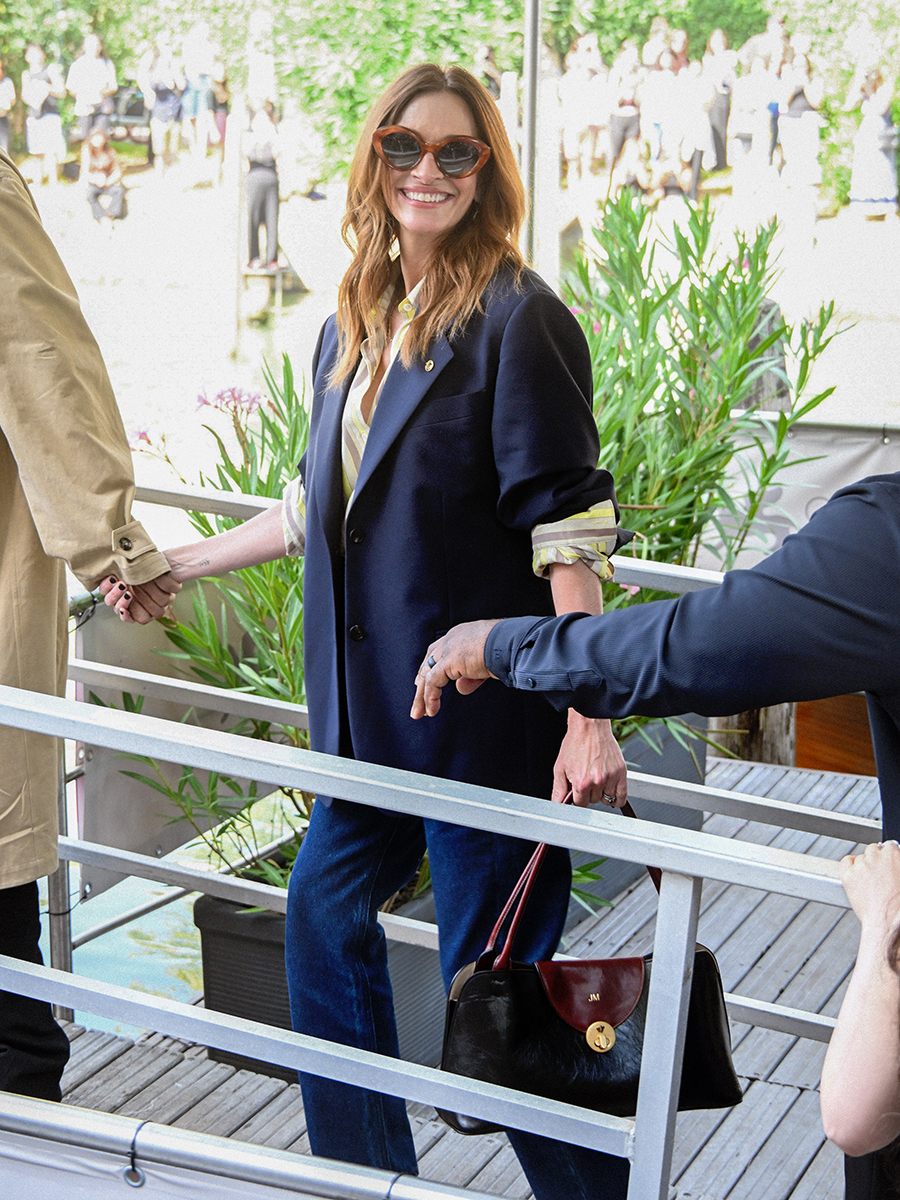
Julia Roberts attends the Mostra, wearing Versace by Dario Vitale.
Tailored jacket in blue wool worn with striped shirting and denim.
Complete with heritage gold buckle belt, woven leather Vienna 95 shoes, and top handle leather bag with Medusa twist-lock.