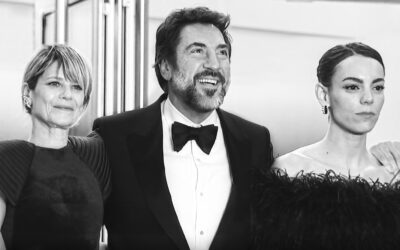

in order from the left: Manolo Solo, Hugo Encuentra and Patricia López Arnaiz
The Only World Possible
by Alexandra I. Mas
There are films one enters slowly, almost against one’s own habits of perception. Directed by Tiago Guedes and adapted from the Jesus Trilogy by J. M. Coetzee, winner of the 2003 Nobel Prize in Literature, the film premiered at the Cannes Film Festival as something increasingly rare within contemporary cinema: a philosophical work unafraid of silence, abstraction and metaphysical uncertainty. Let us say it immediately: prepare for over three and a half hours of philosophical marvel.
Action, in the conventional sense, scarcely matters here. And yet within the film one encounters the purest forms of love, death, desire, dream, art and existential terror. One encounters indirectly the entirety of human civilisation: education, language, morality, parenthood, identity, social order, memory itself. All the structures through which humanity attempts to stabilise existence.
And slowly, magnificently, AQUI strips them bare.
The film unfolds within a strange territory where the protagonists begin life again without a past. A place emptied of biography, possessions and inherited identity. Simón encounters David, a child travelling alone, and assumes responsibility for him almost instinctively. Together they find Inés, whom Simón recognises — for reasons impossible to explain rationally — as the child’s mother. She accepts the role — for reasons we instantly understand — and a family forms. Or perhaps the idea of a family. Because throughout the film, family ceases to function as biological certainty and becomes instead a permanent negotiation between emotion, language and perception. David accepts and rejects parenthood according to immediate interior truths.
You are my mother. You are not my mother. The categories shift constantly because the child refuses symbolic compromise. This is where the film becomes extraordinary.
David evolves according to emotional immediacy with almost terrifying purity. Arrangement, adaptation and social performance do not exist within his universe. The world has not yet imposed its architecture upon him. Death remains abstract. Crime remains abstract. Language itself remains unstable.
At one point comes the childlike question containing perhaps the entire philosophy of the film: why do we name things the way we name them? David insists he possesses his own language. Language itself appears revealed as convention rather than truth. Numbers too, he suggests, are simulacra, human systems attempting to imprison reality through classification. Yet reality escapes continuously. Meaning exists only temporarily because humanity insists upon naming.
And perhaps this is why the film carries such hypnotic force: it reconstructs the world through the eyes of someone not yet fully colonised by social order.
The existential questions therefore takes quantum dimensions.
Why are we here?
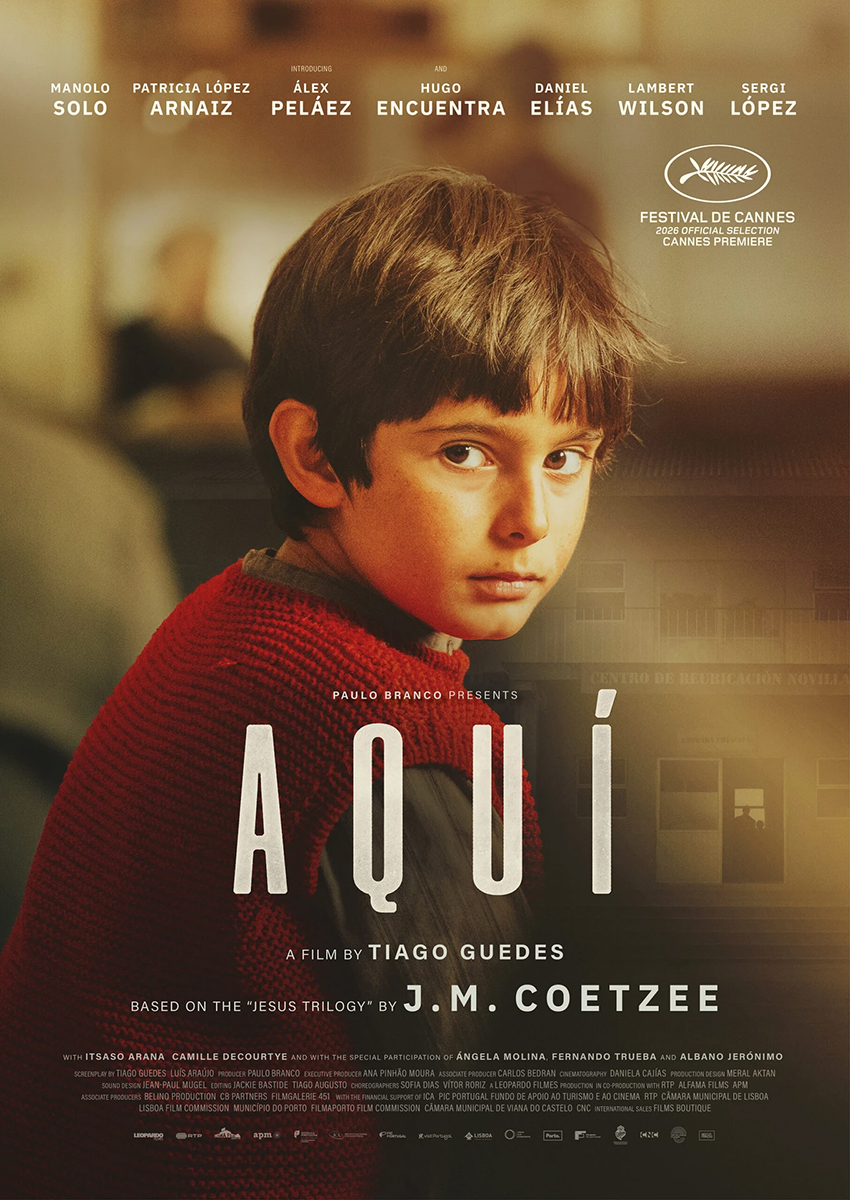
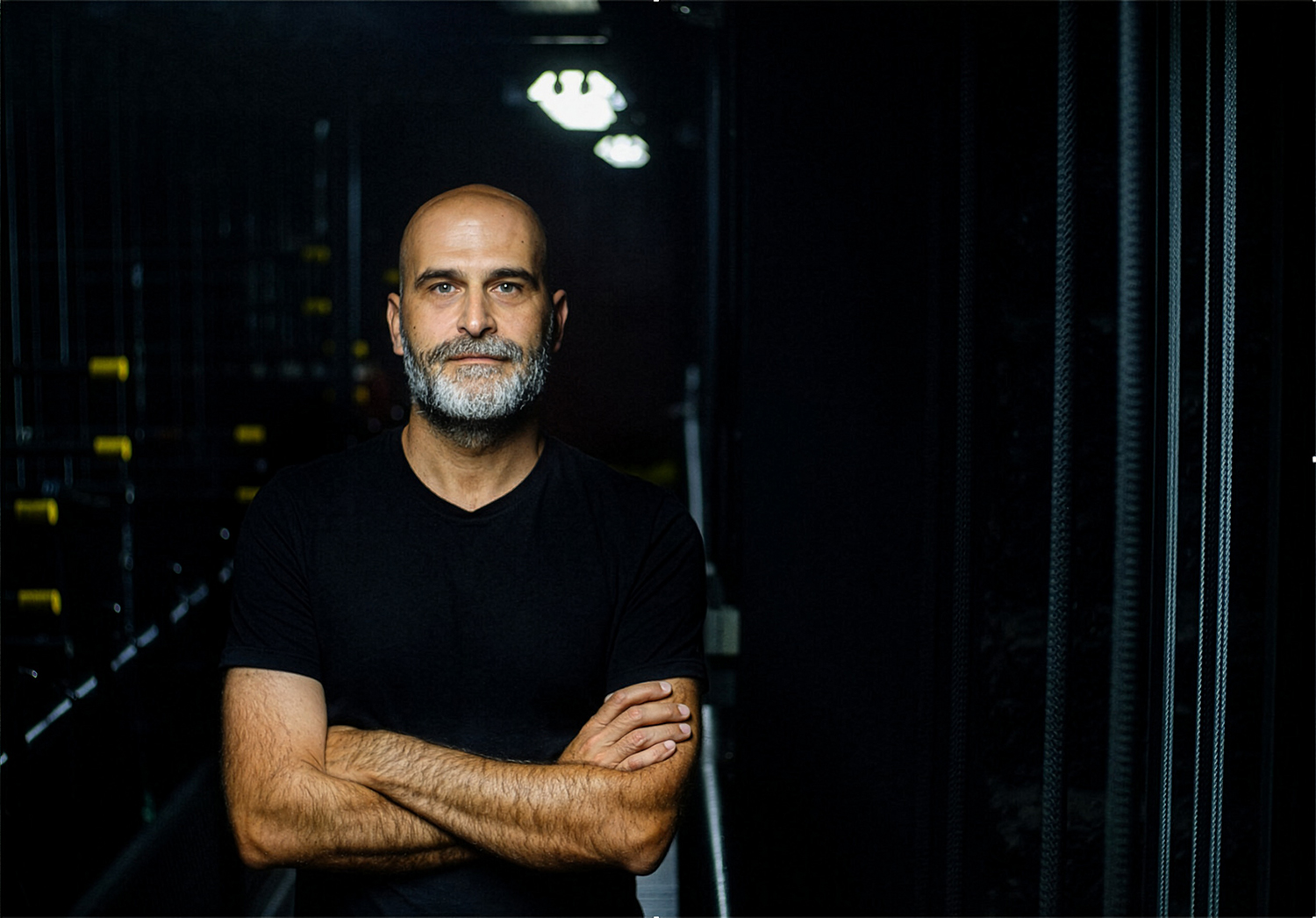
director Tiago Guedes
The question gradually consumes David after he enters school and begins integrating into the structures of collective society. Education itself appears both necessary and tragic: a process through which imagination becomes disciplined into consensus. Yet he discovers another form of expansive freedom within an alternative school where dance becomes a method for learning mathematics. Music contains hidden architectures capable of revealing existence itself, past and future alike. Astrology, rhythm and the human body align into a different understanding of knowledge.
Death is present as well.
Not as spectacle, but as ontological shock. The death of El Rey, the beloved horse, and David’s growing understanding of continuity beyond life, alter the emotional gravity of the film entirely. Then comes the murder of his extraordinary dance teacher, the only adult who fully understood him. Within the child opens a terrifying revelation: mortality exists as concretely as life itself. And yet he carries no hatred toward the perpetrator.
This tragedy ignites in David the desire to become “normal,” to resemble the other children, to enter finally into the order of the world. He understands and accepts the orphan term. And this transformation destroys him.
The more David resembles the others, the more violently he rejects his earthly existence.
“How does one die?” The question arrives with unbearable simplicity.
Visually, Guedes approaches this universe with remarkable austerity. No decorative mysticism. No aesthetic excess. If magic exists here, it belongs intrinsically to reality itself. The camera strips away ornament until only sensory presence remains: faces, thoughts, convictions, silence, light. Life unfolds almost outside chronology, outside the concept of possession itself.
At one point, David declares:
“Yo soy la verdad.”
I am the truth.
And strangely, within the logic of the film, one believes him. Because AQUI proposes something both radical and deeply unsettling: this world, with all its fragility, absurdity and incomprehension, remains the only world possible.
The film carries throughout a peculiar fatalism emptied of despair. Meaning no longer arrives through certainty, religion, sociology or rational systems. Meaning emerges through passage itself: through love, through temporary bonds, through movement toward an unknowable future demanding nothing in return.
Then, near the end, the film leaves us with its final warning: If you try too hard to understand, you will ruin everything. And perhaps that is precisely the point. Some films seek explanation, AQUI seeks presence.