Written by Alexandra Touchard
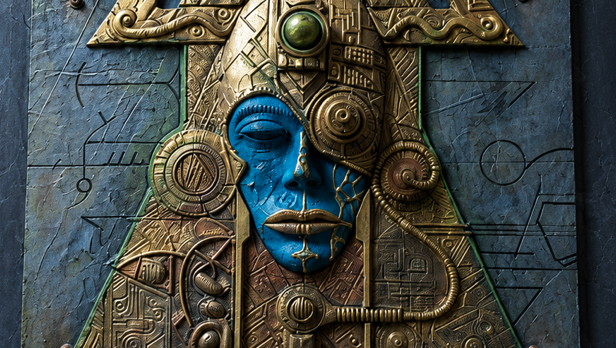
There is a workshop, tucked away at the back of a courtyard not far from Paris, where strange faces emerge from canvases framed with pipes and Gothic stained glass. These are serene faces, touched by a quiet melancholy, as though they carried within them the wisdom of ancient times while standing as emblems of a world yet to come. Their expressions are so hauntingly lifelike that it seems almost fanciful to believe they are the work of human hands. Wandering through the studio, one has the uncanny feeling that the paintings are asleep—that they think, that they listen, quietly and without drawing attention to themselves.
And yet, it is indeed the work of visual artist Fabrice Friob, who devotes all of his free time to imagining these solitary steampunk figures, suspended between eras. At Atelier 96 in Rueil-Malmaison—a shared creative space bringing together a diverse collective of artists—Fabrice scatters his brushes, salvaged objects, and breathes an almost mystical life into his creations. Amid copper-toned hues, Catholic crosses, cherubs, pipes, bolts, and electrical generators, one could almost believe they are witnessing the birth of Frankenstein’s creature.
Despite this remarkable collection of artworks, each more inspired and more vividly alive than the last, only a fortunate few will ever venture to the back of this courtyard to discover this extraordinary body of work, hidden away like a pirate’s treasure.
For that reason, I decided to meet Fabrice and learn more about his journey, his creative process, and the inspirations behind his work, so that I, in turn, might share what lies hidden within this studio—waiting only to be revealed.
Could you introduce yourself in whatever way feels most natural to you?
I live in Rueil-Malmaison, a town of just over 80,000 inhabitants on the western outskirts of Paris. My wife, Anne, and I both work in the French public education system. We have two children: Morgane, who is a social worker, and Gabriel, who is currently pursuing a PhD in biology.
Professionally, I work as a psychologist. Most of my work involves supporting middle school, high school, and university students.
Studying psychology was, in many ways, a default choice, although I have never regretted it. I first became interested in the field as a teenager. At the time, however, my ambition was to attend an art school after graduating from high school. The intense competition and the limited career prospects eventually led me to give up that path.
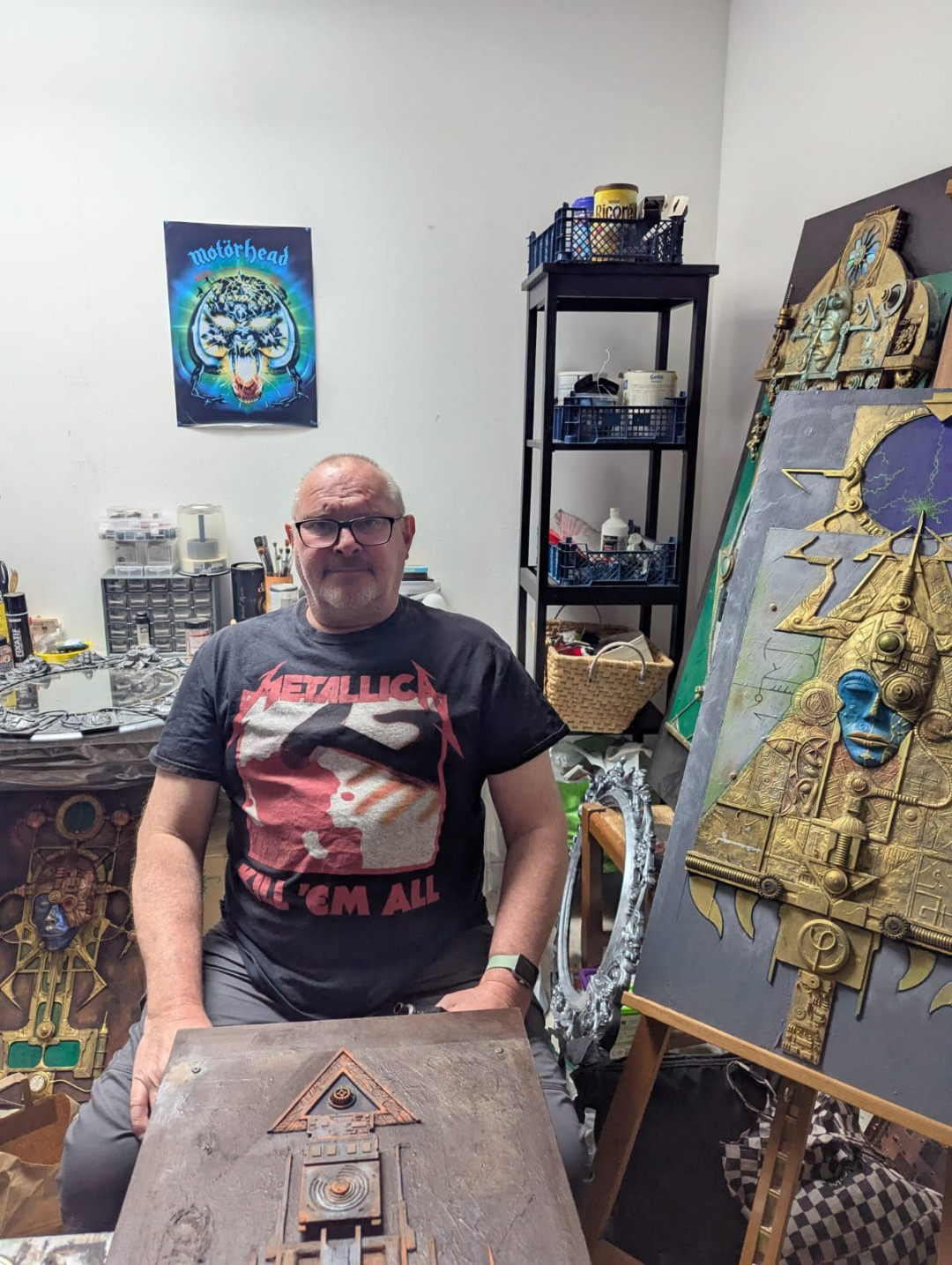
Fabrice Friob in his studio
The idea of working in three dimensions came to me under circumstances that, looking back, seem almost mysterious.
How long have you been creating art, and what first inspired you to pursue it?
I’ve always loved drawing. I devoted an enormous amount of time to it, both at home—sometimes at the expense of my schoolwork—and in the classroom, which occasionally got me into trouble with my teachers! (laughs)
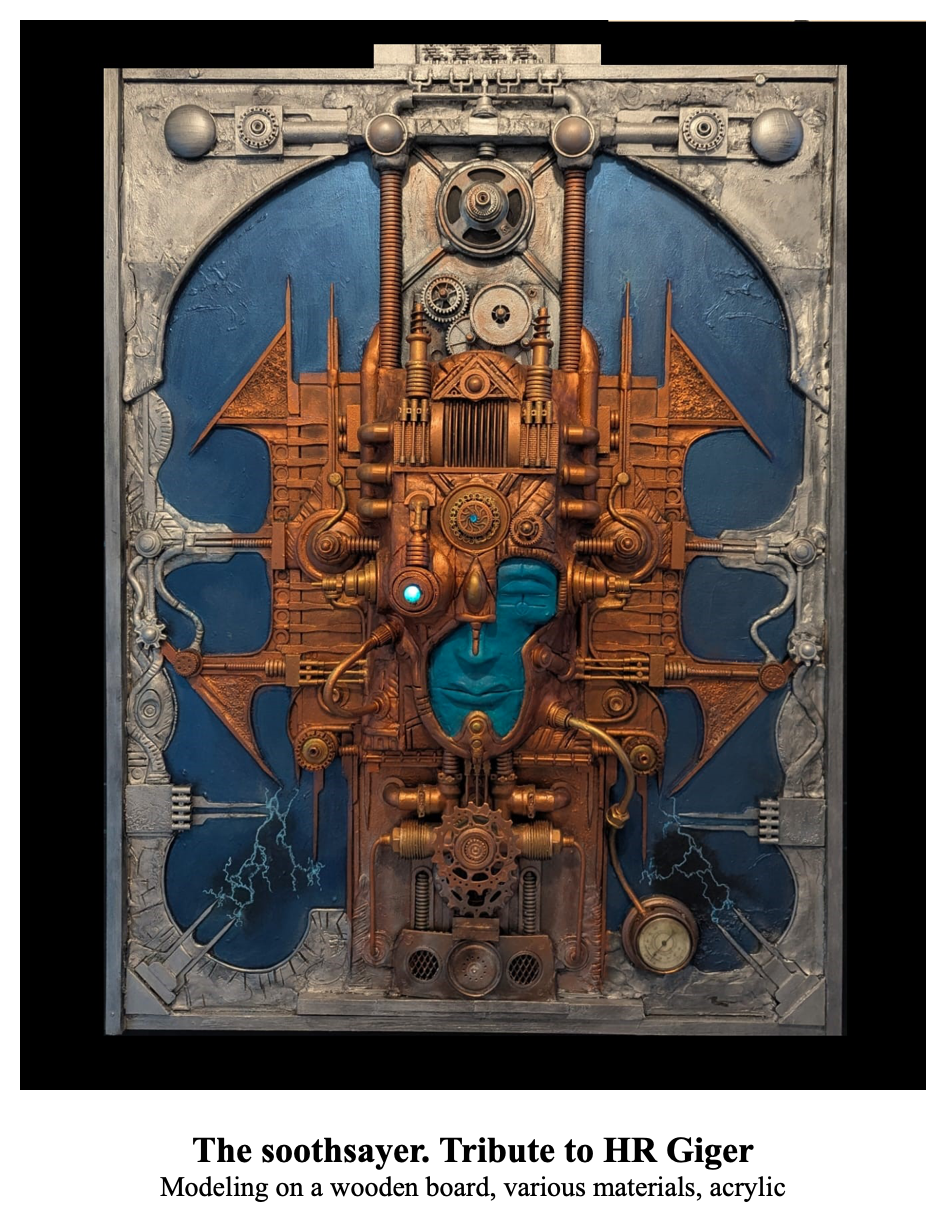
The idea of working in three dimensions came to me under circumstances that, looking back, seem almost mysterious. One day, while observing a bas-relief decorating the wall of my town hall, I was suddenly struck by the certainty that I had to put aside my pencils and felt-tip pens and begin working with physical materials instead. I immediately decided to buy some modeling clay and create figures mounted on wooden panels. It wasn’t long before the idea of making “3D paintings” completely captivated me.
Could you tell us about your creative space and the collective you belong to? Do you think it is important for an artist to have a dedicated place to create?
For several years, the living room of our apartment served as my studio. The dining table, where we shared our family meals, was permanently covered with tools and materials of every kind, while I worked from the coffee table in front of the sofa. I owe my wife a great deal for her endless patience and unwavering support.
I first learned about Ateliers 96 through Serge, a former colleague of my wife and a retired visual arts teacher who was also the association’s president. He encouraged me to apply, as one of the ten studio spaces was expected to become available. I remained on the waiting list for several years. When I was finally told that I had been allocated a studio, I was over the moon. I moved in in October 2023.
From then on, I went to the studio whenever I had a spare moment, often staying until late in the evening. I’ve even spent the night there on occasion—I installed a sofa for exactly that purpose. The studio is only a few minutes’ walk from my home and is accessible 24 hours a day. I honestly couldn’t ask for a better place to work.
Joining Ateliers 96 also meant discovering the incredibly diverse practices and sensibilities of my fellow artists. Their work ranges from painting, photography, and sculpture to the restoration of antique weapons and the making of miniature models. I have come to admire not only their creations but also their personalities and the invaluable advice they so generously share. We try to organize social gatherings whenever we can, although our schedules rarely allow everyone to be there at the same time. During the warmer months, for instance, we often hold barbecues in the courtyard leading to the building where our studios are located.
Whereas art has traditionally tended to look to the past—reinterpreting great myths or exploring the folklore of long-vanished civilizations—many of your works share a distinctly futuristic, even steampunk, aesthetic. Where does this visual and thematic fascination with the future come from?
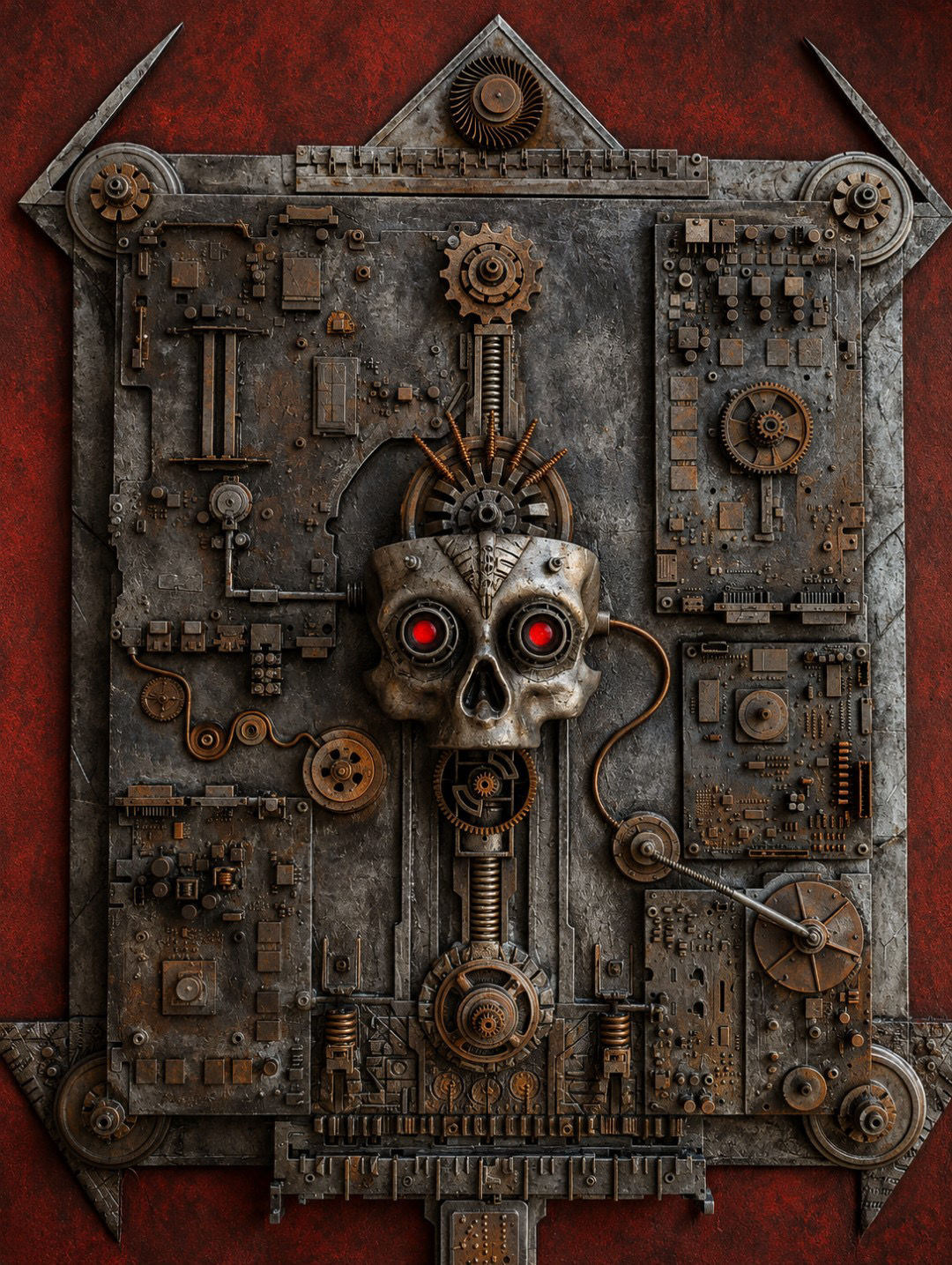
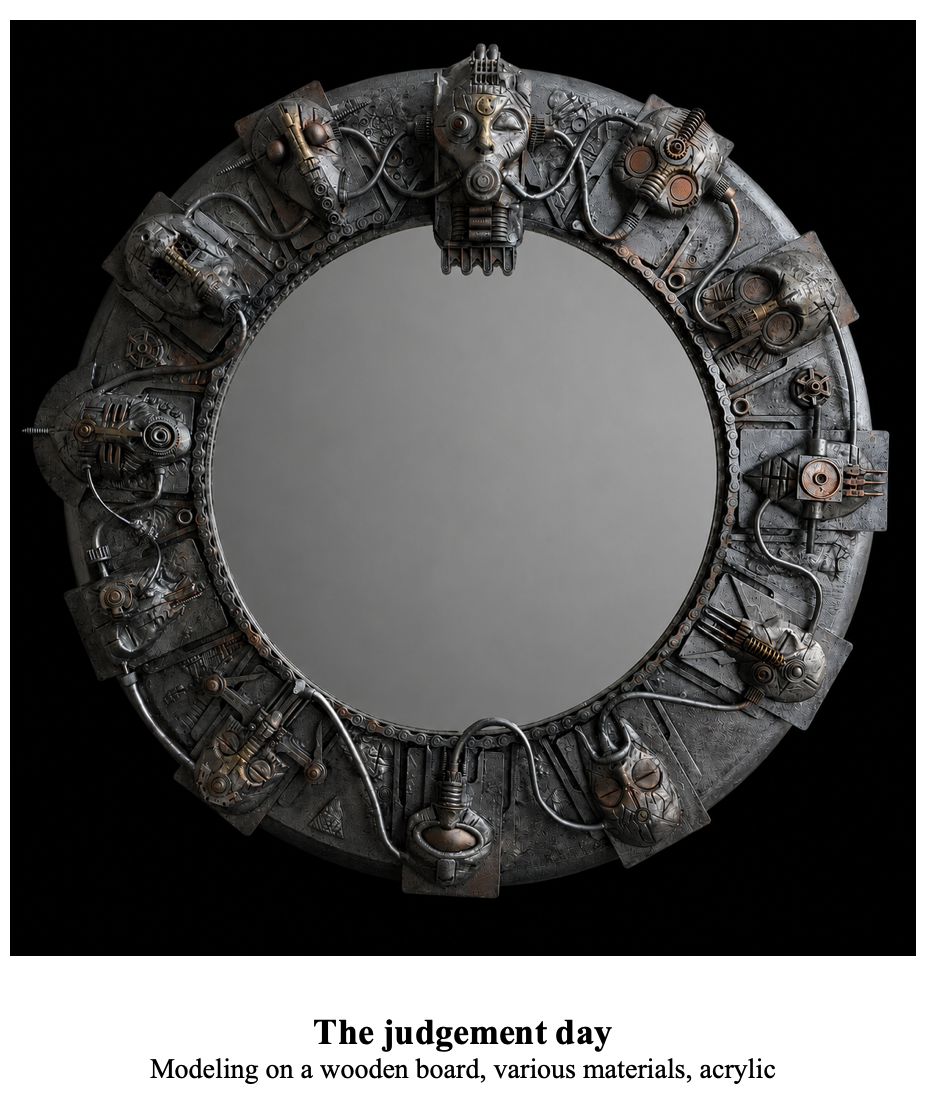
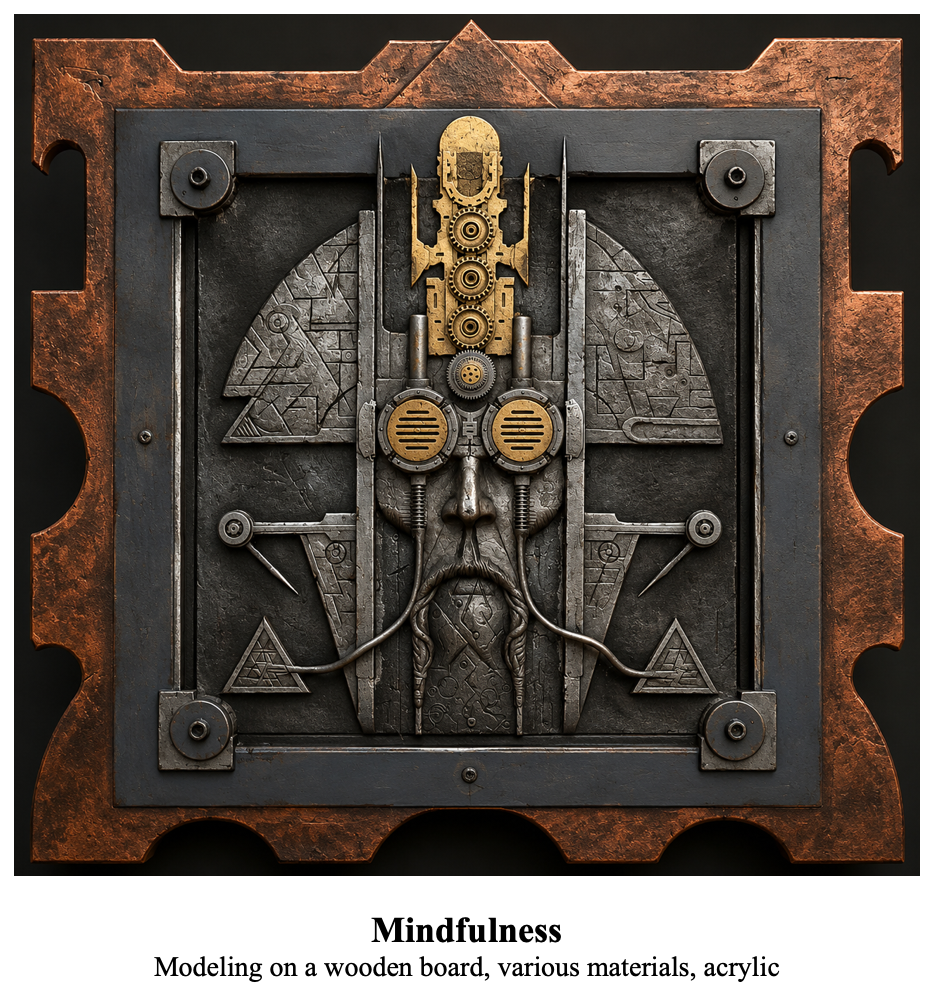
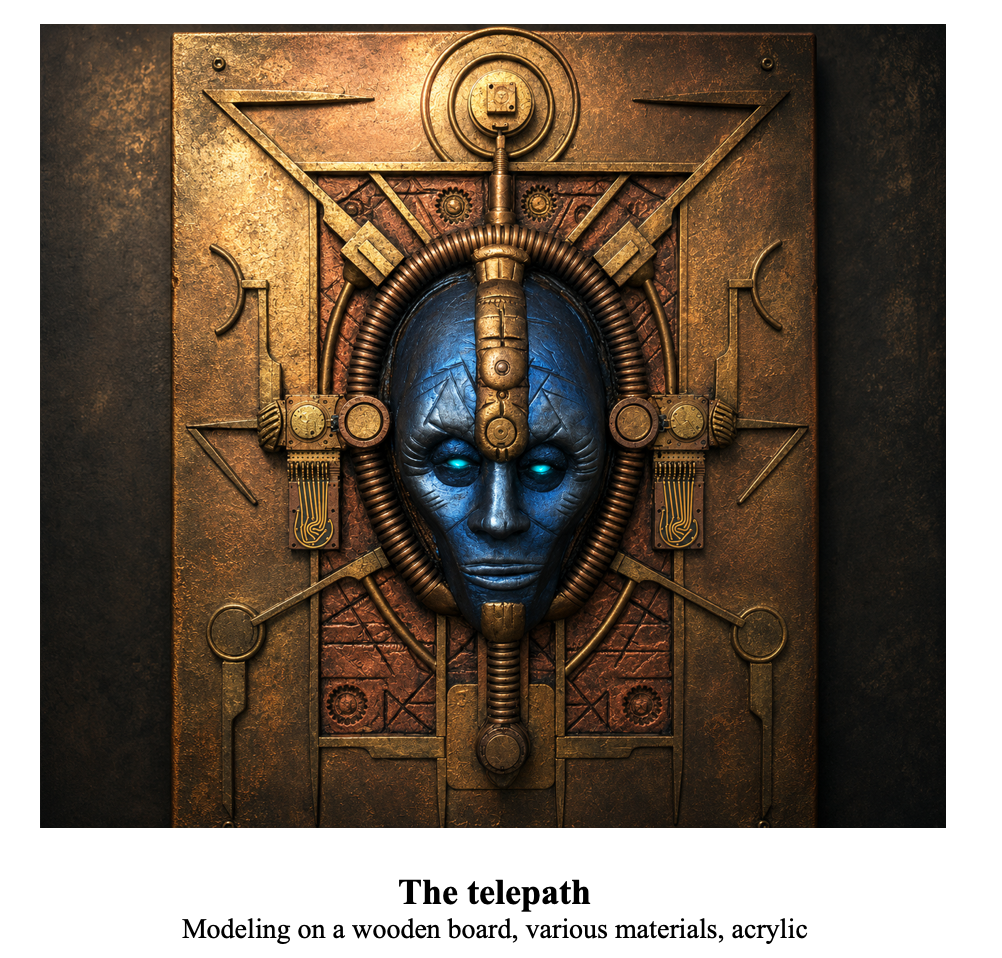
More than the future itself, it is anachronism that fascinates me—more specifically, retrofuturism, of which steampunk is a subgenre. I enjoy bringing together elements that evoke different periods of time and shaping them into a coherent whole.
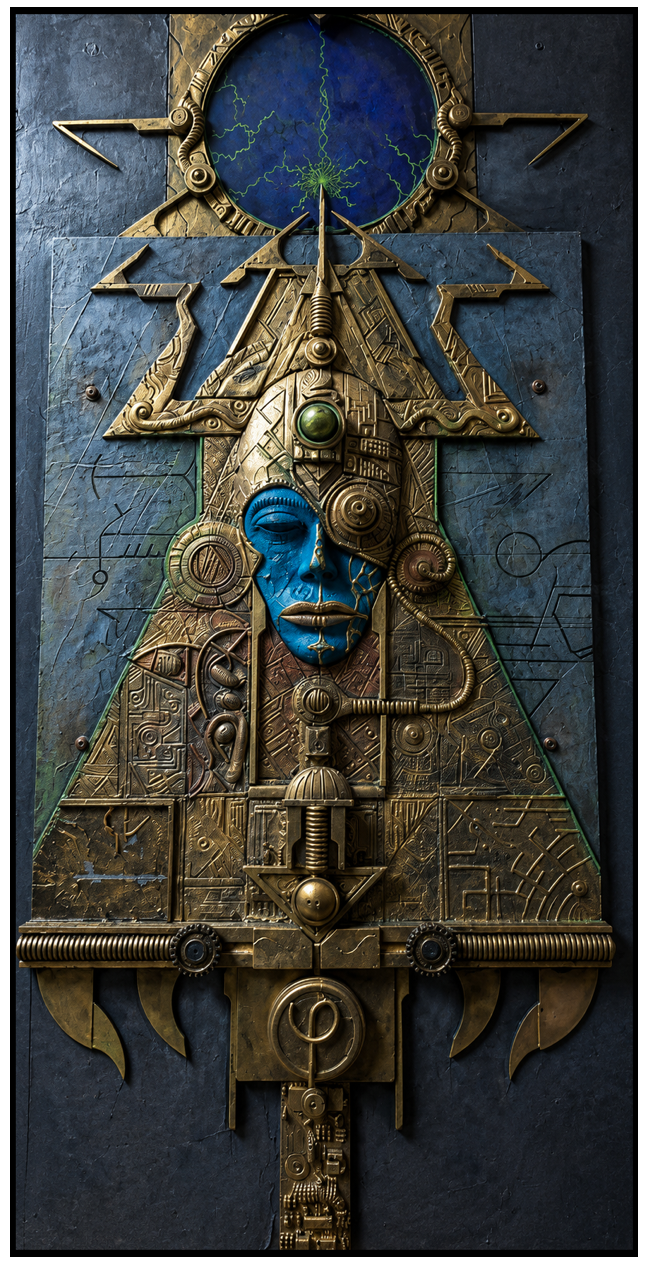
Seventh Secret (Modeling on a wooden board, various material, acrylic)
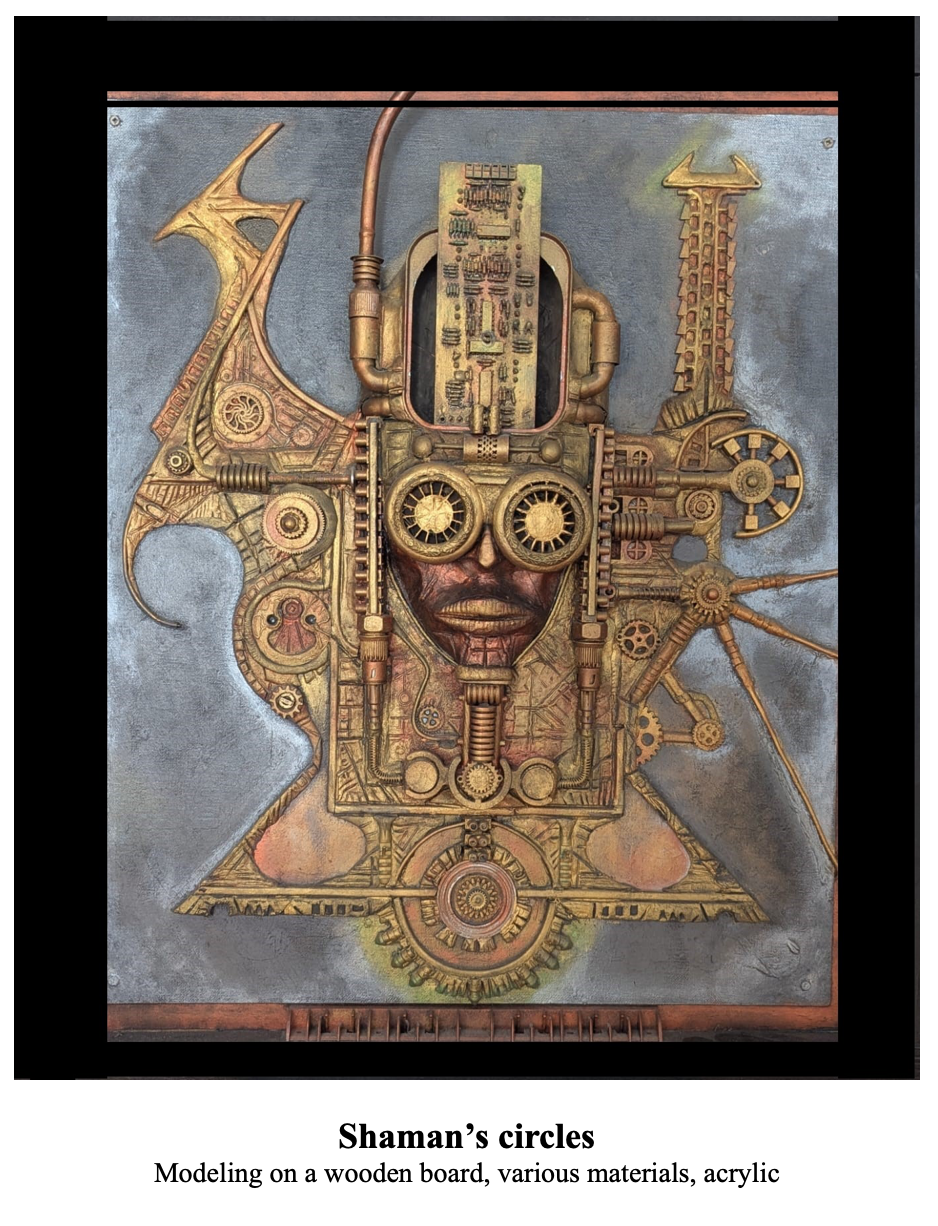
Your work in mixed-media sculpture gives remarkable depth and volume to the faces and forms you create. Is that the main reason you chose this medium over traditional flat painting on canvas?
I did try painting, but I quickly realized it wasn’t a medium I was particularly gifted at. And since I’ve always been fiercely self-taught, I never took the classes that might have helped me develop those skills. Looking back, I don’t think an art school—with its academic approach—would have suited me anyway.
Could you tell us about your creative process? Did you develop your technique on your own through experimentation, or did you train with other artists?
My primary material is a non-hardening, non-bake modeling clay. It gives me a great deal of freedom because I’m constantly revising and reshaping my work as it evolves. Another advantage is that it naturally adheres to the support—even when it’s vertical—which is essential for the way I work.
I developed this technique entirely intuitively, without any outside guidance or formal training. Over time, I also began incorporating a wide variety of found materials, which I try to transform so that they appear to be made of metal. I find that trompe-l’œil quality particularly appealing.
Although your works are futuristic, many of them feature faces with closed eyes or expressions that are almost frozen, evoking the stillness of totems. They also incorporate elements associated with religious imagery, such as the rose windows found in Gothic cathedrals. How do you explain this subtle spiritual dimension that runs through your work?
I’ve long been interested in spirituality and esotericism, but the elements you mention have a far more aesthetic than religious significance for me. That said, I do have a fascination with pagan deities—especially those that emerge entirely from my own imagination. To take the example of the rose window, I found it interesting to combine such a traditionally sacred motif with mechanical and electronic components. Once again, it comes back to the idea of contrast and anachronism that we discussed earlier.
What emotion would you most like your work to evoke?
Ideally, I would like it to create a sense of strangeness—the kind of unsettling fascination I find in the work of the Surrealist painters I admire.
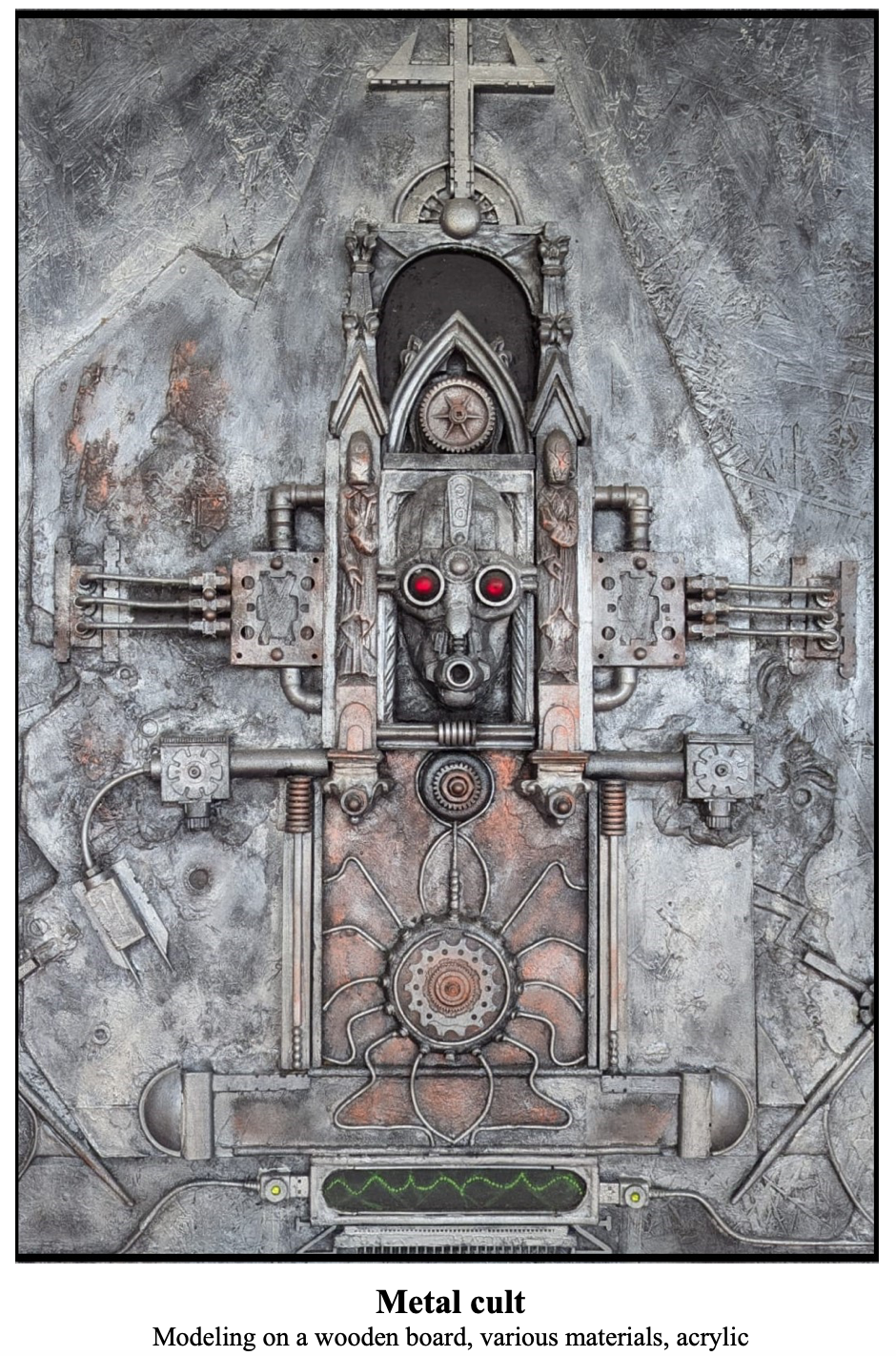
You are also a musician. Do you see a connection between music and the visual arts? Do these two artistic practices influence one another, or do they represent completely different sides of your creative identity?
They’re completely interconnected. I’ve been listening to hard rock—and metal music more broadly—since I was a teenager. The album covers of certain bands have had a profound influence on my visual imagination.
Given the futuristic nature of your work, have you ever considered creating a participatory or performative project?
I would love to collaborate with an artist or engineer capable of designing mechanisms that could literally bring my creatures to life.
Which of your works is your favorite, and why?
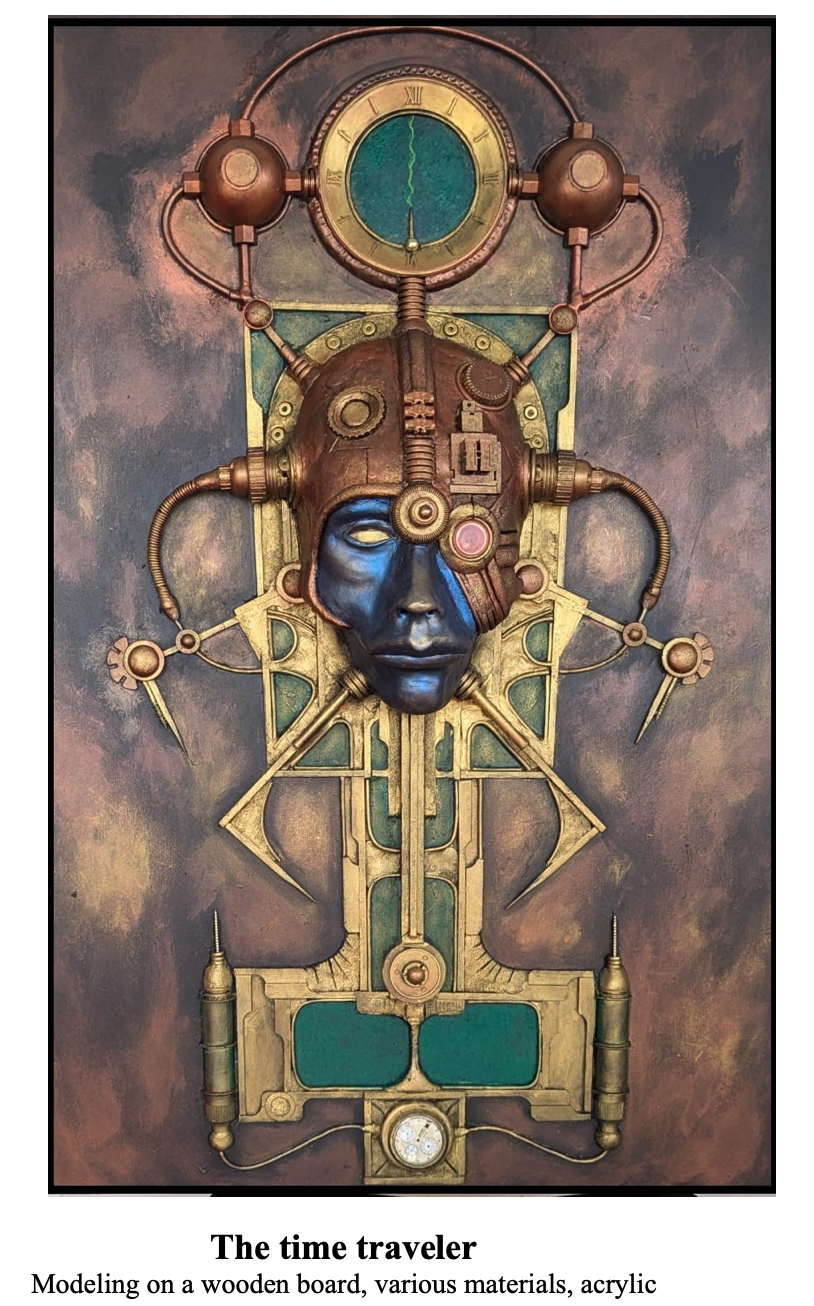
That’s a difficult question, but I think I have a particular fondness for The Time Traveler. I devoted an enormous amount of time to that piece, and I feel it allowed me to overcome a number of technical challenges while pushing my work further than ever before.