

A Portrait of Valentina Voos — Between Global Finance, Cultural Awareness, and the Slow Rhythm of True Elegance
by Dr. Marco Tassini
In an era where luxury risks dissolving into noise, acceleration, and algorithmic trends, there are still voices capable of restoring depth and direction. Among them is Valentina Voos — a former tax lawyer and ex-trader turned cultural observer, storyteller, and ambassador for a more conscious form of elegance. Her journey, shaped across continents and disciplines, mirrors a transition many in the industry are only beginning to understand: from fast consumption to meaningful curation, from logos to knowledge, from performance to purpose. This conversation traces the story of a woman who navigates the world of luxury with the clarity of a strategist and the sensitivity of a collector — reminding us that true style is never loud, and never accidental.
There are people who enter the world of luxury from the outside, attracted by its shine. And then there are those who arrive through a different path — through knowledge, responsibility, and an almost analytical love for beauty.
Valentina Voos belongs unmistakably to the second category.
Born in Rio to a Portuguese-Brazilian family, raised across continents and educated between Europe, the United Kingdom, and the United States, she carries within her the natural fluency of someone who has inhabited many worlds. Before becoming a recognizable face in the landscape of Swiss digital culture, she built a formidable career: tax lawyer, ex-trader, expert in global finance and corporate structures. “My background is very strong in taxation, finance, and the corporate world,” she explains. “I’ve worked with major fortunes and conglomerates, and I spent years traveling everywhere.”
This global orbit is what shaped her gaze — sharp, disciplined, and allergic to superficiality.
Her entry into the online sphere was almost accidental. In 2015, long before the explosion of social media, she began writing a blog as friends encouraged her to share the reflections she collected during her travels.
“People asked me if I wasn’t afraid to travel so much,” she recalls, “and it was suggested that I write a blog. I now have almost seven hundred articles.”
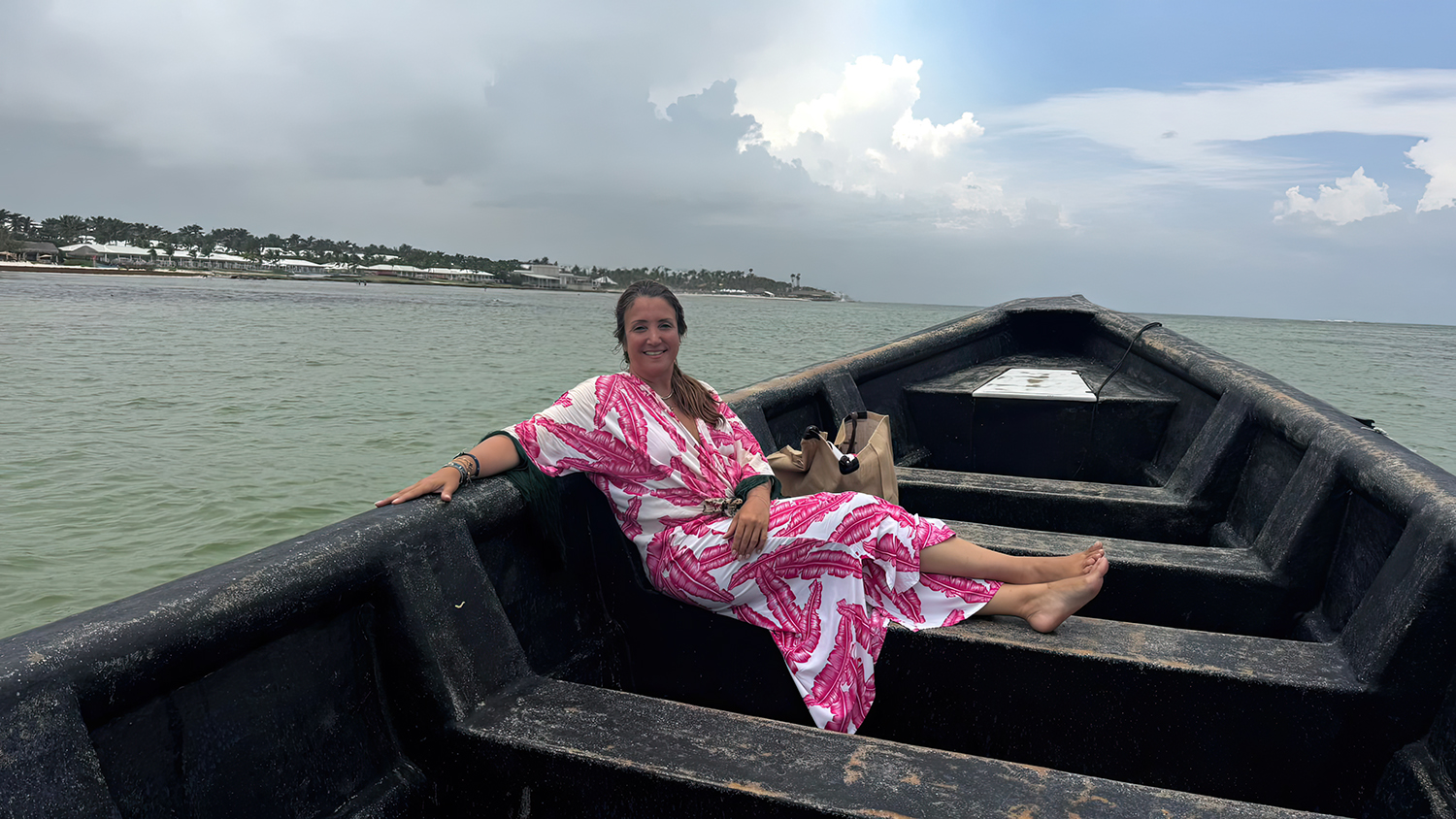
Writing was her first language of expression. And it remains, for her, the most honest one.
Valentina never intended to become an influencer — the word didn’t even exist in her vocabulary when she started. Her social media presence grew slowly, organically, rooted in her professional life and personal interests: economics, craftsmanship, technology, crypto, the evolution of luxury markets.
“I simply wanted to share my experiences, my point of view according to my age, in an organic way.”
Her first major collaboration came not through a marketing funnel but through the natural geometry of Swiss professional circles. Nespresso discovered in her something they didn’t have among the traditional lifestyle profiles: a business mind with a refined cultural sensibility. She was assigned to the professional branch, hotels, business lounges, international spaces. Not the usual “at-home coffee machine” universe.
Since then, her partnerships have expanded, but her criteria remain unwavering: she only works with brands whose values align with hers, where craftsmanship, longevity, and cultural integrity are non-negotiable.
Today she is ambassador for Mazda (Switzerland and Europe), Club Med, and The Bicester Collection, a relationship born from her critical writing on overproduction and fast luxury.
“I don’t take every brand,” she states clearly. “Of course, everyone works for money. But I will not work for anyone just for that. I have very clear values.”
One of the most compelling aspects of Valentina’s thought – and the one that resonates profoundly with The Edge – is her critique of the current rhythm of luxury production.
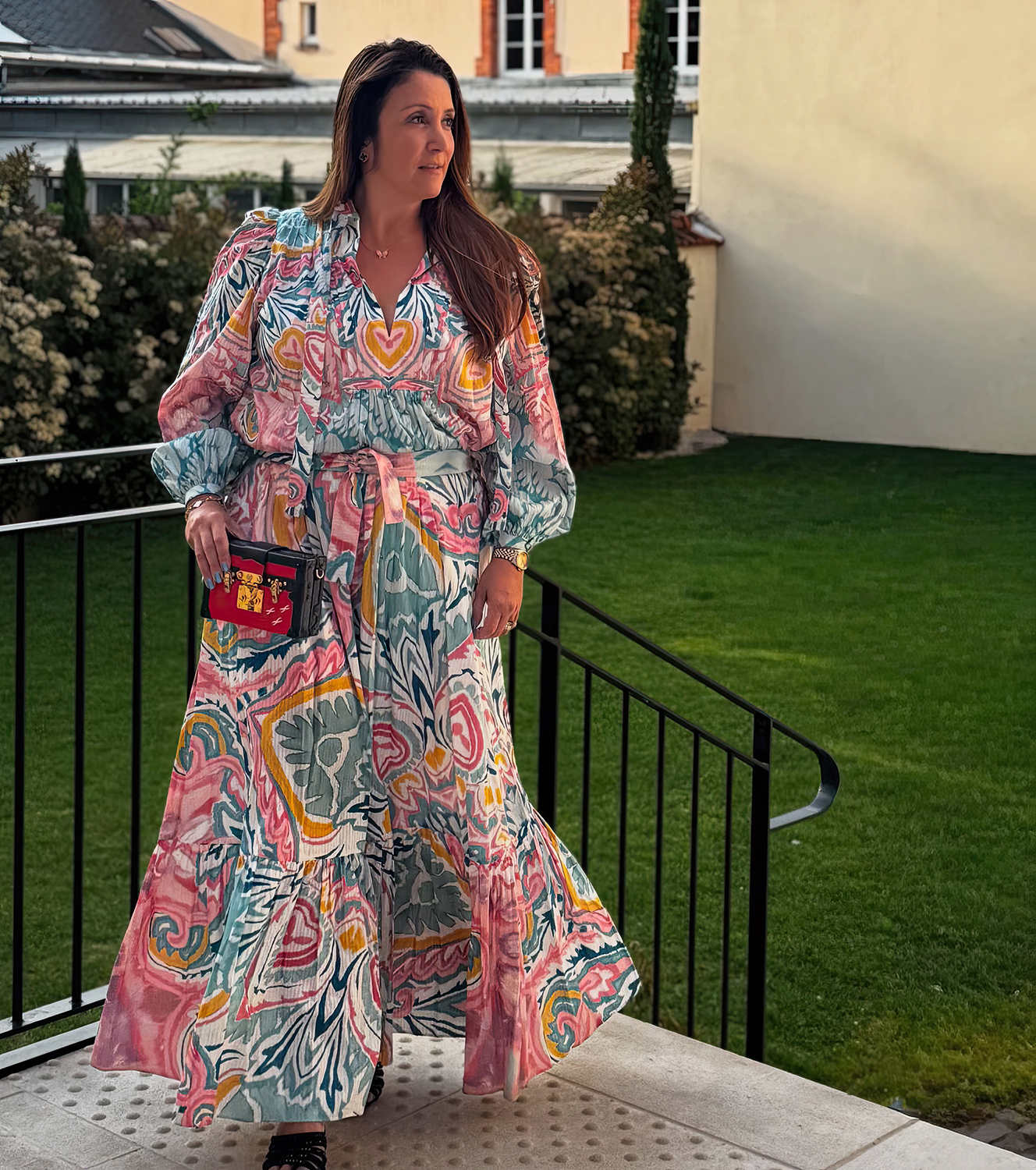
She speaks not as a nostalgist, but as someone who understands markets from within.
“I wrote about fast fashion, not Zara or H&M, but the fast fashion of luxury. Producing a new collection every six weeks, the waste, the pressure to buy constantly… The industry became a machine.”
She applauds France’s law forbidding the destruction of unsold products, but insists the real solution lies upstream:
producing less, producing better, and restoring the dignity of craftsmanship.
In our conversation, we found ourselves aligned.
As I told her, saving European savoir-faire is a priority, because what is lost in craftsmanship is often lost forever.
“People today feel a sense of belonging through logos,” she says. “They think they belong to society because they carry an object. For me, it’s the opposite. I am who I am, and the object is part of me, not me part of the object.”
This, perhaps, is her most important message: