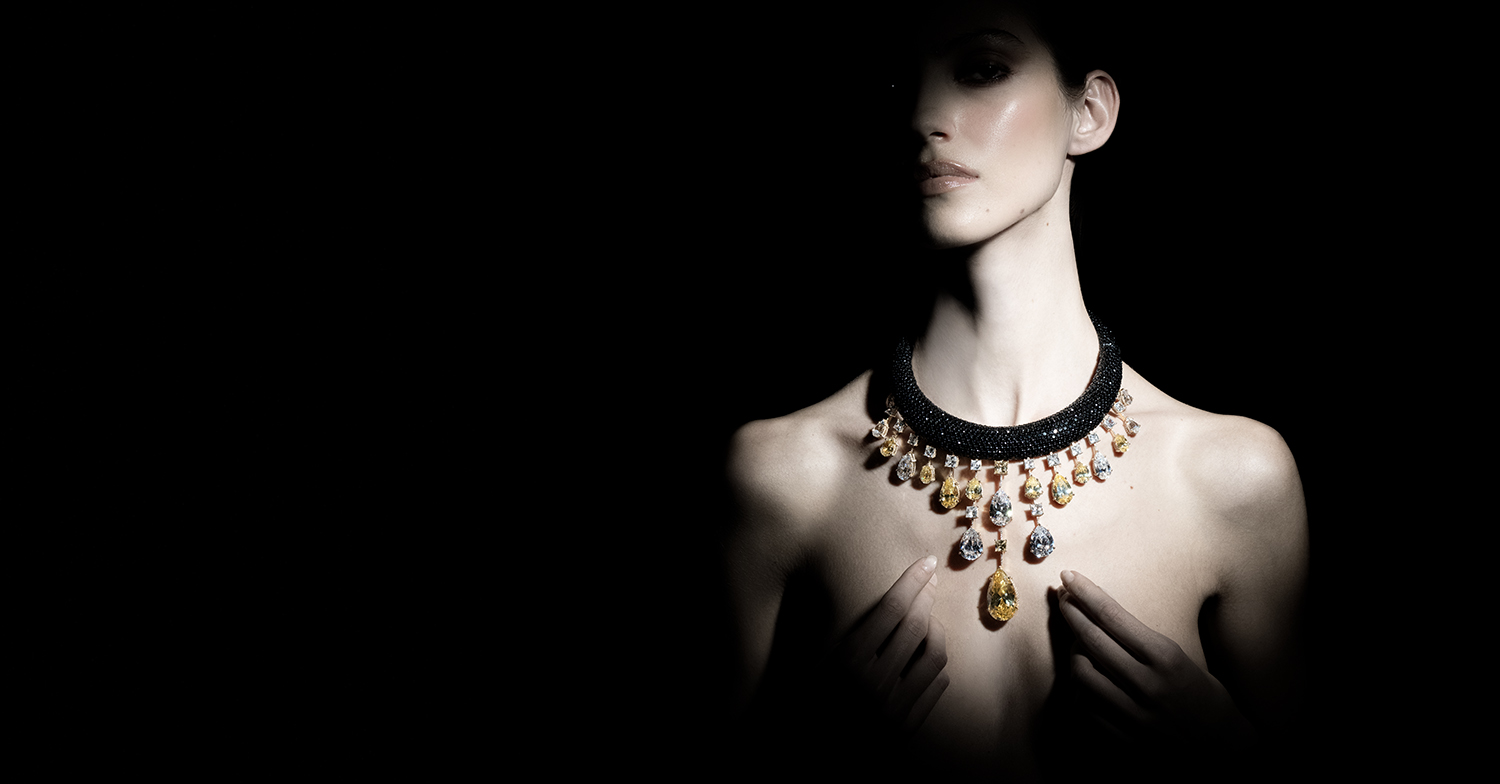

In Stéphane Rolland’s haute couture ateliers, embroidery is structural. Diamonds, jonquil stones, rubies, garnets, topazes and crystal are deployed as integrated matter, embedded directly into gazar, crepe, organza and satin. Plexiglass cubes become luminous carriers of precious stones; doves emerge in diamond pavé; ruffs crystallise into halos of refracted light. These are not jewels one removes at the end of the evening. They belong to the garment’s architecture, inseparable from its line and intention. The atelier treats gemstones as thread, calibrated, disciplined, absorbed into silhouette.
Beyond these integrated embroideries lies another register. A constellation of autonomous jewellery pieces emerges, conceived in collaboration with Diosa Paris, whose craftsmanship anchors Rolland’s sculptural vision in material exactitude.
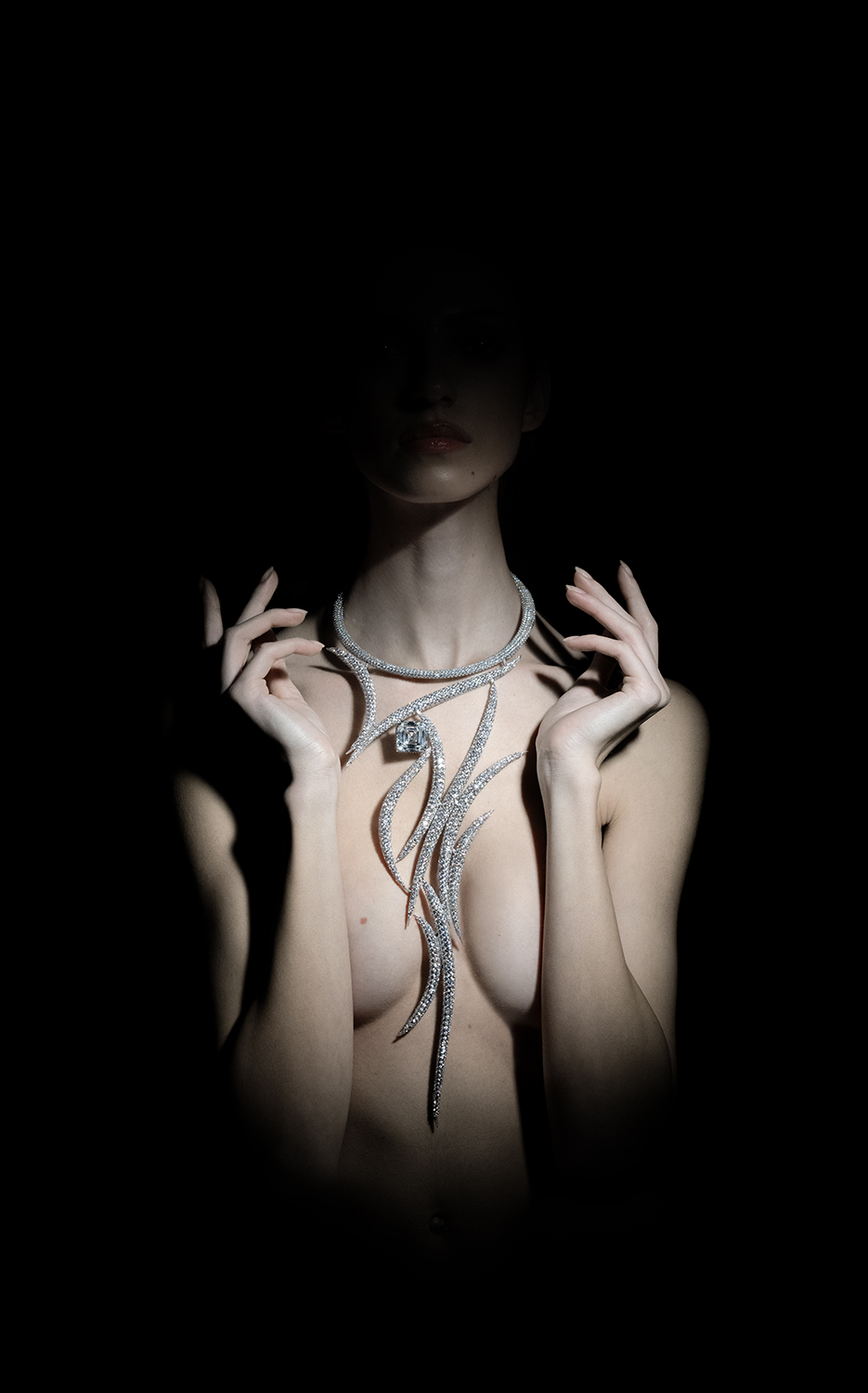
The Traits de Plume necklace and earrings in white gold and diamonds exemplifies linear discipline. Diamonds are set in graduated articulation along a slender structural spine, creating the illusion of a single, uninterrupted stroke. Its refinement lies in invisibility: micro-settings maximise the penetration of light while preserving suppleness of movement. It reads as calligraphy, yet functions as precision engineering.
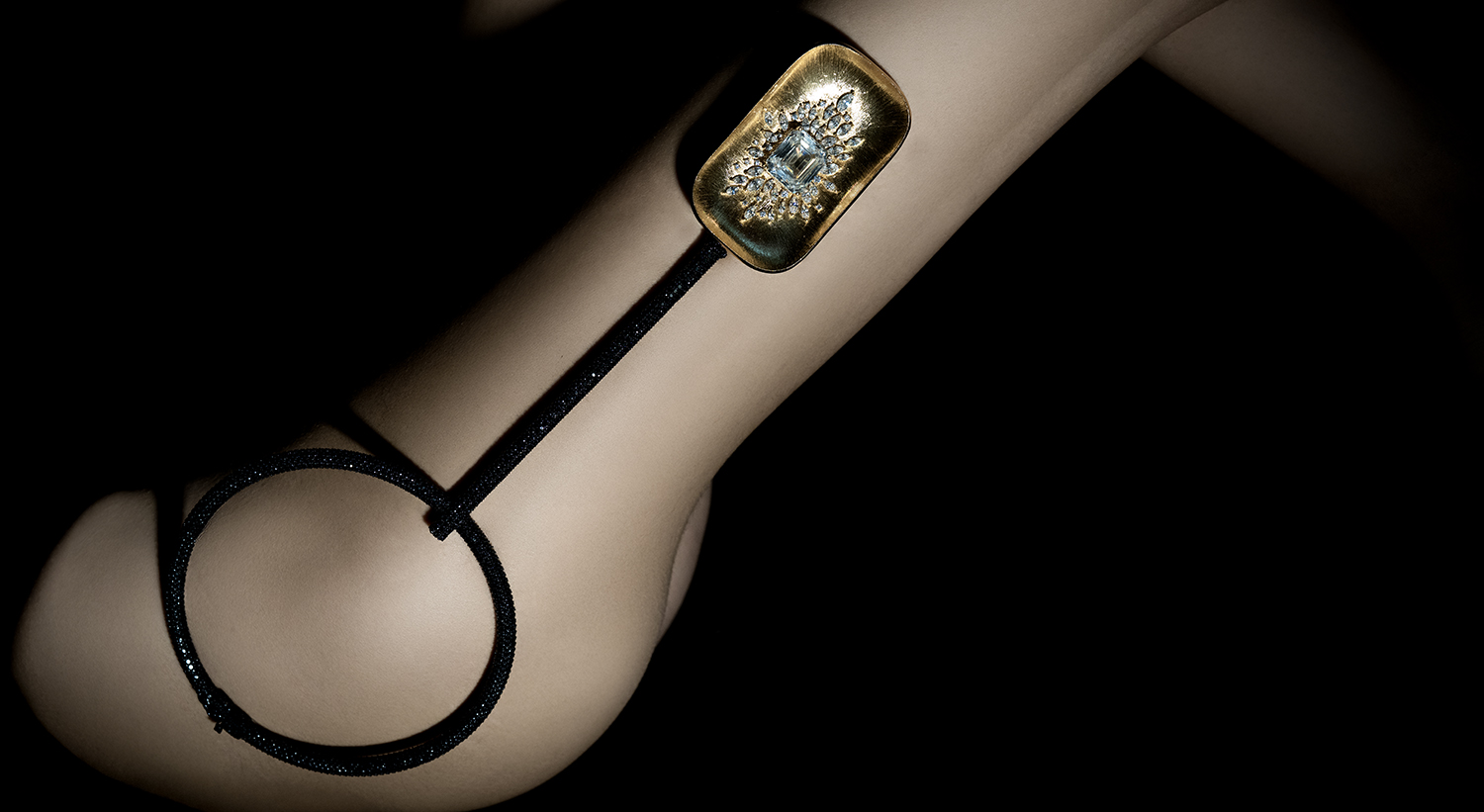
The Black Diamond Tank necklace, for instance, is engineered with deliberate density. Its pavé surface absorbs light rather than disperses it, each stone calibrated to sit flush within a visually rigid yet articulated gold structure. The brushed gold basin element, edged with diamonds, introduces a sculptural counterweight, a measured tension between matte restraint and crystalline brilliance. Weight distribution is meticulously calculated so the piece rests with authority along the clavicle. It does not collapse into ornament; Rolland’s jewellery remains a structural gesture.

The ring monumental, asserts itself as a focal point. Its structure transforms the hand into a pedestal, the gem held in deliberate tension within a sculptural framework. Here, jewellery inhabits space. The citrine is framed within an assertive construction that suggests force. What emerges is presence, sovereign, controlled, almost confrontational. The mounting establishes a dialogue between weight and elevation; it is not sparkle that defines the piece, but structure.
Across these works, the same discipline prevails: articulated hinges, reinforced clasps, counterbalanced weight, invisible settings. Engineering ensures that what appears monumental remains entirely wearable.
by Alexandra I. Mas