I was walking through Paris when a man stopped me. “Cool hat. Where did you get it?” he asked. “Vintage,” I said. “Of course,” he replied, as if that alone explained everything. I kept walking, but the moment stayed with me. In a city where you can tap your phone and order the same bag as everyone else, the only things that still register as special are the ones that cannot be reproduced… The pieces that survive by chance, travel across decades, and land on your head on a random weekday.
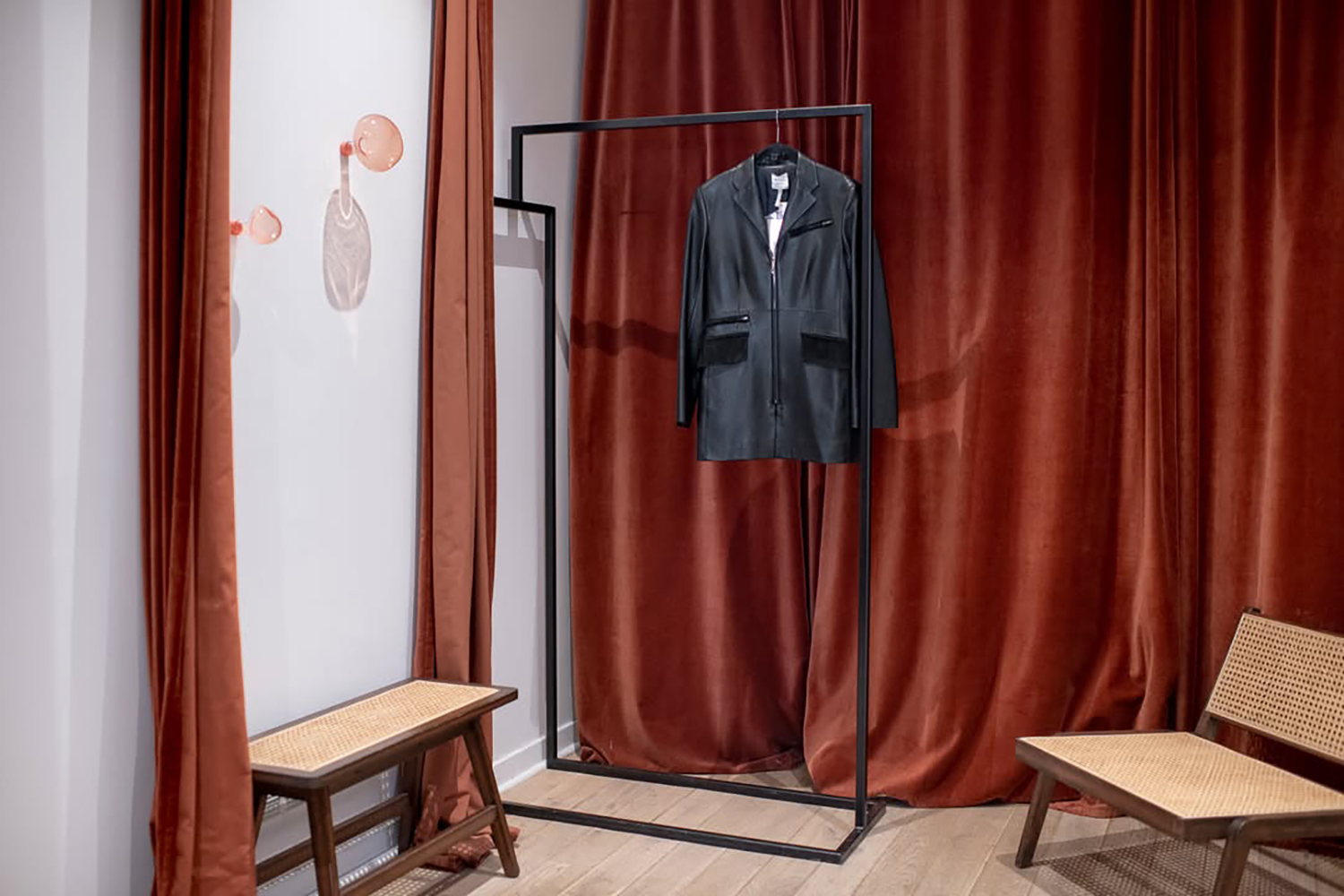
Paris feels that shift everywhere. Not in the thrift stores, but in the curated vintage boutiques that now anchor the Marais, Sentier, and République. The city has become a laboratory of archival silhouettes, precise eyes, and decades collapsing into one another. Over the past weeks, I spoke with several of the boutiques shaping this new landscape. What emerges is not nostalgia but a new grammar of luxury built on rarity, expertise, and the desire to stand apart in an era of global sameness.

The Parisian Market: Rare pieces, Higher prices, Global demand
Ask anyone in Paris’s vintage circuit and you’ll hear it instantly: demand is exploding, supply is running out.
“At some point, the rare pieces just became harder to find,” says Thibaud Beugre (founder of Demain Rétro ). “The demand exploded — and the prices followed.”
The Statement, a shop born from the meeting of three others: Jeannette, Riis Studio, and Cosmic Affair Vintage, sees it too: “In seven years, everything has changed. The quality
vintage is harder to source, and even basic charity shops cost more.”
And from Nice Piece, founded in 2002 by Bonaventure Kell, it’s clear : “Everyone is
looking for beautiful, very beautiful pieces. But they’re harder to find, and the prices reflect
that.”
What used to be a niche market is now international. Alexia Marchand, who founded Open Dressing, estimates that “70% of the clientele is foreign, mostly from the U.S., the U.K.,
and Asia.” These shoppers come with references, screenshots, runway years, silhouettes in
mind. They aren’t browsing; they’re hunting.
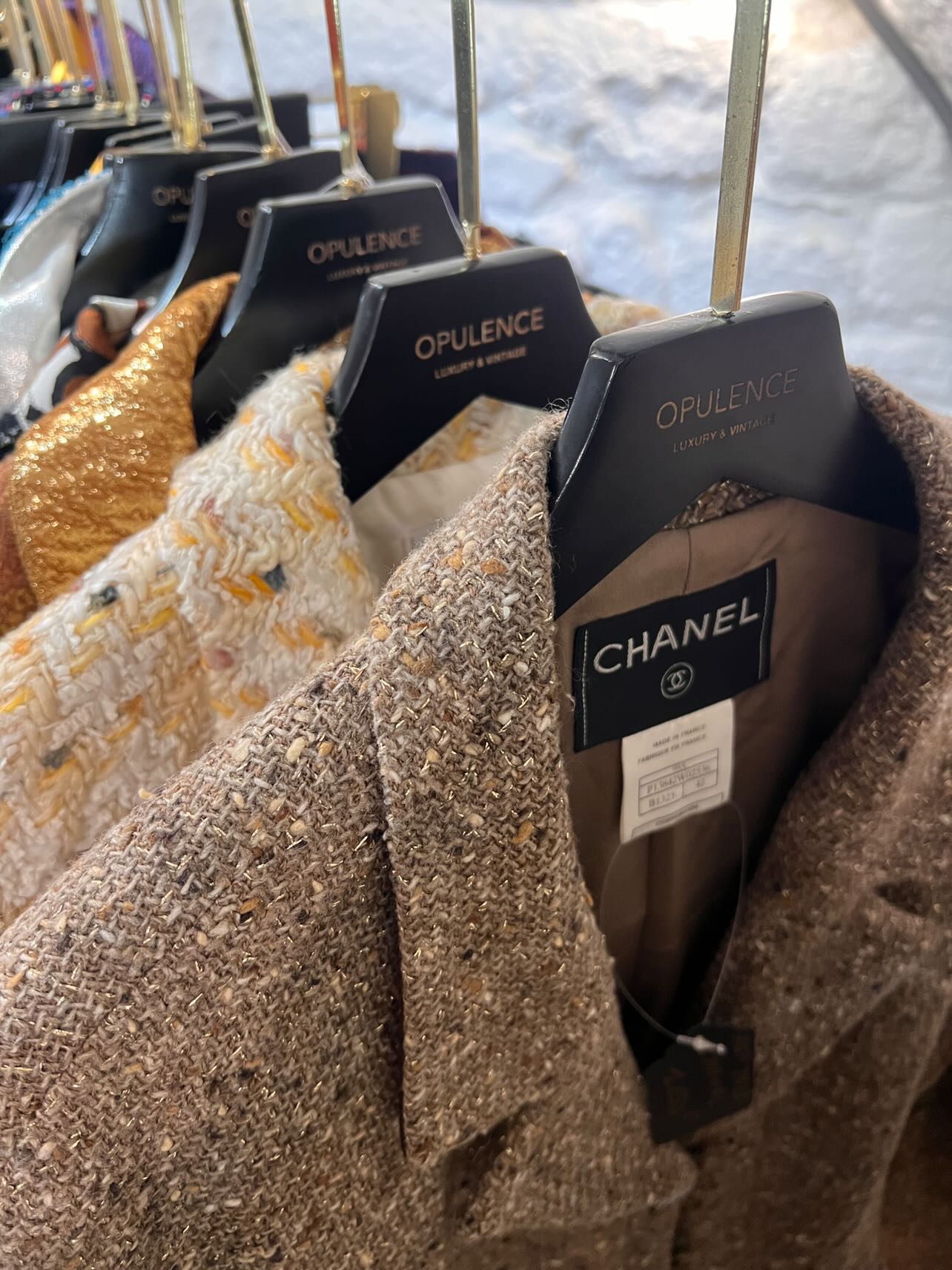
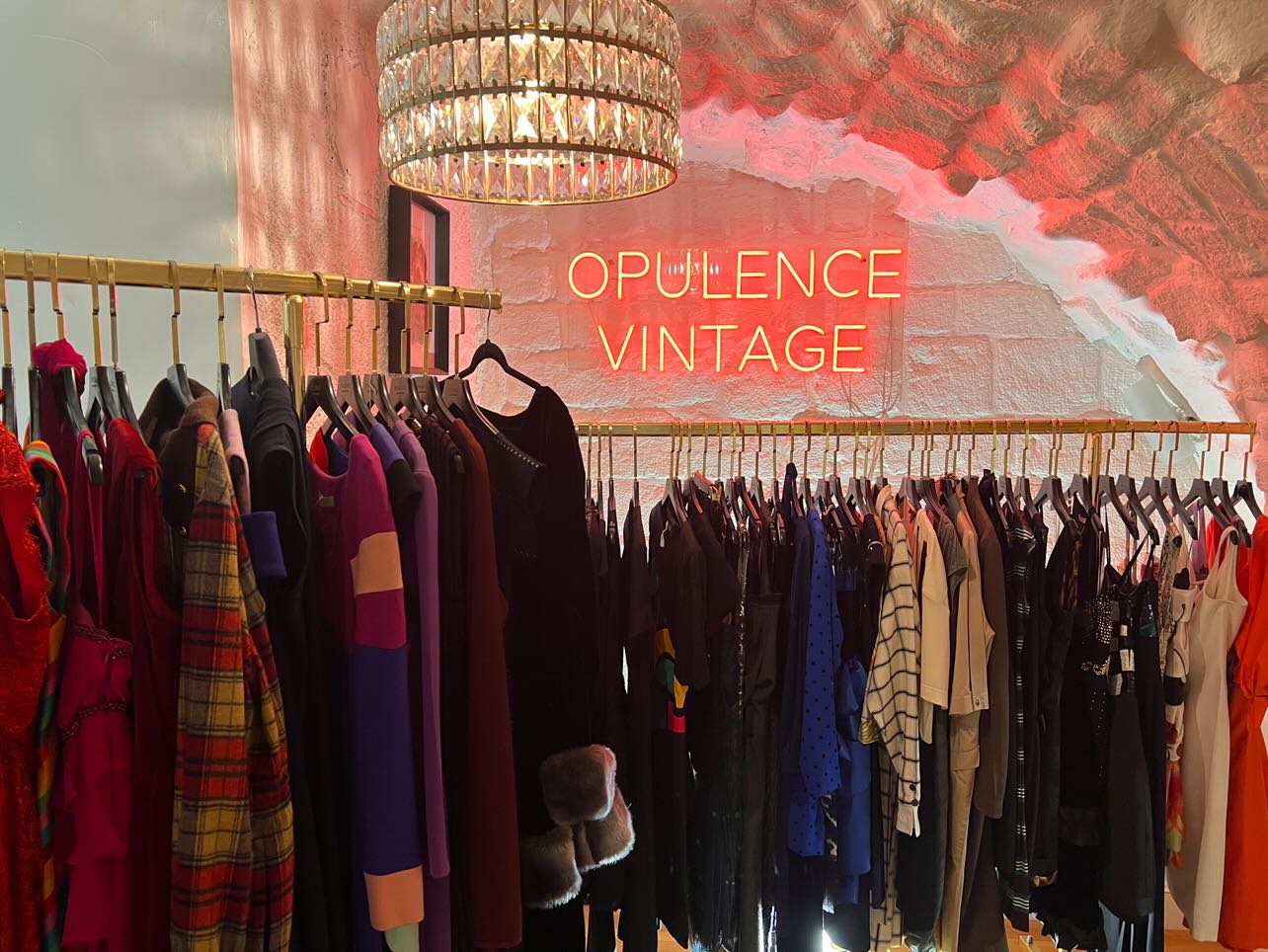
For Raul Barragán Sanz, owner of Opulence Vintage — a boutique filled with archival YSL,
Chanel and other Paris heavy names, tucked away on rue Danielle Casanova near Place
Vendôme — the reality is quite different. He told me most clients walk in looking for a gift, a
single piece that feels like Paris in their hands.
Paris isn’t only a city that sells vintage anymore. It’s slowly becoming a place where vintage begins to shape tourism.
The Shift From Thrift To Curation
If thrifting is about quantity, Parisian vintage is about editing. It’s a different logic, a different gaze — one built on precision rather than accumulation.
“The fripe is not vintage,” says Bonaventure Kell from Nice Piece. “Vintage is selection —
the pointu — and the nostalgia of a chosen era.”
Others describe the same shift in their own way. Demain Rétro explains their method
clearly: “What matters is the cut, the material, and the silhouette a piece can create today.
We don’t fetishize a decade — we look for dialogue with contemporary dressing.”
The Archivist by Elias Hosoi, whose collection centers on the ’90s and early 2000s, puts it
differently: “A piece can be anonymous if it has justesse. It’s not about the label, it’s about
coherence.”
This attention to coherence is also what drives The Statement, who source constantly —
brocantes, charity shops, auctions — chasing pieces with presence. “We hunt every day to
find pieces powerful enough to stand on their own.”
And at Opulence Vintage, where many items come through depositors, another pressure
emerges — one that didn’t exist a decade ago: “The big challenge now is authenticity. The
fakes are excellent. Even professionals doubt sometimes — especially with pieces after
2015.”
All of them, from archivists to hunters to depositors, converge on the same conclusion: in Paris, curation is no longer about taste alone. It’s about expertise, and navigating a market where knowledge has become survival.
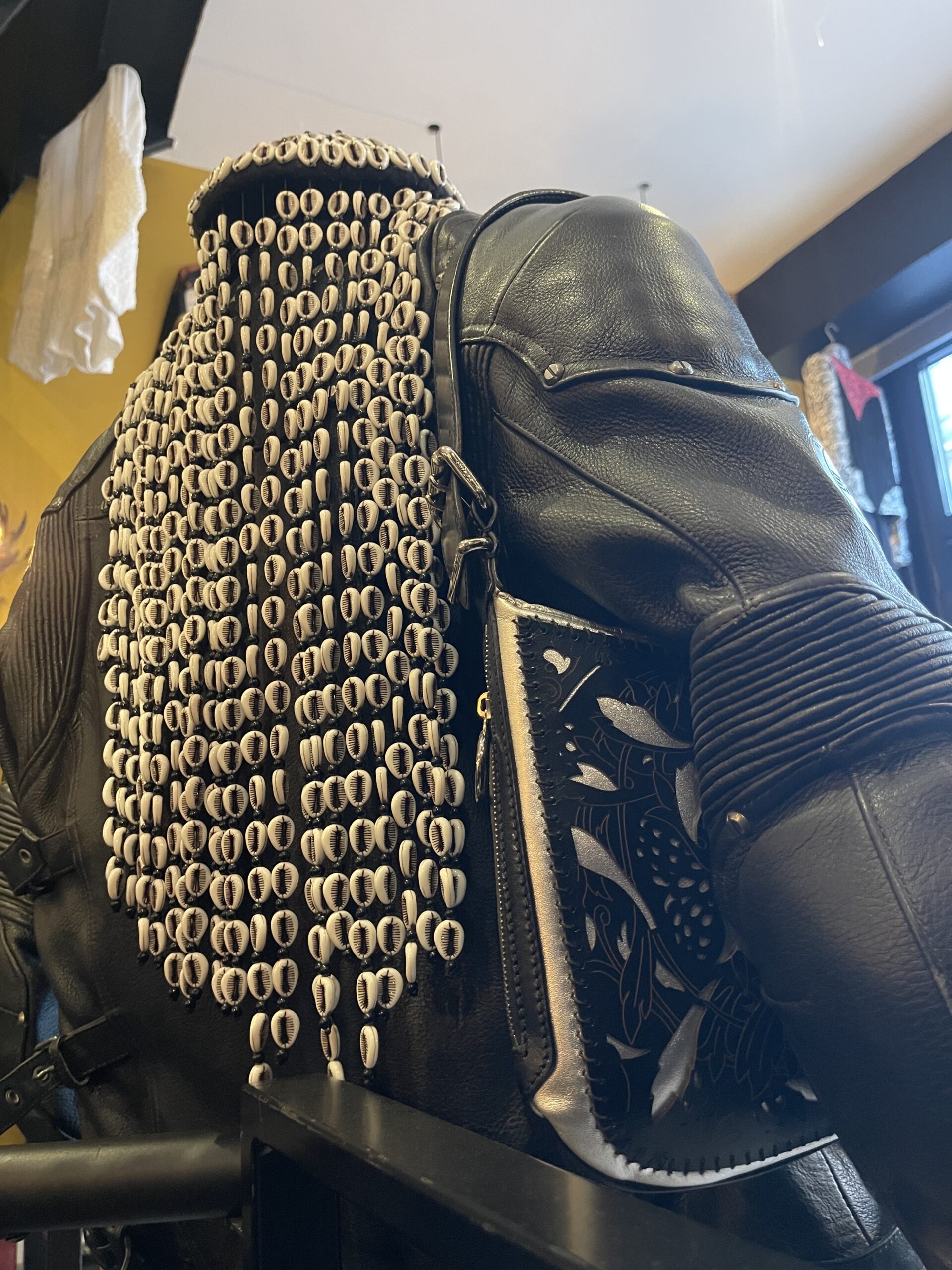
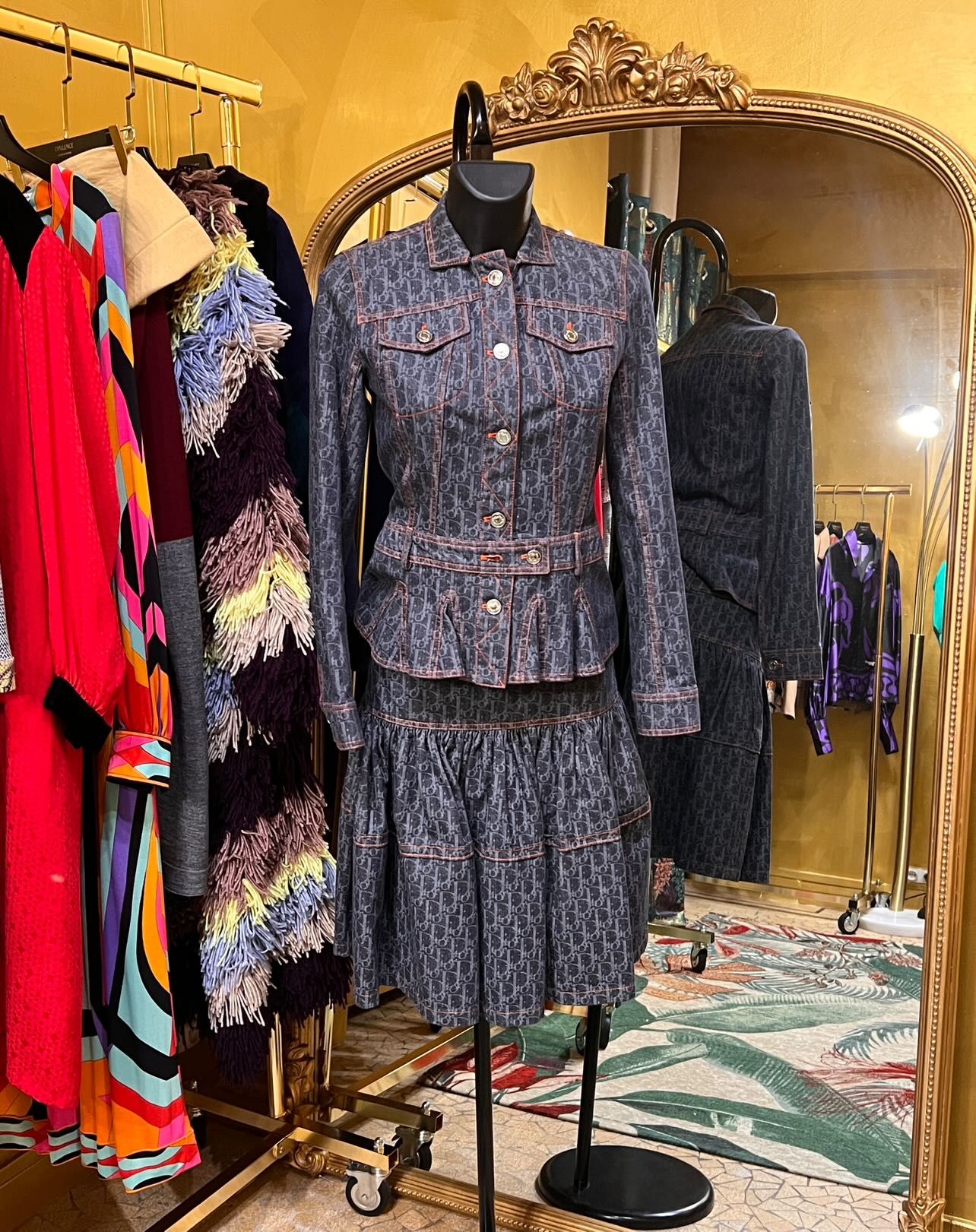
What surprised me most is how uniformly the boutiques described their clients. No matter the neighborhood or the price point, they all seemed to be speaking about the same kind of shopper. “They are very piquées,” says The Statement. “They look for the exceptional or the coup de coeur. They express themselves through clothes.” Demain Rétro goes further: “They want to find their piece not consume in quantity. It’s a very affective process.”
Nice Piece echoes that emotional dimension: “Even if they don’t buy anything, they leave with stars in their eyes. That’s what a strong selection does.”
At Open Dressing, the pattern continues: clients come mostly for “branded, emotional pieces: the coup de coeur items.”
The Archivist observes a wider cultural shift shaping this behavior: “With prêt-à-porter prices going up, vintage becomes the logical alternative. And the advantage is clear: the cuts and fabrics of the ’90s and 2000s are superior to what is made today.” Taken together, these voices point in the same direction. Vintage is no longer about sustainability. It is about identity. The people who shop it want to look singular, in a world where the new has become uniform.
This is perhaps the biggest paradox.
We live in a moment where the same Miu Miu skirt, the same Margiela Tabi, the same Loewe handbag can circle the globe in hours — purchased, posted, replicated, turned into a meme before it even has time to belong to anyone.
The result is simple: luxury feels less luxurious. If everyone can buy the same item in three clicks, what is the value of owning it? This is where vintage slips back in, almost as a quiet revolt against the flattening of taste. “They come for pieces that fall outside the usual frame,” the archivist tells me. “The ones that keep their singularity.” Demain Rétro sees the same instinct: “Clients have a deeply emotional relationship with clothing: they love the idea of finding their piece, rather than consuming in terms of quantity.” The search for something no one else owns has become the new form of desire, and boutiques respond with a level of attention that borders on archival discipline.
Rarity, Fragility, and Extinction
Every boutique sees the same danger: vintage is finite. “The ’70s pieces are almost gone,” says The Statement. “Very hard to find in good condition.”
Nice Piece describes the structural shift more clearly: “It used to be easy — families sold to shops. Now they sell on platforms and pop-ups. The flow changed completely.”
Opulence Vintage adds another layer: “Authenticity is the real battle. The quality of fakes is alarming.” Rarity builds desirability, but it also speeds up the disappearance of what remains. In Paris, sourcing has turned into archaeology. Every item is a fragment of a decade that will not return. And if vintage continues to stand as the main alternative to luxury, the tension will only intensify: desire keeps rising while supply keeps shrinking. Many assume Vinted and Vestiaire are a threat to physical boutiques, yet the reality is far more complex. “Platforms are tools,” says The Statement. “Some shops sell there. It extends reach.” But that reach doesn’t replace the fundamentals. “Selling vintage online is complex because every piece is unique,” says Demain Rétro. “You need photos, measurements, descriptions… it’s extremely time-consuming.” The archivist captures the essential distinction: “Platforms don’t offer reading or experience. To understand a garment, you have to see it — and touch it.”
Open Dressing reaches the same conclusion: “The boutique is primary. People want to try. A cut is a cut — you have to feel it.” Digital can distribute, but physical spaces give meaning.
What the Paris Vintage Market is Teaching Us About the Future of Fashion
After speaking with all these boutiques, the conclusion becomes unavoidable. Paris is no longer simply a fashion capital. It is becoming the capital of curated pasts.
In a world of infinite access, the only true luxury is the unrepeatable. When style is flattened by algorithms, people gravitate toward silhouettes with texture, provenance, and memory — pieces that hold something the new can’t deliver. And when I think back to the man who said “Of course it is,” I realise he wasn’t just observing a hat. He was giving the key to the new logic of desire.
Of course it’s vintage — because singularity has become rare. Because repetition has become the rule. Because wearing a piece of time now carries more meaning than wearing a piece of trend. What Paris’s vintage market teaches us is this, perhaps: the future of fashion may not lie in what comes next, but in what cannot be found twice.
by Doria A., 2025
Interviewees mentioned: Thibaud Beugre (Demain Rétro), Bonaventure Kell (Nice Piece), Alexia Marchand (Open Dressing), Raul Barragán Sanz (Opulence Vintage), Elias Hosoi (The Archivist), and The Statement.