
A New Cultural Horizon
by Alexandra I. Mas
With the opening of Espace Gabrielle Chanel at the Power Station of Art in Shanghai, CHANEL deepens its presence on the international cultural map. This new centre, created through a long-term partnership between CHANEL and the Power Station of Art, signals a shift in how luxury houses engage with the artistic ecosystem. It is not an annex, nor a branded pavilion, but a cultural infrastructure built to endure — a gesture of confidence toward contemporary creation and those who will shape its future.
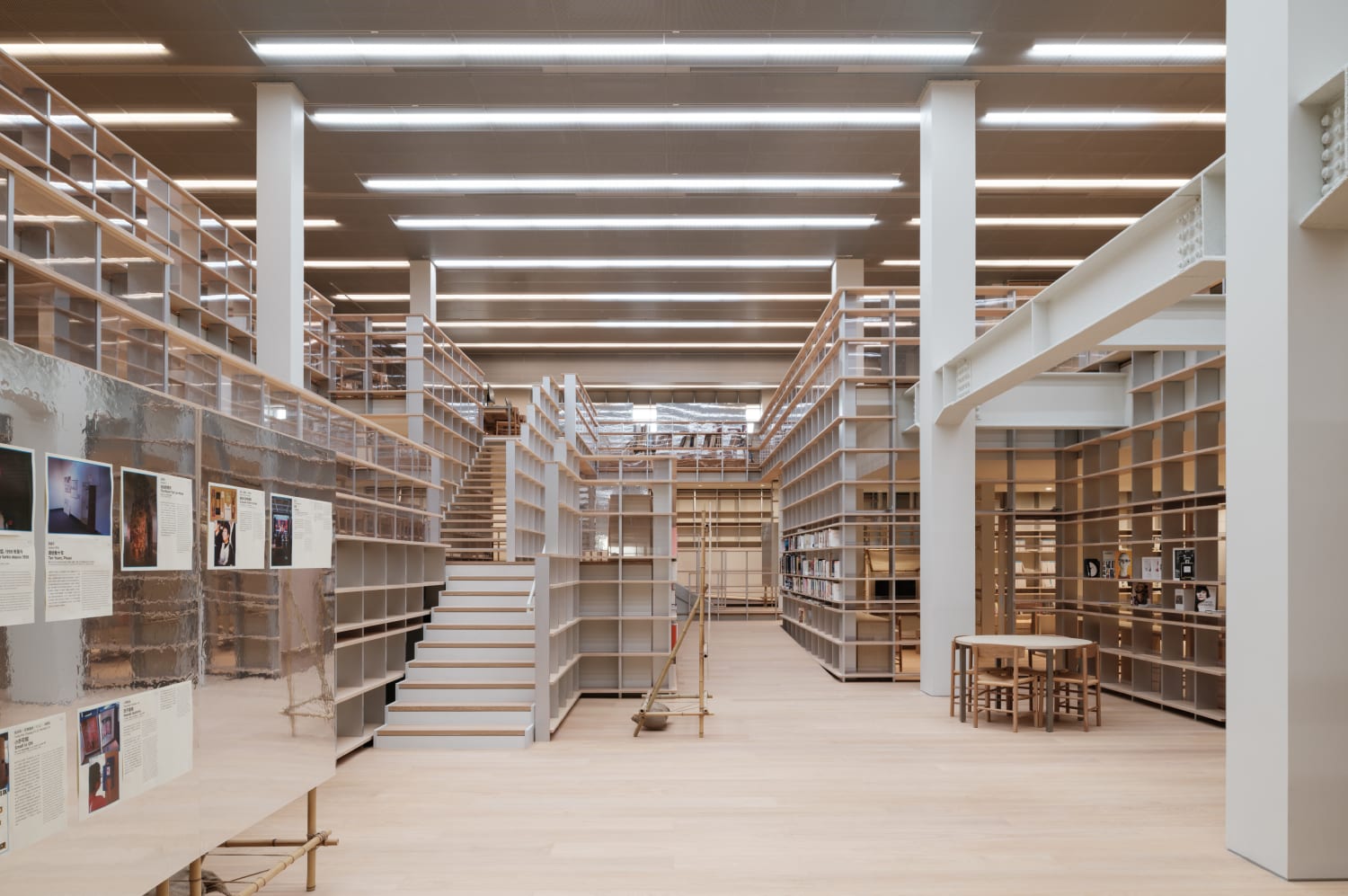
At the heart of the project is Mainland China’s first public library dedicated to contemporary art, an ambitious 50,000-volume collection designed by Japanese architect Kazunari Sakamoto. His architecture works with discretion: clean sightlines, generous circulation, a clarity that lets books, images, and thought remain the protagonists. For collectors, this signals something essential — an understanding that knowledge, not spectacle, sustains artistic value. Sakamoto’s library opens onto research, education, and dialogue, positioning Shanghai as a node in the global network of contemporary art study.

Adjacent to the library, the new 300-seat public theatre expands the institutional vocabulary of the Power Station of Art. Designed for performance, video, sound, and experimental formats, it is a place for artistic risk, the type of space where new languages enter the cultural bloodstream. For a museum once born from the industrial architecture of the former Nanshi Power Plant, the evolution feels coherent: a former generator of electricity now becomes a generator of ideas.
The centre also houses the renewed Power Station of Design, together with a riverside terrace overlooking the Huangpu River. This constellation — library, theatre, design hub — forms a cross-disciplinary campus within the museum, one capable of anchoring long-term research while remaining open to the city and its shifting urgencies.
This partnership continues CHANEL’s broader cultural engagement: from the Next Cultural Producer Programme, launched at the Power Station of Art in 2021, to its major initiatives at CalArts, the BFI, the Venice Biennale, Hamburger Bahnhof, and beyond. CHANEL’s cultural presence is not episodic; it is architectural. It invests where ideas accumulate, where archives grow, where future artists can find a framework robust enough to support their ambition.
Why Cultural Infrastructure Matters
Institutions such as Espace Gabrielle Chanel matter because they stabilise the conditions for culture to think itself forward. Art does not grow in the noise of constant novelty; it grows in places where time, care, and continuity are afforded. A library, a theatre, an archive, these are slow structures, built for the long arc of meaning. By contributing to such infrastructures, CHANEL signals faith in the intelligence of audiences, the resilience of artists, and the need for spaces where imagination is treated as a civic resource. In a world of immediate consumption, cultural depth becomes a strong form of generosity.