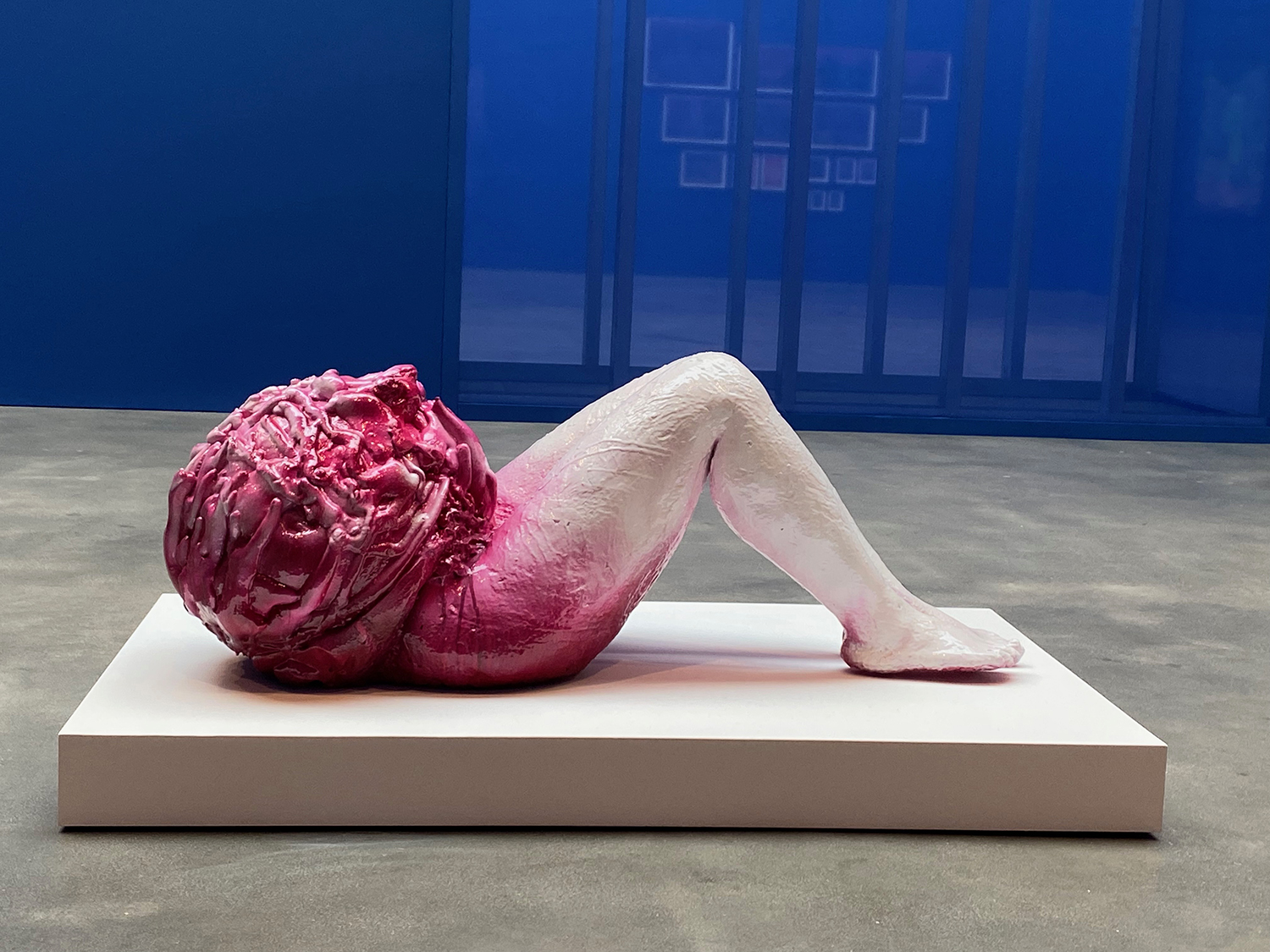
Ayesha Feisal, Rooted (In fi nite source), 2023
At the 61st Venice Biennale, Sierra Leone made its debut in a working art school. Looking back at the exhibition, that choice of venue seems inseparable from the question it posed: what happens when a national pavilion becomes a place to learn from other ways of seeing?
In Gianfranco Gentile’s Aqua alta (Piazza S. Marco, Venezia), the architecture of St Mark’s Square remains recognisable as water takes possession of the foreground. Working in pastel on corrugated cardboard, Gentile returns to the Venetian view associated with Canaletto and empties it of people. What was once an image of civic splendour becomes a picture of exposure. It was a telling work to encounter in Sierra Leone’s first national pavilion at the Venice Biennale. Here, Venice itself was the place being scrutinised.
Curated by Sandro Orlandi Stagl and Willy Montini, with Fatima Maada Bio as commissioner, Mondi Presenti / Worlds of Today ran from 9 May to 22 November 2026 at the Liceo Artistico Statale Michelangelo Guggenheim in Dorsoduro. The exhibition brought Sierra Leonean artists into conversation with peers from West Africa, Europe and beyond. Within the wider context of Koyo Kouoh’s In Minor Keys, that decision gave the pavilion a tension of its own. A first national participation carries a particular demand for visibility. How much can an exhibition open itself to others while giving the artists at the centre of that debut the space to be seen on their own terms?
The works gave that question form. In Ayesha Feisal’s Rooted (Infinite Source), a pair of bent legs rises from a dense crimson mass. The feet are still, the knees lifted. The figure seems poised between rest and the possibility of movement. Feisal has spoken of the work in relation to the strength and creativity she locates in her experience of womanhood. That account gives the stillness a particular weight. Taking root becomes a way to gather strength.
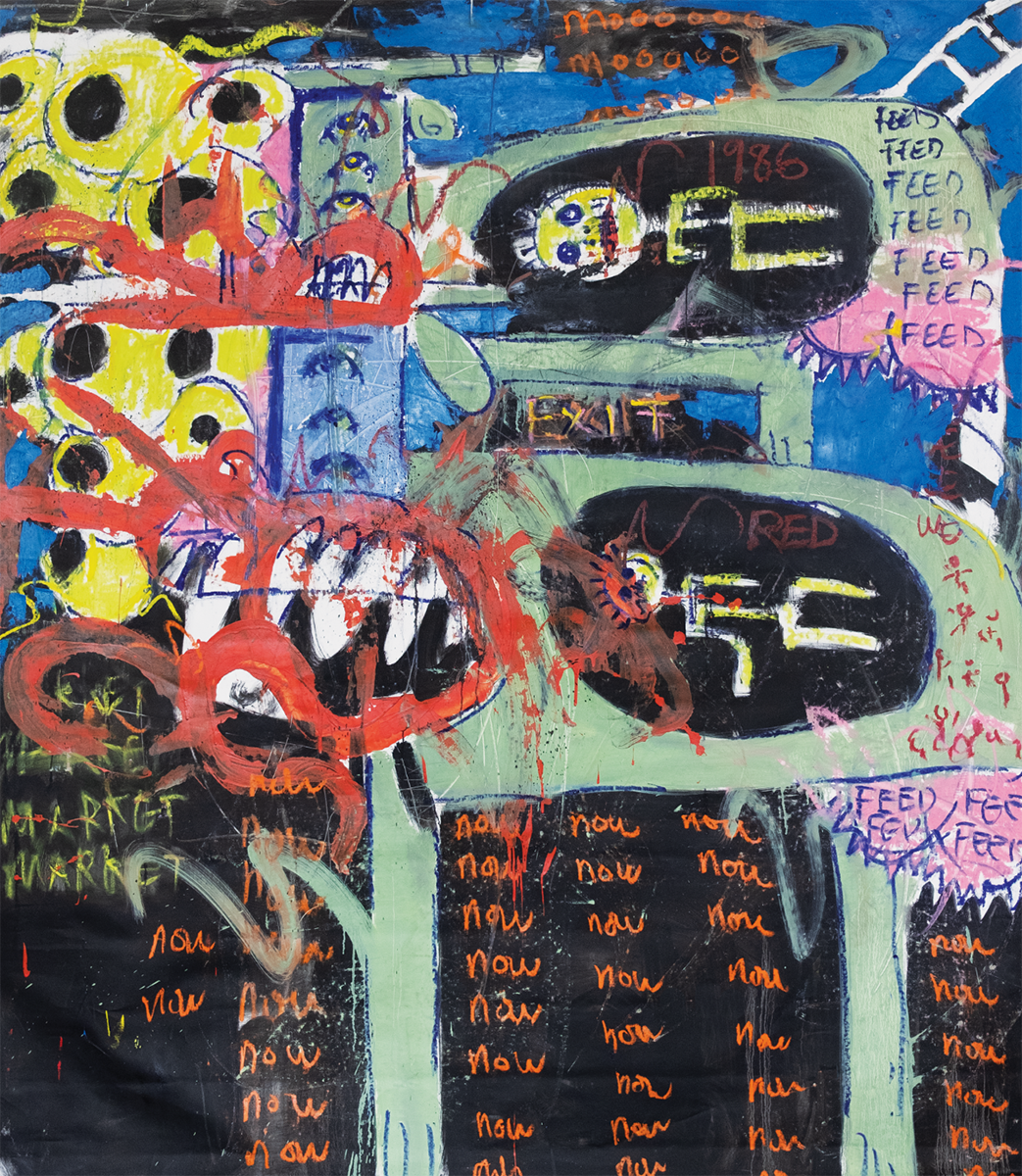
Móyòsóré Martins, Feed the machine, 2025
Courtesy Traffic Arts
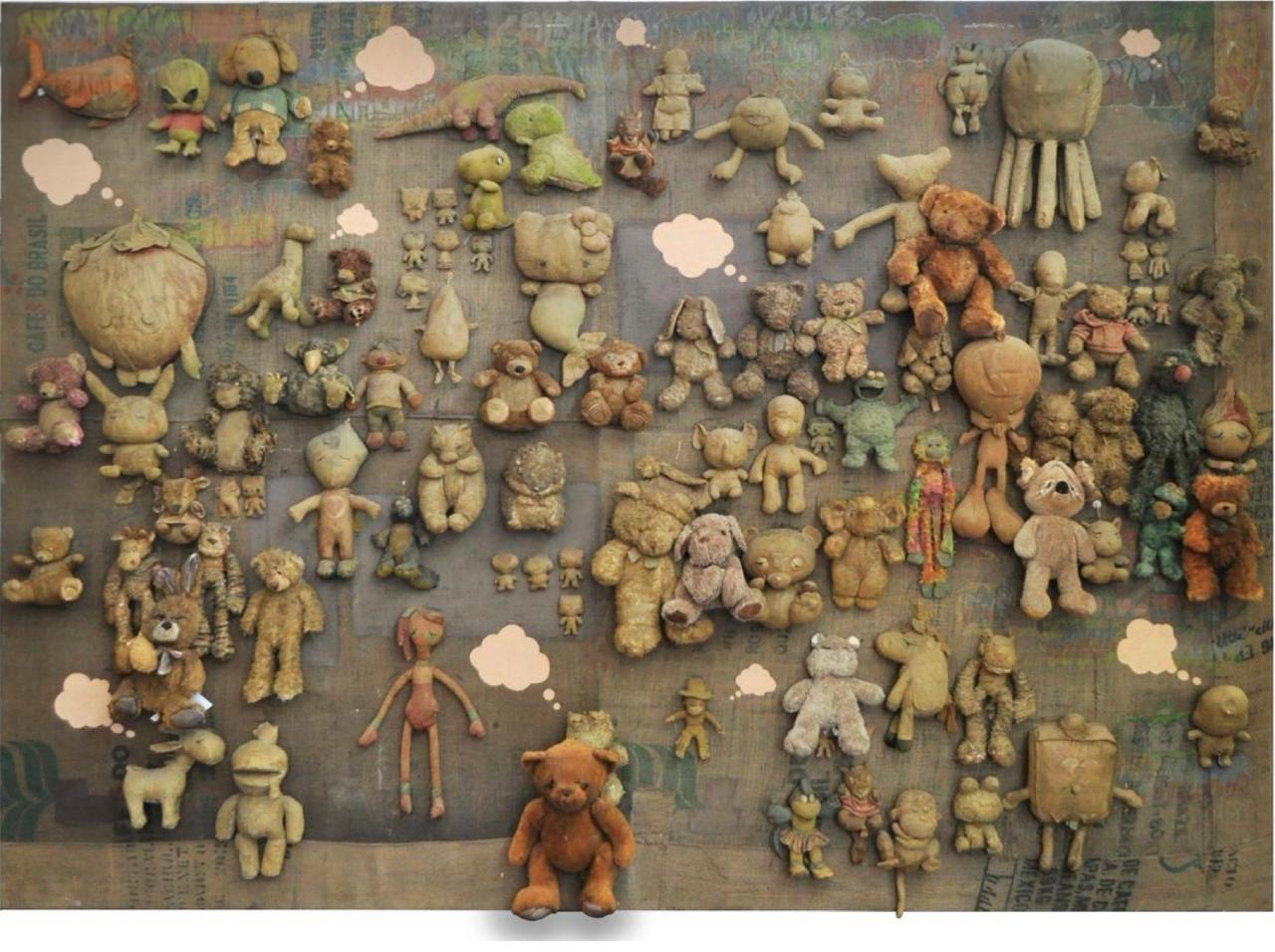
Stillness carries a different charge in Hickmatu Bintu Leigh’s Let Our Boys Be Boys Again. Worn soft toys cover a single surface, with blank thought bubbles scattered among them. The toys retain the familiarity of objects once held close. Seen together, they also suggest a group whose members have been gathered and counted, yet whose thoughts remain inaccessible. The word again gives the work its urgency. The title asks what it would take for childhood to be returned to those from whom it has been taken.
Móyòsóré Martins’s Feed the Machine pushes against that quiet. Repeated words crowd the picture. FEED multiplies along the edges, now runs down the lower half, and EXIT appears near the centre. The eye keeps searching for a way through and finds itself caught in the repetition. This was where the curatorial breadth could work against the exhibition. An open invitation to find connections can also make distinct concerns sound interchangeable. Feisal’s grounded body, Leigh’s silent toys and Martins’s insistent commands were most revealing when their differences held. Each put a different pressure on the viewer’s attention.
The choice of venue acquired its clearest meaning towards the end. At the 19 November finissage, a discussion moderated by Paolo Mozzo brought Gentile and the two curators into a conversation on art, the environment and the role of younger generations. Students and teachers were invited to take part. Gentile’s flooded Venice gave that invitation a concrete starting point. What does it mean to inherit a city whose image has circulated for centuries, when the conditions of living in it are changing?
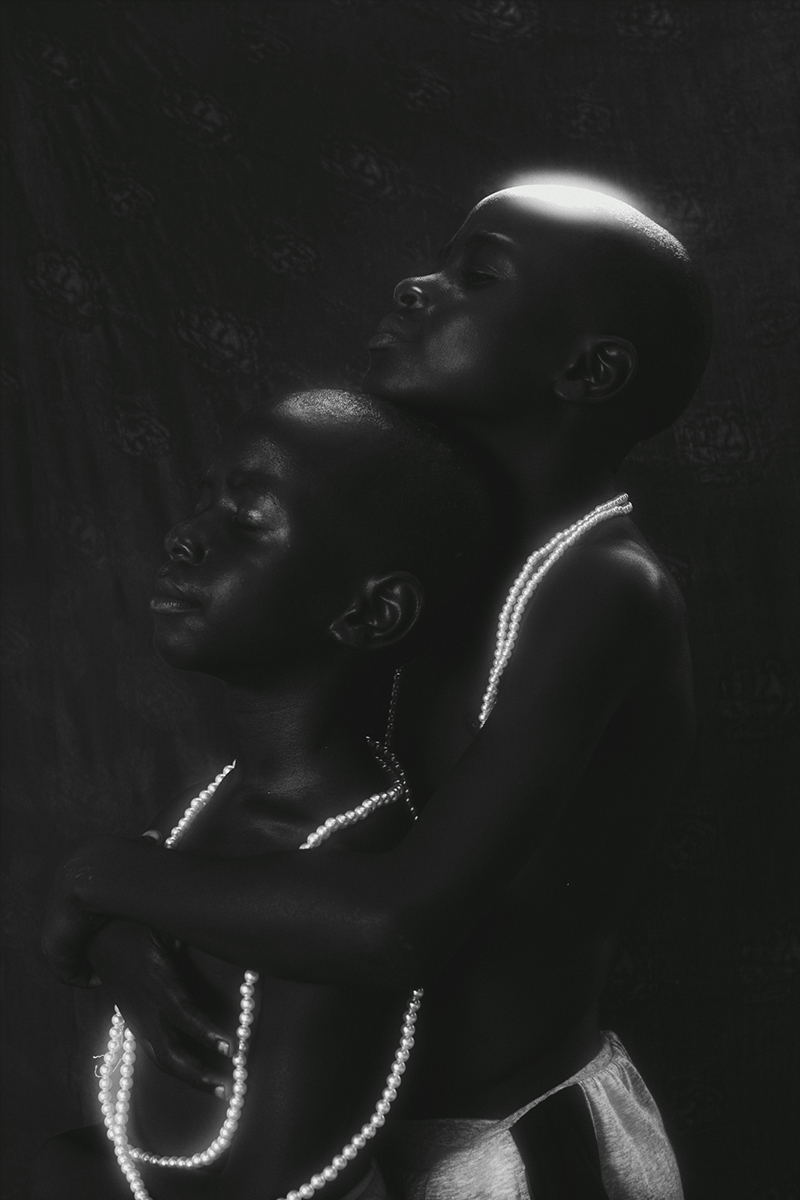
Hickmantu Bintu Leigh, Let our boys be boys again, 2025
Armando Amaya Romero, Laziness from The 7 Deadly Sins Series 2024
CourtesyGaleria Errante
After the pavilion closed, the image of St Mark’s under water held a further implication. A national pavilion can turn the gaze back on its host. In Sierra Leone’s debut, Venice became a place whose own future was open to question, and an art school became the place to ask who would have a hand in shaping it.
by A.I. Mas
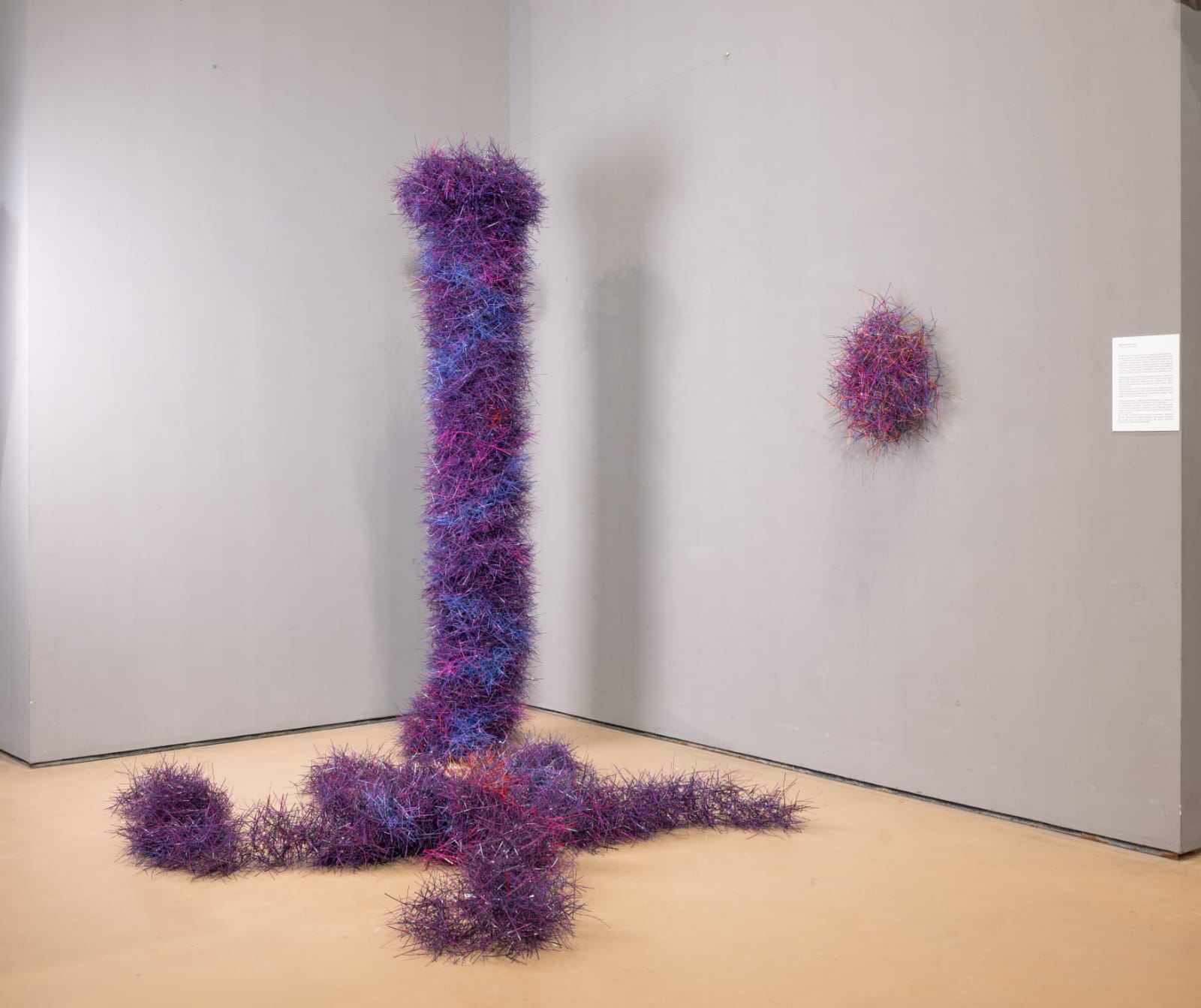
Margherita Levo Rosemberg, Della democrazia 2023