BAD HABITS
Venice, Ruin, and the Discipline of Fragment
by Alexandra I. Mas
Venice is sedimented history. Every façade holds centuries in suspension. Stone carries salt, water, commerce, migration, empire. The lagoon does not erase; it preserves in distortion. To paint here is to negotiate with time itself.
On the occasion of the 61st International Art Exhibition – La Biennale di Venezia, the Fondazione Querini Stampalia will present Nigel Cooke: Bad Habits, curated by Evelyn C. Hankins, from May 5 through November 22, 2026.
It will be Cooke’s first solo exhibition in Italy, a fact that matters less as milestone than as context. Because Venice does not receive artists lightly. This spring, Cooke becomes the Fondazione’s first artist in residence, working within the Portego della Biblioteca, a space overlooking the Rio di Santa Maria Formosa, suspended above Carlo Scarpa’s architectural interventions. The paintings will be completed there, creation and display into continuity.
THRAÛSMA — RUIN AS BEGINNING
Cooke’s new paintings find their origin not in Venice alone, but in Athens. Studying broken statues in museums, he meditated on ruins as language. The Greek word θραῦσμα — thraûsma — meaning ruin, trauma, fragment, becomes foundational.
A fragment is not absence. It is concentrated presence.
Athens, like Venice, is a palimpsest, a surface upon which thousands of years have written themselves. Cooke does not paint ruins in the literal sense; he paints fragmentation as structure. Words emerge in early compositional stages, functioning simultaneously as text and image. Language dissolves into mark-making. The painting becomes archaeological and neurological at once. There is something almost cerebral in the linear construction of these works. Cooke’s marks recall brain circuitry, landscape formations, mammalian fragments. Paleontology, neuroscience, classical mythology, zoology, fields that appear disparate converge in gesture. The canvas becomes a site where dualities fold: mind and body, human and animal, organic and geological.
This folding is epistemological. Cooke holds a PhD in Philosophy, having written on non-linear systems in the thought of George Bataille and Michel Serres. Non-linearity is not theory for him; it is practice. So his painting becomes a system that refuses linear causality. It circles. It accumulates. It reflects upon itself.
Cooke is equally attentive to the city’s darker undercurrents and to contemporary world events. The palette shifts toward the nocturnal. Deep tones dominate. From this darkness, fragments of figures, animals, objects emerge, atmospheric. He describes the paintings as evoking “moments of uncertainty and darkness, with threads of hope and the possibility of change glimmering as moonlit fragments”
Forms are never fully graspable. They hover between recognition and dissolution. There is something profoundly Venetian in this restraint. In a city where water distorts reflection and light fractures across canals, certainty is never absolute. Vision is mediated by shimmer. Yet this exhibition is not an homage to Venice but a certain reconfiguration. The paintings, like the city itself, become sites in which the self can be reimagined. Cooke’s canvases resist immediate resolution. They demand duration. They ask the viewer to dwell within ambiguity, to allow associations to surface slowly, like ruins emerging from sediment.
The exhibition’s title, Bad Habits, carries an understated irony. Habit implies repetition. Yet Cooke’s work refuses it in any simple sense. Each painting destabilises its own logic. The “habit” may be painting itself, the compulsion to return to the surface, to test representation again and again.
At the Fondazione Querini Stampalia, institution founded in 1869 upon the radical idea that culture is a shared good, Cooke’s residency echoes that very gesture. The space, historically open and inclusive, becomes laboratory and painting active thought. A continuous line, a compelling spatial aspect as the paintings will be exhibited in the very room in which they were completed. In a city built upon layers of ruin and renewal, Nigel Cooke’s paintings seek to inhabit uncertainty with intelligence, discipline, and quiet hope. Because a fragment is not the end of a narrative. It is the beginning of interpretation.
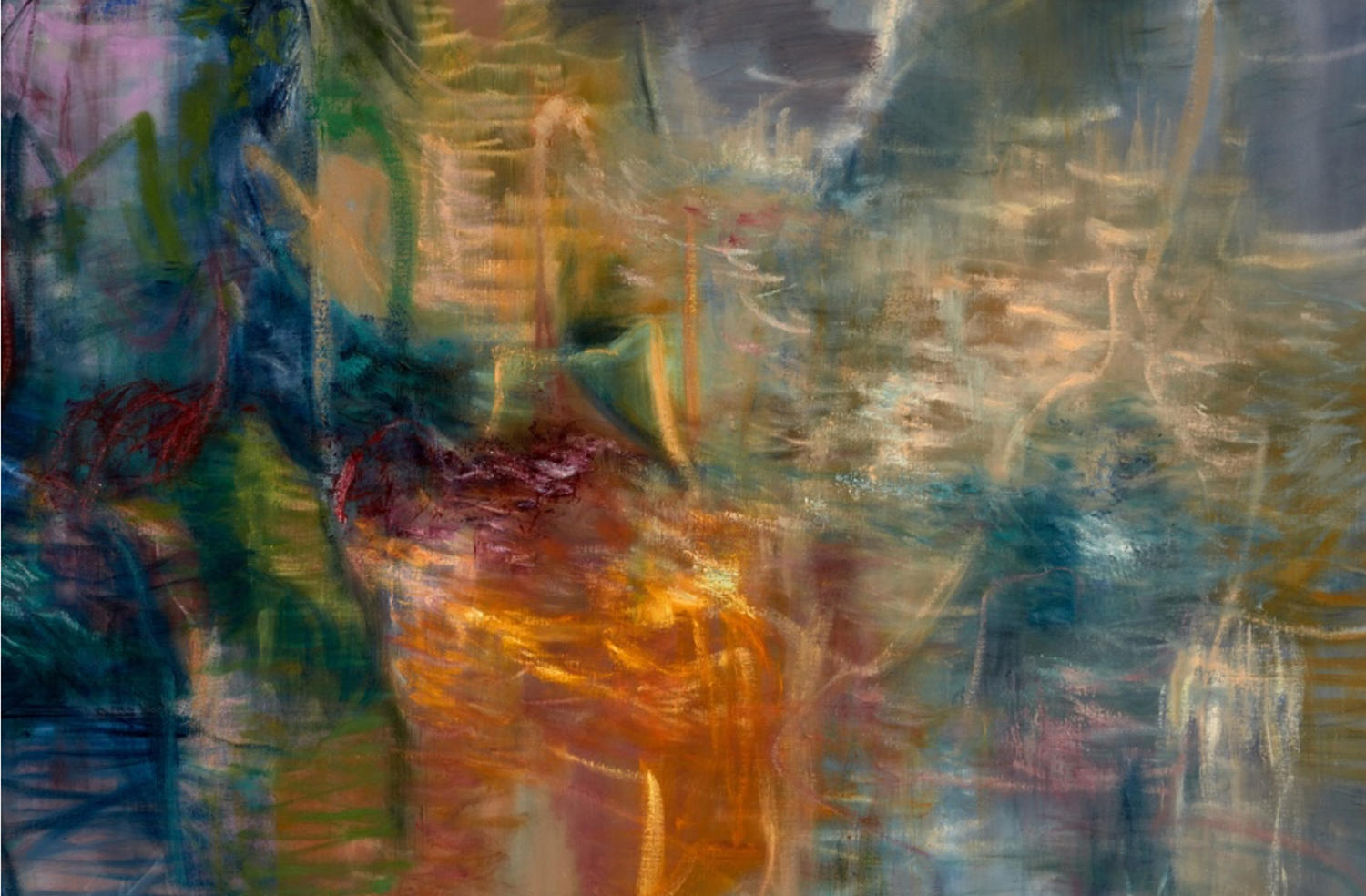
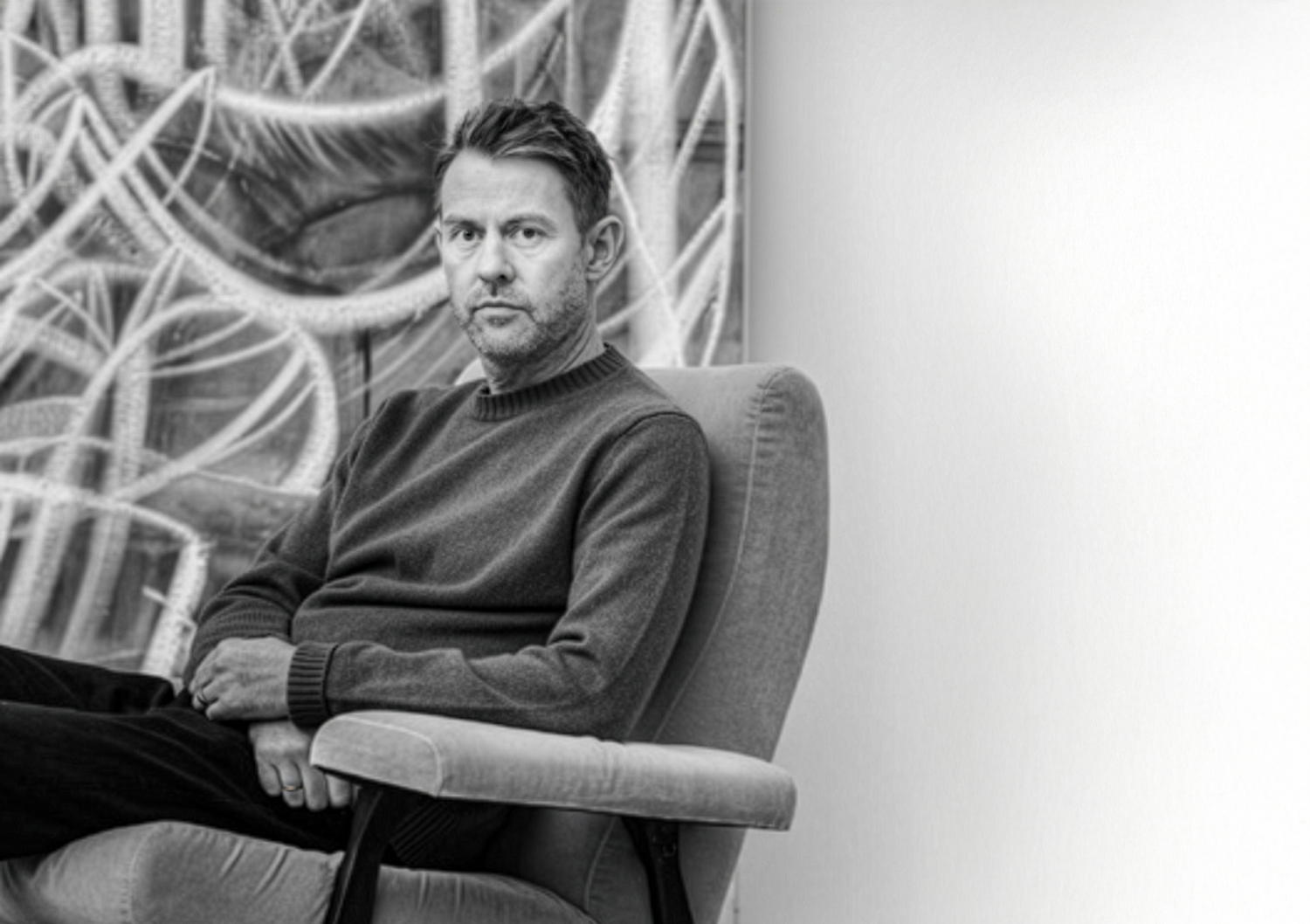
Nigel Cooke, Detail of The Nurture of Jupiter, 2024
© Nigel Cooke, courtesy Pace Gallery